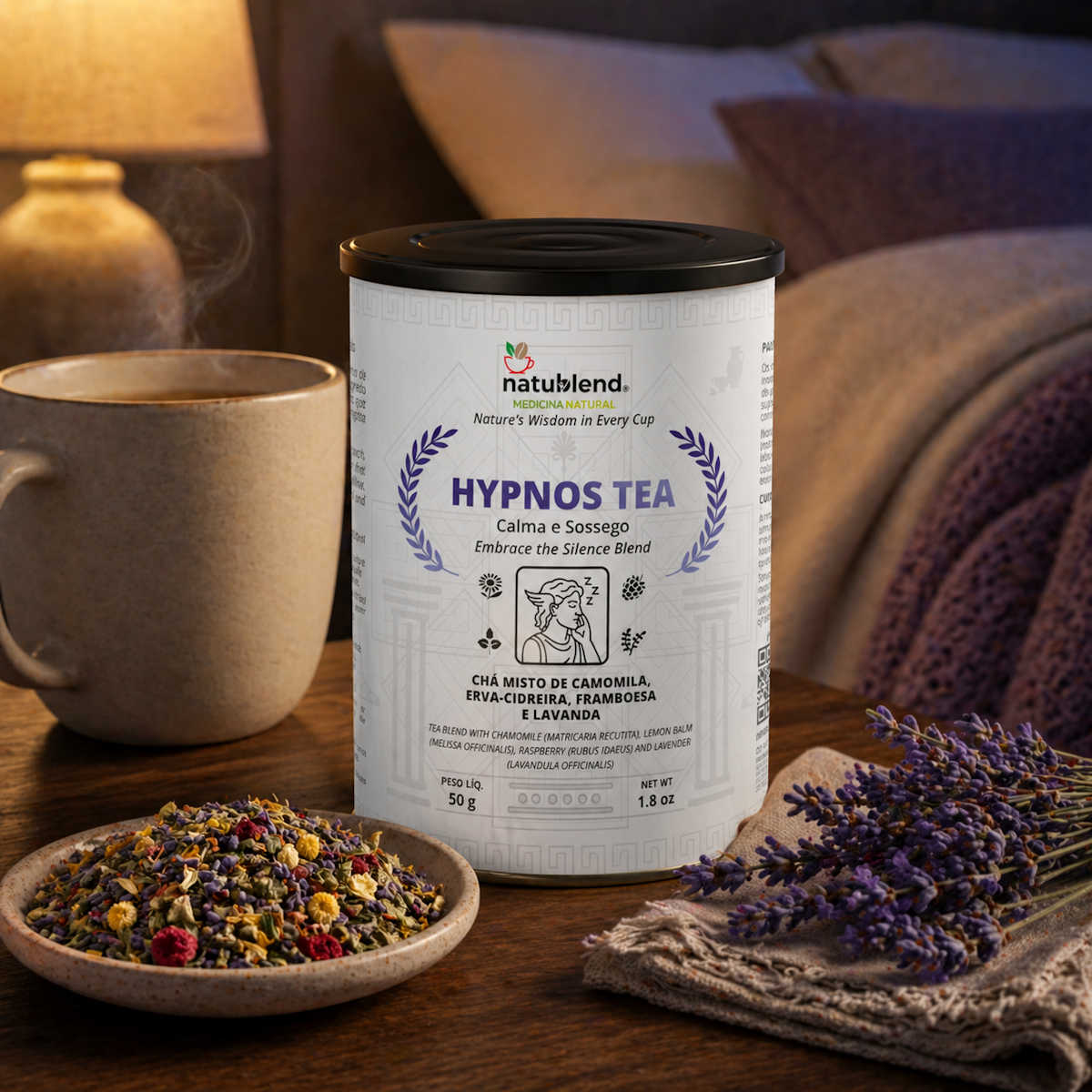
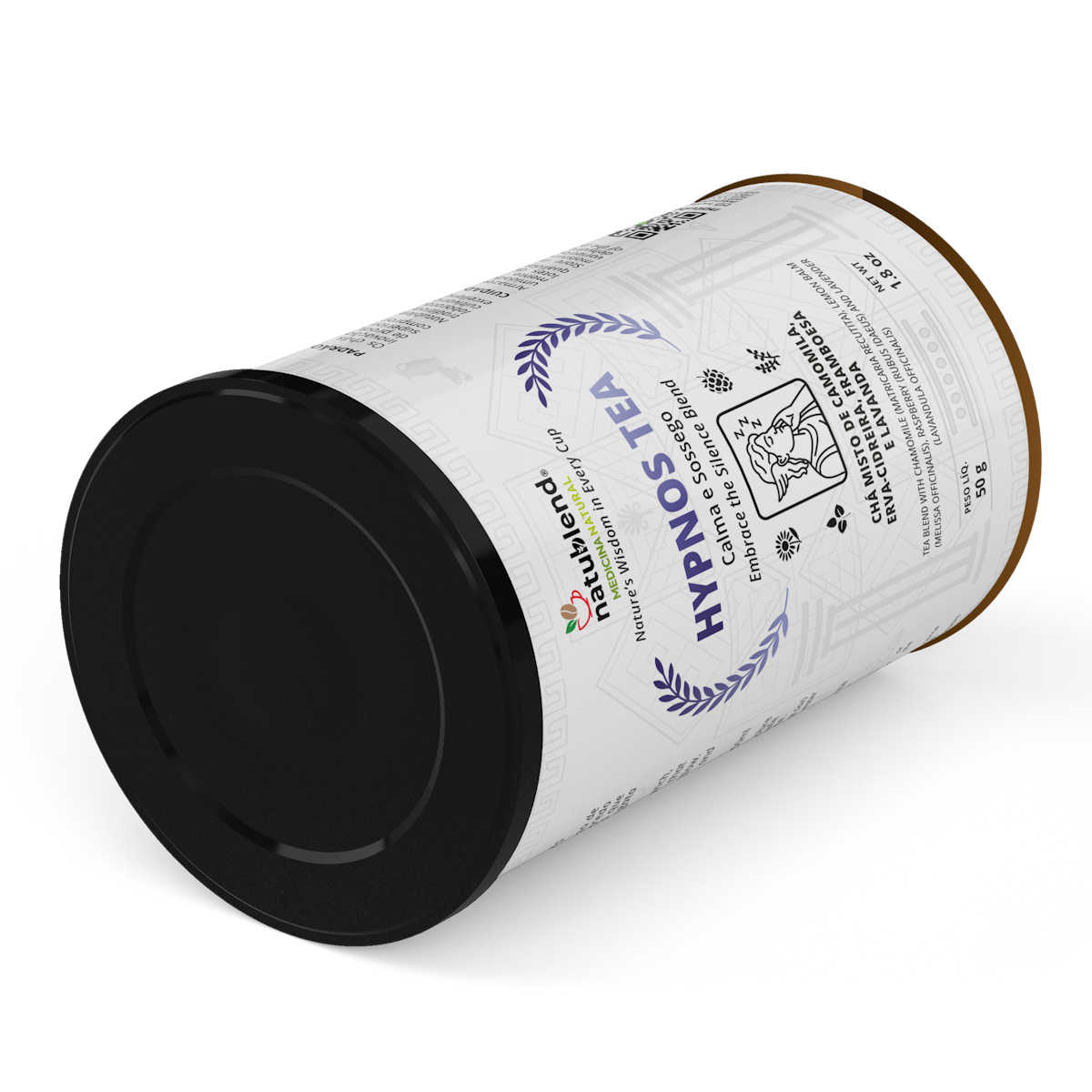
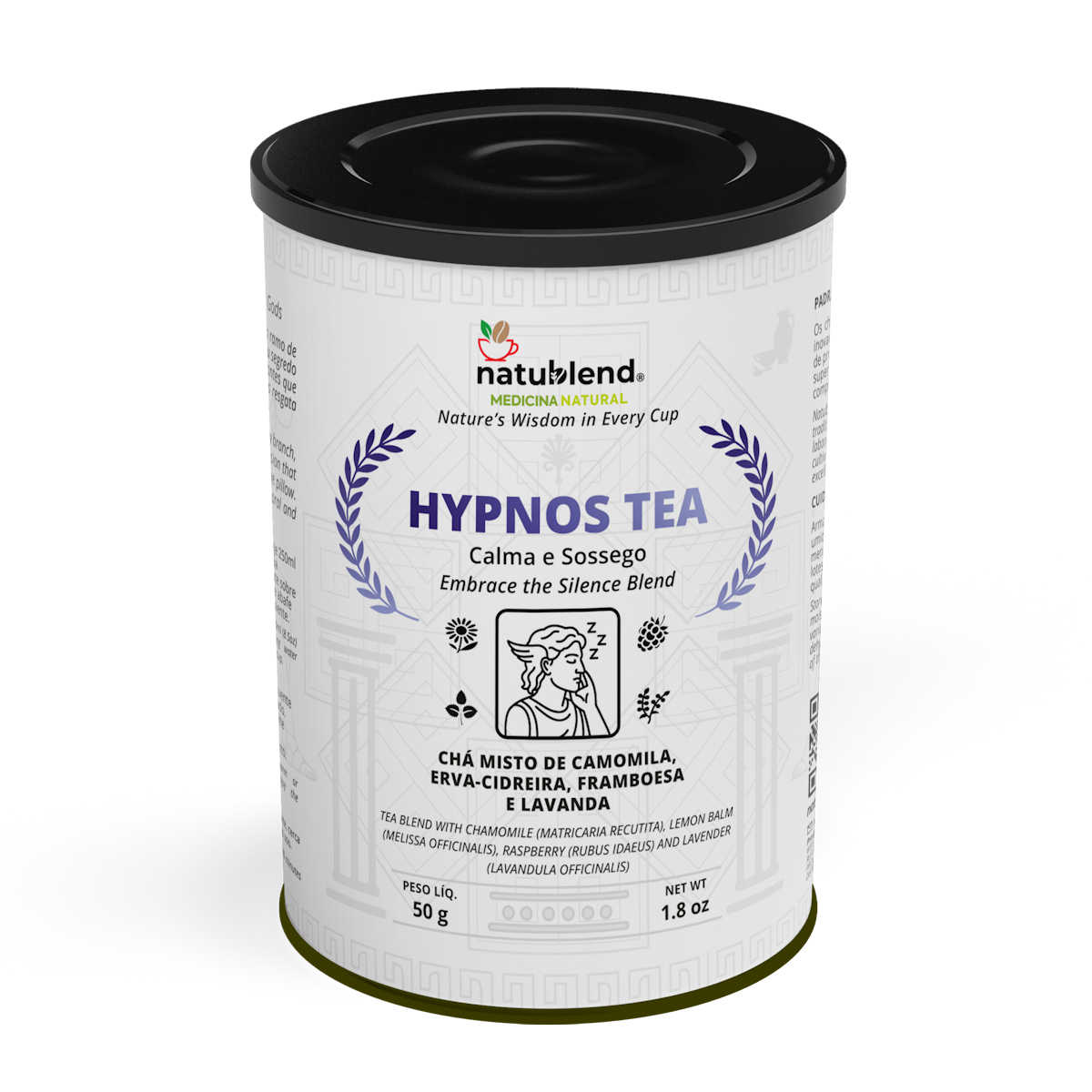
Hypnos Tea brings together chamomile, lavender, lemon balm, and raspberry in a 50 g tin from Natublend’s Wisdom of the Gods collection. It is an infusion of flowers, fruit, and leaves, made without the leaf of Camellia sinensis, the plant for which the trade reserves the word tea in the strict sense (Upton Tea Imports, n.d.). None of the four ingredients is a source of caffeine, and the story of the leaf left out of this blend is told in the article on the history of tea, from China to the Ribeira Valley.
The name pays tribute to Hypnos, the personification of sleep in Greek mythology, and the connection between the god and the blend ends with the name: the next section tells who he was, and the rest of the article covers what goes into the tin.
Why Hypnos

In Greek mythology, Hypnos is not an Olympian god but a daimon, the personification of sleep. According to the Theoi Project, he lived in Erebus and rose into the sky every night in the train of his mother, Nyx, the Night (Theoi Project, n.d.). Hesiod’s Theogony lists Hypnos himself, his brother Thanatos, and the Oneiroi, the Dreams, among the children of Nyx (Hesiod, Theogony). In ancient art, Hypnos appears as a winged youth, often holding a poppy stem or a torch turned downward (Theoi Project, n.d.). Natublend named the blend in his honor, and the collection’s illustration, at the top of this page, draws on this iconography, showing the god among poppies under a full moon. The poppy, however, appears only in the image: the ingredients in the tin are the four described below.
The Four Ingredients in Hypnos Tea
Lavender and raspberry appear in no other blend in the collection, so this is where Natublend tells the story of each. Chamomile and lemon balm have already been introduced in the articles on other blends, indicated under each entry.
Lavender
Lavender is the ingredient Natublend places at the front of Hypnos Tea’s aroma, and it is also the one that carries the finish. The product page does not name the species, and the genus Lavandula includes plants with very different profiles; for use in infusions, the most likely candidate is Lavandula angustifolia Mill., true lavender, in the family Lamiaceae, native to southern France, Italy, and northeastern Spain, whose dried flowers are the part used (POWO, n.d.).
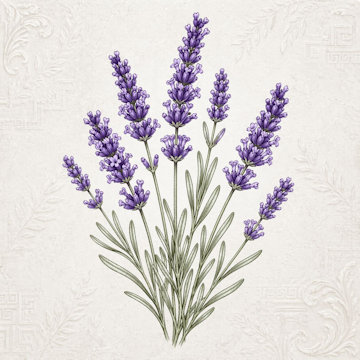
The Herb Society of America explains why it is usually the one chosen for the kitchen: compared with lavandin, Lavandula × intermedia, a hybrid grown mainly for essential oil and perfumery, true lavender has a sweeter, softer aroma and much less camphor, a compound that gives the flavor a harsh, resinous edge, although some low-camphor lavandin cultivars also make their way into cooking (Herb Society of America, n.d.). In the blended tea lexicon by Kim and colleagues, lavender appears as a floral aroma that can carry earthy notes and notes of freshly cut artemisia (Kim et al., 2018), an herbaceous background that keeps the finish of Hypnos Tea from coming across as merely perfumed.
Raspberry
Among the ingredients in the collection, raspberry is the only fleshy fruit. The accepted name is Rubus idaeus L., in the family Rosaceae, the same family as the apple and the rose, and what goes into the blend is the fruit (POWO, n.d.). In tea blends, raspberry is most often used as dried fruit, whether chopped, granulated, or whole, added for aroma and color; the leaf of the same plant, sold separately as raspberry leaf tea, is a different product and is not part of Hypnos Tea.
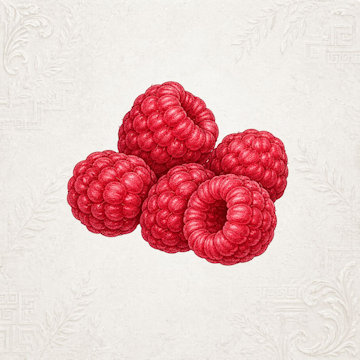
For Hypnos Tea, the brand specifies freeze-dried raspberry: the fruit is frozen and the water is then drawn off under vacuum, passing straight from ice to vapor, which preserves its shape and leaves the flesh light and crumbly. According to Natublend, it breaks down on its own in the water and needs no extra steeping time. The hibiscus beverage lexicon by Monteiro and colleagues defines the raspberry note as sweet-sour aromatics commonly associated with the fruit (Monteiro et al., 2017), and that is the trait the brand describes on the mid-palate, more as a nuance than as a dominant flavor.
Chamomile
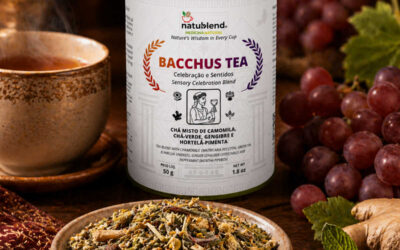
The chamomile in Hypnos Tea is Matricaria chamomilla L., a dried flower of the family Asteraceae, and the name Matricaria recutita, still common on labels, refers to the same species (POWO, n.d.). In this blend, chamomile is the ingredient most sensitive to steeping time: at 5 minutes it stays in the background, and at 7, according to the brand, it deepens the body of the drink and becomes the soft base on which the other three ingredients rest. The story of the plant is told in the article on Bacchus Tea.
Lemon Balm
The brand lists this ingredient by its Brazilian Portuguese name, erva-cidreira, which in Brazil is given to more than one plant, and the Hypnos Tea page does not provide the scientific name. The most likely candidate is Melissa officinalis L., known in English as lemon balm, in the family Lamiaceae, whose leaves are used in infusions and which is native to a region stretching from the Mediterranean to Central Asia (POWO, n.d.). In Hypnos Tea, it brings the subtle citrus note that appears right after the chamomile and gains ground in the iced version. The plants sold under this name are discussed in the article on Harmonia Tea.
Sensory Profile
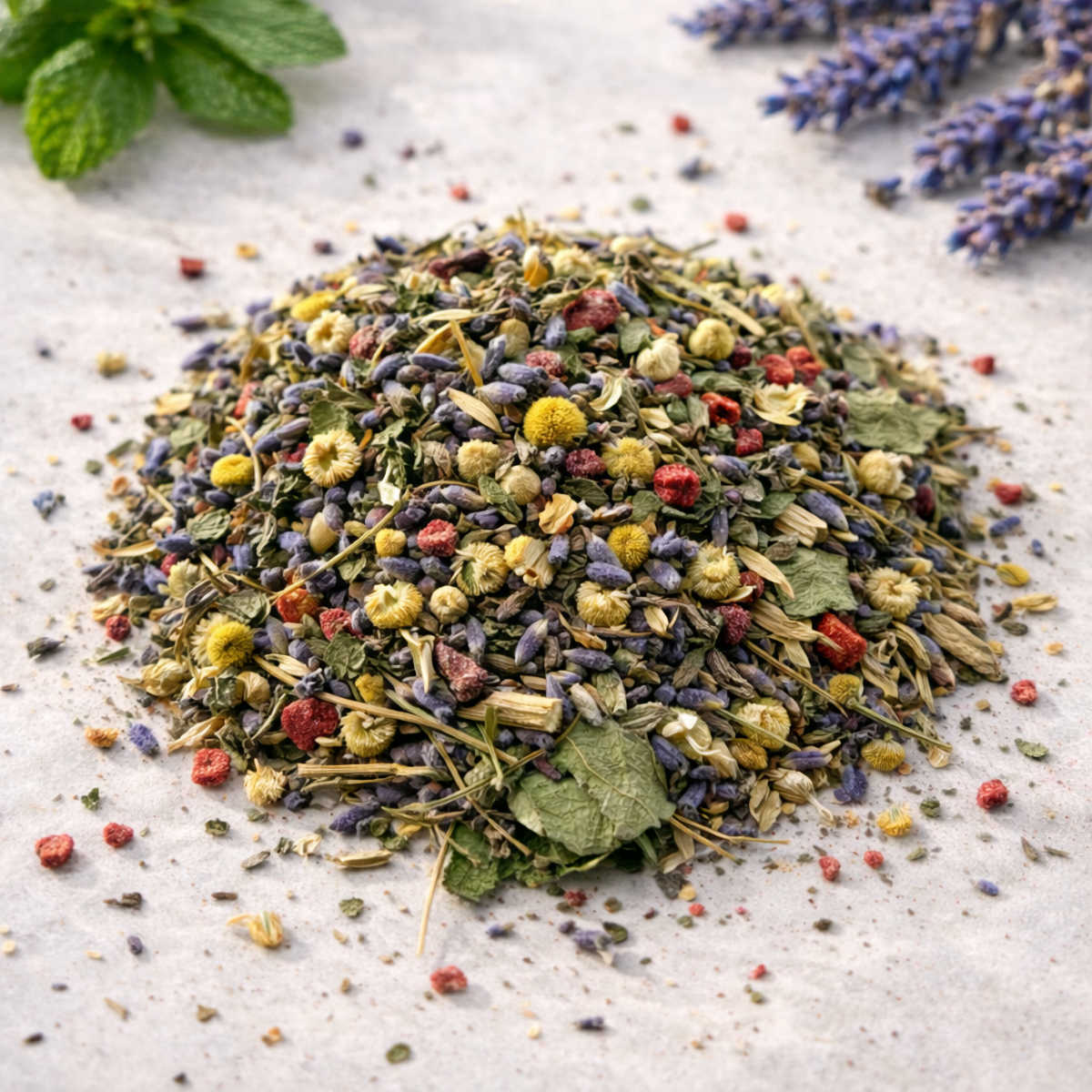
Aroma of the dry blend. When the tin is opened, lavender dominates: floral, herbaceous, and slightly resinous, as the brand describes it. Just beneath it come the chamomile, with the slightly musty floral fragrance, associated with dried flowers, that the lexicon by Kim and colleagues attributes to it (Kim et al., 2018), and the citrus note of the lemon balm, while the raspberry is barely perceptible.
Aroma of the infusion. In hot water, the lavender begins to share the steam with the chamomile, and the lemon balm becomes more distinct. The brand asks for the vessel to be covered right after the water is poured because the aromatic compounds in lavender are quickly lost to the air.
Liquor color. A light, translucent golden yellow, with a rosy veil that the raspberry releases in the first few minutes and coppery glints against the light, according to the brand. The rosy tone is a veil, not the base color.
Flavor. On the attack, the chamomile comes in soft and slightly sweet, and the lemon balm follows close behind, making the cup feel lighter on the palate. The raspberry shows up on the mid-palate, with a sweet-sour touch that adds depth without turning Hypnos Tea into a fruit infusion, and the finish belongs to the lavender, which lingers on the lips for a few moments after the sip.
Body. Light to medium, with a soft texture. The brand states that the cup has neither bitterness nor astringency, the puckering of the lining of the mouth that the lexicon by Monteiro and colleagues attributes to tannins (Monteiro et al., 2017).
How to Brew Hypnos Tea
Natublend’s recipe calls for water just short of boiling and a longer steeping time than the one used for the blends made with tea leaves.
- Heat the water to between 90 and 95 °C, without letting it boil; if you have no thermometer, take the kettle off the heat when the first large bubbles rise and wait 30 seconds.
- Measure out 2 g of the blend for every 200 ml of water.
- Pour the water slowly over the blend and cover the vessel right away.
- Steep for 5 to 7 minutes: at 5, the lavender and lemon balm come through lighter; at 7, the chamomile gains body.
- Strain without pressing the flowers and serve without sugar, as the brand recommends.
- If you like, reuse the same portion for one or two more infusions.
Without the catechins of the Camellia sinensis leaf, flower and herb infusions do not need the cooler water that green and white teas call for. Even so, Natublend stays slightly below boiling because, according to the brand, chamomile and lavender release bitter compounds at 100 °C. The steeping time, 5 to 7 minutes, is the same one The Republic of Tea’s chamomile brewing guide recommends for a hot cup (The Republic of Tea, n.d.).
For the iced version, the brand recommends 6 to 8 hours in the refrigerator, in room-temperature water; in the cold, the lavender recedes and the lemon balm and raspberry come forward.
Natublend’s Suggested Moment
Natublend positions Hypnos Tea for the end of the day, as the last cup of the evening, brewed after dinner and served unhurriedly, and the scent of lavender rises with the steam as soon as the lid comes off. On warm nights, the product page suggests adding an ice cube to the freshly strained cup. The brand does not recommend the blend for children under 12 without professional guidance.
Other Blends in the Collection
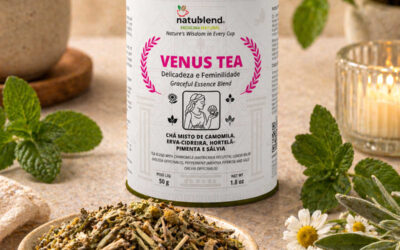
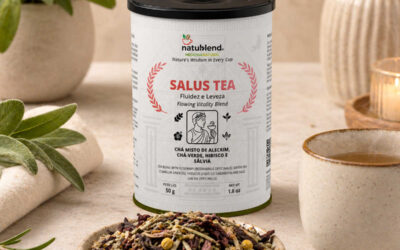
Hypnos Tea is one of the 15 blends in the Wisdom of the Gods collection, and two of them repeat the chamomile and lemon balm pairing that forms the base of this cup. Gaia Tea swaps the lavender and raspberry for anise (sold in Brazil as erva-doce) and lemongrass, and the result leans toward anise-like and citrus notes. Venus Tea puts peppermint and sage in place of the flower and the fruit, with a minty mid-palate and an herbaceous finish with a slight bitterness.
Frequently Asked Questions
Do Any of the Ingredients in Hypnos Tea Contain Caffeine?
None of them. Hypnos Tea contains no Camellia sinensis leaf, and chamomile, lavender, lemon balm, and raspberry are not among the plants known to contain caffeine.
Can Hypnos Tea Be Cold-Brewed?
Yes. Natublend recommends 6 to 8 hours in the refrigerator, with the blend in room-temperature water, and the result comes out fresher and less floral than the hot version.
Does Hypnos Tea Pair Well with Dessert?
It pairs well with delicate desserts that let the lavender come through. Since the brand suggests Hypnos Tea for after dinner, it is worth trying with butter cookies, fresh strawberries, or vanilla custard; the strawberries echo the raspberry. Very intense sweets, such as dark chocolate or dulce de leche, tend to drown out the flower and the fruit.
Hypnos or Hipnos: Why This Spelling?
Hipnos is the Portuguese form of the name of the god who personifies sleep in Greek mythology; Hypnos, with a Y, is the transliteration closest to the Greek, used in English and in reference works such as the Theoi Project. Natublend adopted this spelling for the name of the blend, as a tribute to the god.
This content is informational and describes teas and infusions as foods. It does not replace professional health guidance. Pregnant women, breastfeeding women, children, and people undergoing medical treatment should consult a health professional before adding any infusion to their routine.
References
View All 11 Cited References
Peer-Reviewed Scientific Studies (1)
- PMC2018 KIM et al. A Lexicon for Descriptive Sensory Evaluation of Blended Tea. Preventive Nutrition and Food Science, v. 23, n. 4, p. 364-373, 2018. Available at: pmc.ncbi.nlm.nih.gov.
Supplementary Readings (10)
- UPTON TEA IMPORTS. A Closer Look at the Difference Between Teas, Tisanes and Herbal Infusions. n.d. Available at: uptontea.com.
- THEOI PROJECT. Hypnos. Theoi Greek Mythology, n.d. Available at: theoi.com.
- HESIOD. Theogony. English translation hosted on the Theoi Classical Texts Library, n.d. Available at: theoi.com.
- ROYAL BOTANIC GARDENS, KEW. Rubus idaeus L. Plants of the World Online (POWO), n.d. Available at: powo.science.kew.org.
- 2017 MONTEIRO et al. Cross-cultural development of hibiscus tea sensory lexicons for trained and untrained panelists. Journal of Sensory Studies, v. 32, n. 5, e12297, 2017. DOI: 10.1111/joss.12297. Table 3 available at: gala.gre.ac.uk.
- ROYAL BOTANIC GARDENS, KEW. Lavandula angustifolia Mill. Plants of the World Online (POWO), n.d. Available at: powo.science.kew.org.
- THE HERB SOCIETY OF AMERICA. Lavender in the Kitchen: Flavor Profiles Across Species and Cultivars. The Herb Society of America Blog, n.d. Available at: blog.herbsociety.org.
- ROYAL BOTANIC GARDENS, KEW. Matricaria chamomilla L. Plants of the World Online (POWO), n.d. Available at: powo.science.kew.org.
- ROYAL BOTANIC GARDENS, KEW. Melissa officinalis L. Plants of the World Online (POWO), n.d. Available at: powo.science.kew.org.
- THE REPUBLIC OF TEA. Guide on How Long to Steep Chamomile Tea. Tea Library, n.d. Available at: republicoftea.com.