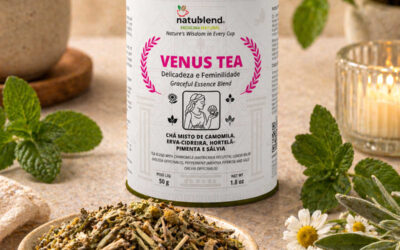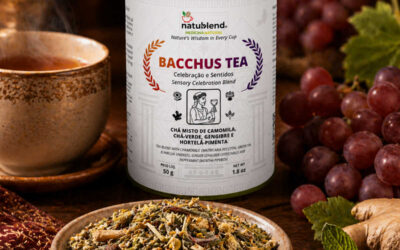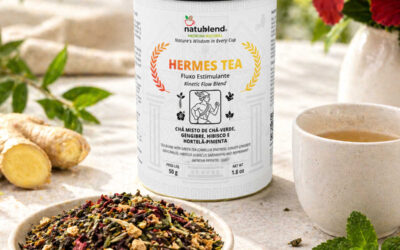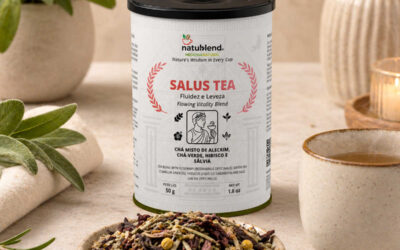
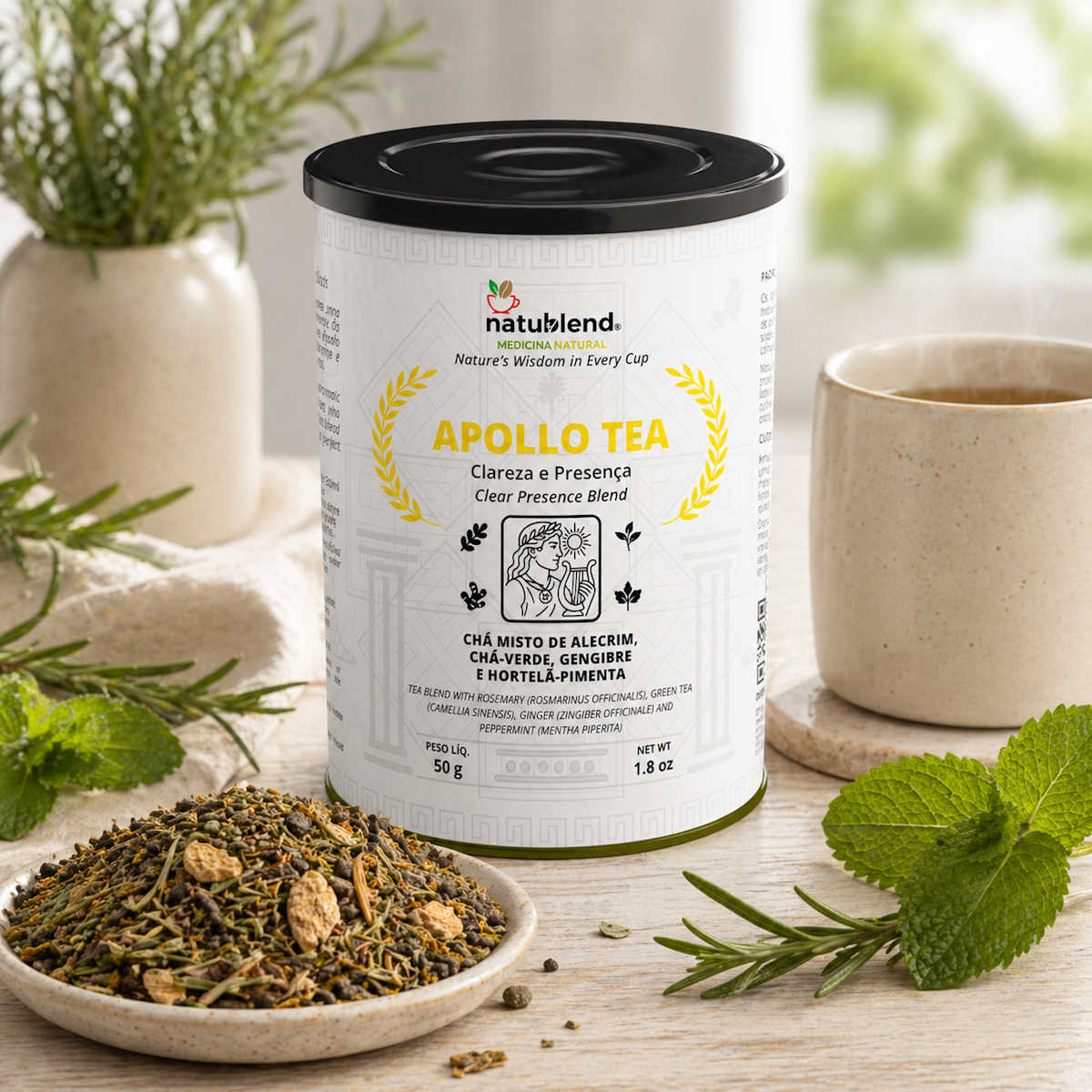
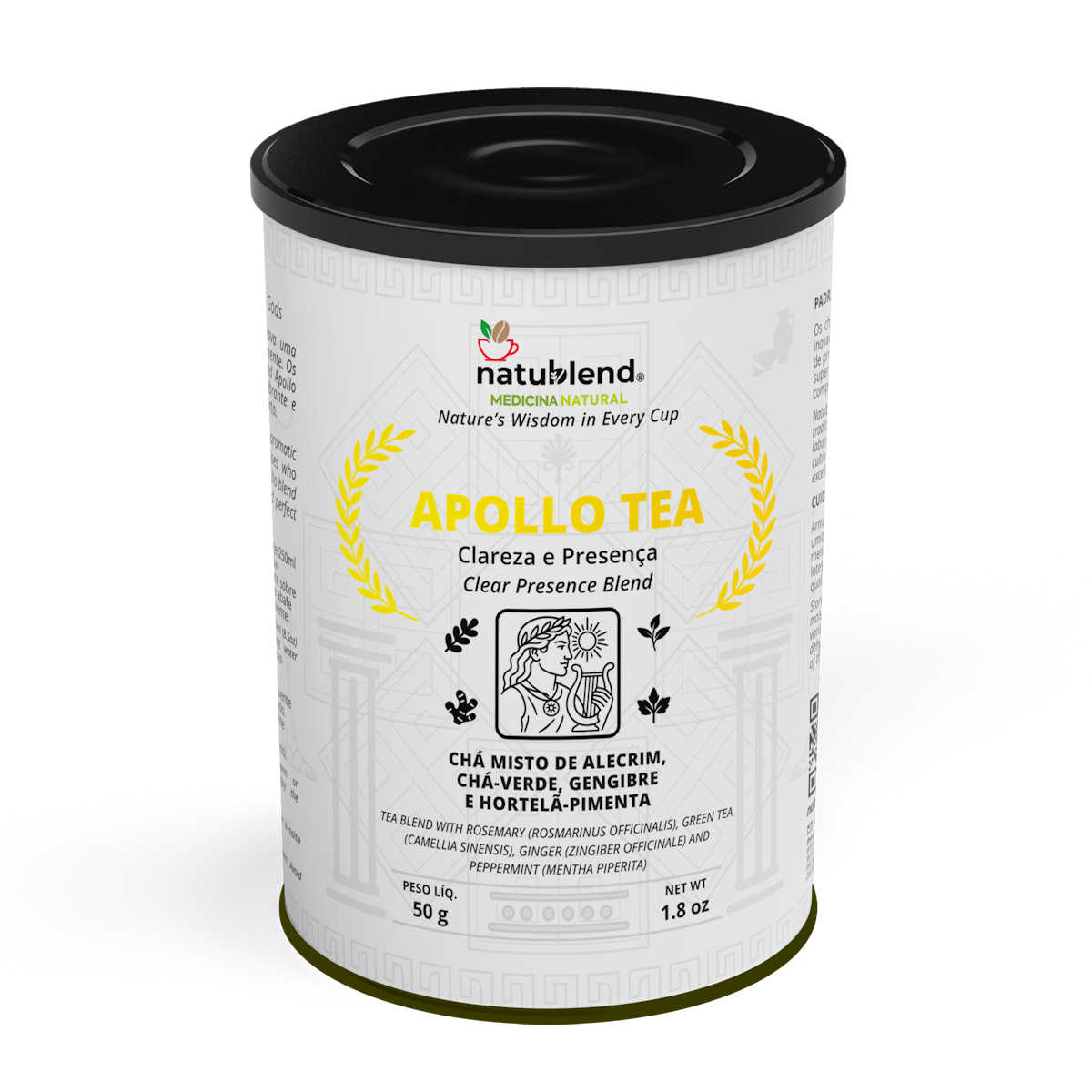
Apollo Tea brings together ginger, green tea, peppermint, and rosemary in a 50 g tin from Natublend’s Wisdom of the Gods collection. Its base is green tea, the leaf of Camellia sinensis, so the blend naturally contains caffeine, unlike most infusions made only from flowers, herbs, or roots (Upton Tea Imports, n.d.); for the story of where this leaf comes from and how it reached Brazil, the article on the history of tea, from China to the Ribeira Valley is well worth a read.
The name honors Apollo, the Greek god of music, oracles, and poetry. Natublend suggests Apollo Tea for the first cup of the morning, brewed without hurry and served without sugar, and that ritual guides the sections that follow, alongside the story of rosemary.
Why Apollo

In Greek mythology, Apollo is the Olympian god of archery, music, oracles, poetry, prophecy, the protection of the young, and song, almost always portrayed as a beardless youth with a bow, a laurel crown, and a lyre (Theoi Project, n.d.). Hesiod, Homer, and the Homeric Hymns all make him the son of Zeus and Leto (Theoi Project, n.d.). He was born on the island of Delos and, while still young, killed the serpent Python at Delphi, where he founded his oracle; another well-known episode of the myth is the musical contest in which he faced the satyr Marsyas. Natublend named the blend in honor of Apollo, and the reference lives in the name and in the illustration on the tin, which shows the god in profile, crowned with laurel, beside a lyre and a sun.
The Four Ingredients of Apollo
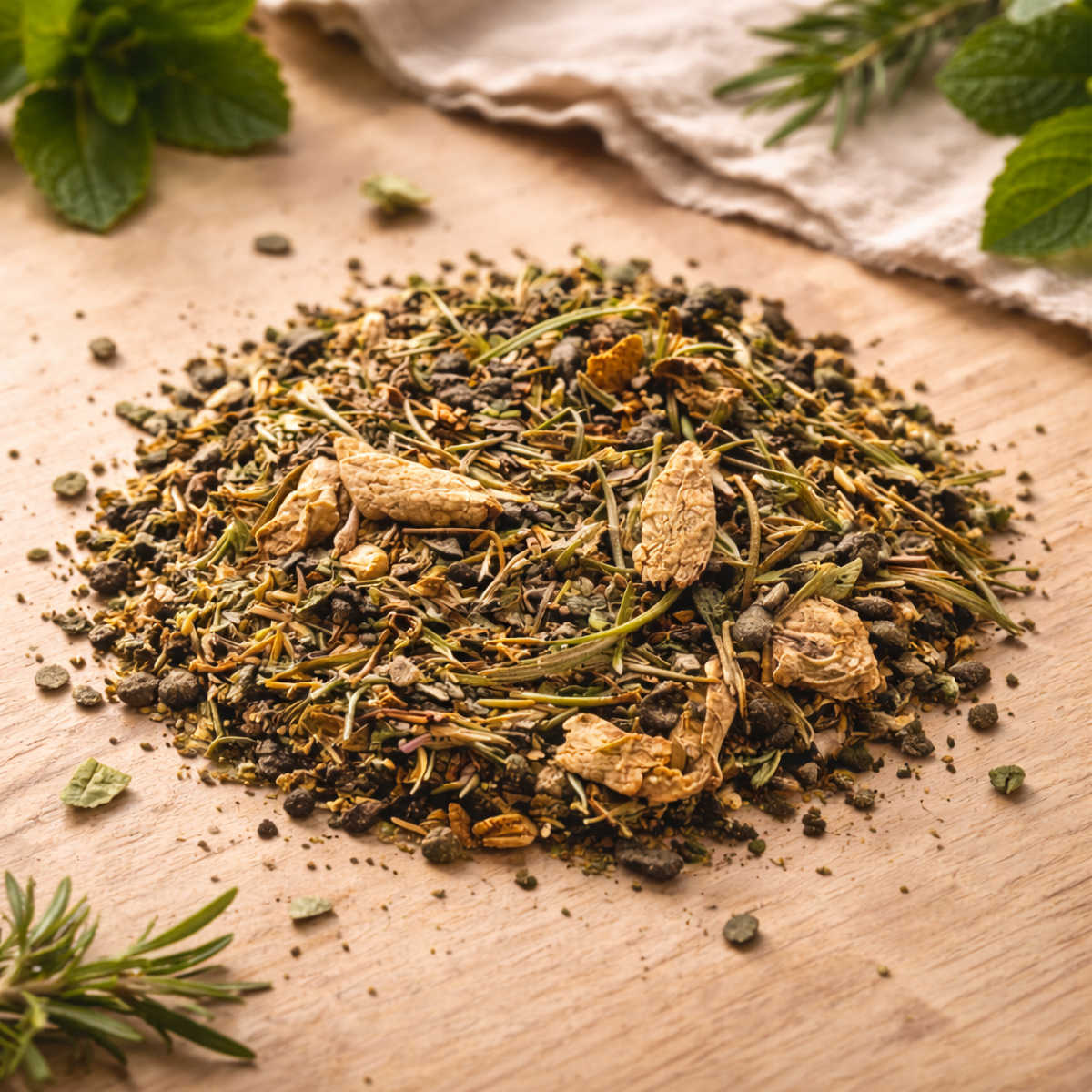
Of the four components, rosemary is the one this article covers in detail, because Apollo is where it has its reference page in the collection. Ginger, green tea, and peppermint, a trio Natublend repeats in Bacchus and Hermes, appear here for the role they play in this particular cup, with links to the articles that tell their stories.
Rosemary
Rosemary gives Apollo the resinous note that opens the cup. Plants of the World Online, the botanical catalog of the Royal Botanic Gardens, Kew, now lists Salvia rosmarinus Spenn. as the accepted name, while the traditional Rosmarinus officinalis L., still common on labels, including Apollo’s, is treated as a synonym (POWO, n.d.). With that change, rosemary moved into the sage genus, within the family Lamiaceae. What goes into the infusion are the needle-thin leaves of a shrub native to the Mediterranean, from Portugal and Morocco to Cyprus, Egypt, and Turkey (POWO, n.d.).
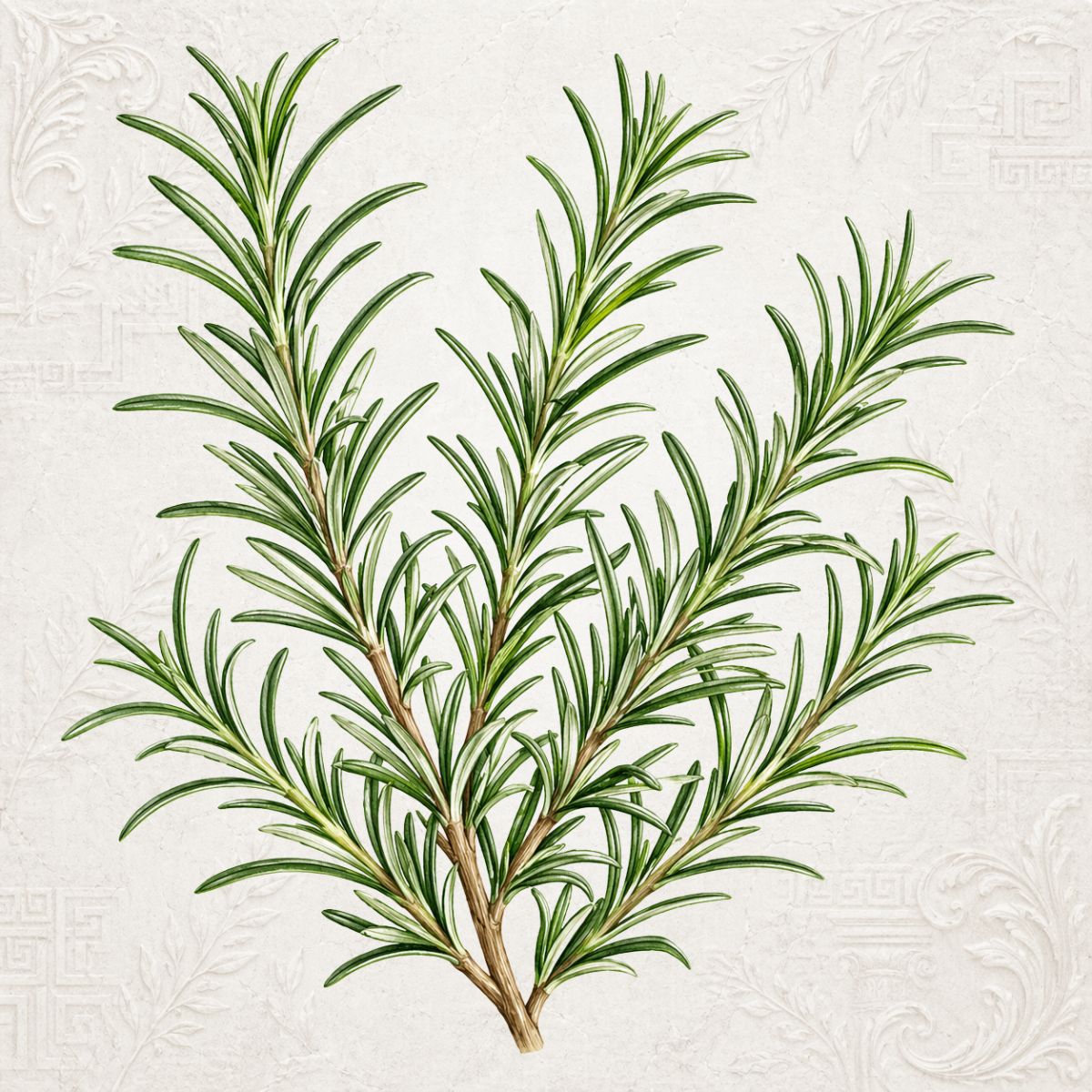
When it comes to flavor, the sensory lexicon for blended teas developed by Kim and colleagues describes rosemary as having a fragrance reminiscent of rose, a menthol-like cooling sensation, a slight pungency similar to that of ginger, and a long finish (Kim et al., 2018), a description that anticipates two of its partners in the tin.
Green Tea
The base of the blend and the source of its caffeine, green tea is the young leaf of Camellia sinensis (L.) Kuntze, of the family Theaceae, heated soon after harvest so that oxidation stops early, which preserves its green color (WSU Extension, n.d.). In Apollo, its job is to give the blend structure, with a light astringency that shows up right after the rosemary and before the ginger steps in. The full story of the plant is told in the Salus Tea article.
Ginger
The blend uses the dried rhizome of ginger, Zingiber officinale Roscoe, of the family Zingiberaceae (POWO, n.d.). In Apollo, it holds the mid-palate, with a pungency that builds slowly and never masks the other ingredients. The lexicon by Kim and colleagues notes that ginger also has a sweet, citrusy, lemony side (Kim et al., 2018), and it is this side that carries the cup from rosemary to peppermint. The rhizome has its own write-up in the Epione Tea article.
Peppermint
Peppermint, Mentha × piperita L., is a natural hybrid of Mentha aquatica and Mentha spicata, from the same Lamiaceae family as rosemary, and it goes into the blend as dried leaf (POWO, n.d.). Its role is to close Apollo, with the refreshing sensation that sensory lexicons call cooling, which here extends the minty trace already hinted at by the rosemary itself. The plant’s journey is told in the Venus Tea article.
Tasting Notes
Aroma of the dry blend. When you open the tin, rosemary usually comes through first, resinous and herbaceous, with peppermint close behind; the green tea and dried ginger stay in the background, like a vegetal base with a faint pungent edge.
Aroma of the infusion. Once it meets hot water, the blend opens up: rosemary stays in front, now joined by the green-leaf and grassy notes typical of green tea, while the ginger begins to reveal its citrusy side.
Color of the infusion. With no flowers or calyces in the formula, the color of Apollo comes from the leaves and the ginger: Natublend describes the infusion as greenish-gold and crystal clear, which in tasters’ terms means a bright, clean, lively cup, a far cry from the dull, lifeless look that tea glossaries consider undesirable (SV Tea, n.d.).
Flavor. The attack is herbal and resinous, led by the rosemary, and right behind it comes the light astringency of green tea, the subtle dryness that tasting glossaries attribute to tannins (SV Tea, n.d.). On the mid-palate, the pungency of the ginger builds little by little, and the finish is minty, with the cooling sensation of peppermint layered over the long aftertaste that is already characteristic of rosemary. The brand’s description makes no mention of sweetness, and it makes sense to taste Apollo straight, with nothing added, to catch the whole sequence.
Body. Light, according to Natublend itself, and fluid enough for the ginger, peppermint, and rosemary to come through in distinct layers instead of merging into a single impression of strong tea.
How to Brew Apollo
Natublend’s recipe for Apollo is short and precise, and it pays to follow it to the letter the first few times before adjusting the steeping time to your own taste.
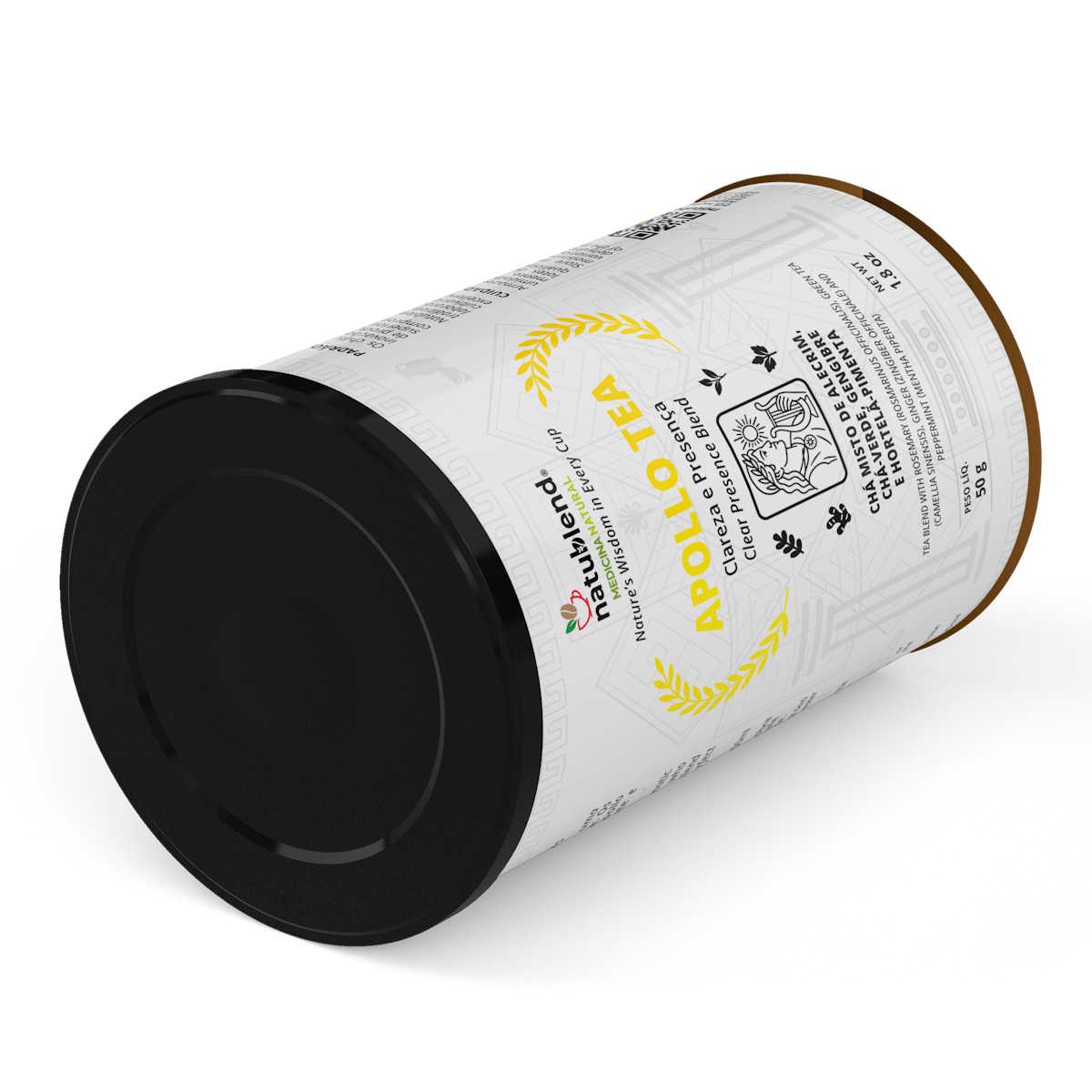
- Heat the water to between 80 and 85 °C, without letting it boil.
- Measure out 2 g of the blend for every 200 ml of water.
- Steep with the cup covered for 3 to 4 minutes.
- Strain and serve unsweetened, as the brand advises.
- If you like, reuse the same measure for one or two more infusions.
The below-boiling temperature follows the logic of green tea, and Natublend itself warns that above 85 °C the infusion turns bitter. The explanation lies in solubility: catechins, responsible for much of the bitterness and astringency of the green leaf, dissolve readily in boiling water and far less in cooler water, whereas amino acids, linked to sweetish and umami flavors, come out almost as well in cold water as in hot (My Japanese Green Tea, n.d.). For the iced version, Natublend calls for 2 g in 200 ml of cold water, left for 6 to 8 hours in the refrigerator.
When Natublend Suggests Serving It
Natublend positions Apollo as a morning tea, for the start of the workday or the first cup of the day, and sums up the idea in a line from the product page: “Apollo doesn’t ask for haste. It asks for intention.” In practice, that intention lies in the brewing itself, which calls for heating the water only to 80 to 85 °C, covering the cup, and counting the minutes, and in the suggestion to drink it without sugar so that the peppermint and rosemary come through in full. The extra infusions from the same measure let you refill the cup, and the brand also presents Apollo as a gift idea.
Because its base is green tea, Apollo contains caffeine, and anyone who also drinks coffee should count both in their daily total; Natublend does not state the amount per cup, which depends on steeping time and temperature. The brand adds that Apollo is not recommended for children under 12 without professional guidance.
Other Blends in the Collection
Apollo is one of the 15 blends in the Wisdom of the Gods collection, and two of them help clarify the role rosemary plays in this cup. Hermes Tea keeps the ginger, green tea, and peppermint but swaps rosemary for hibiscus, so the tasting leaves the resinous register behind and gains acidity and red-fruit notes. Athena Tea takes the opposite route and keeps the rosemary, this time over a black tea base, alongside cloves and erva-doce, a Brazilian name shared by anise and fennel, in a spiced, anise-scented profile.
Frequently Asked Questions
Does Apollo Tea Contain Caffeine?
Yes. The base of the blend is green tea, the leaf of Camellia sinensis, which naturally contains caffeine. Natublend does not state the amount per cup, and it varies with steeping time and temperature.
Can You Make Apollo as an Iced Tea?
You can. Natublend recommends a cold version with 2 g of the blend in 200 ml of cold water, left for 6 to 8 hours in the refrigerator. Without heat, extraction happens slowly, which is why the steeping time stretches from minutes to hours.
Which Foods Pair Well with Apollo?
Since Natublend suggests Apollo for the morning, the clue lies in the rosemary itself, a constant presence in Mediterranean cooking. A savory table set with fresh cheese, olive oil, and sourdough bread goes well with the herbal profile and minty finish of the cup.
Where Does the Name Apollo Come From?
Natublend named the blend in honor of Apollo, the Greek god of music, oracles, and poetry. Apollo, with a double L, is the Latin form of the name, which keeps the double lambda of the Greek Apóllōn and is also the form used in English; in Portuguese, the god is called Apolo. The tribute also appears in the illustration on the tin, which shows the god crowned with laurel beside a lyre and a sun.
This content is informational and describes teas and infusions as foods. It does not replace professional health guidance. Pregnant women, breastfeeding women, children, and people undergoing medical treatment should consult a health professional before adding any infusion to their routine.
References
View All 10 Cited References
Peer-Reviewed Scientific Studies (1)
- PMC2018 KIM et al. A Lexicon for Descriptive Sensory Evaluation of Blended Tea. Preventive Nutrition and Food Science, vol. 23, no. 4, pp. 364-373, 2018. Available at: pmc.ncbi.nlm.nih.gov.
Institutional Sources (1)
- GOV WASHINGTON STATE UNIVERSITY EXTENSION. Tea Types and Home Processing. n.d. Available at: vegetables.wsu.edu.
Supplementary Readings (8)
- UPTON TEA IMPORTS. A Closer Look at the Difference Between Teas, Tisanes and Herbal Infusions. n.d. Available at: uptontea.com.
- THEOI PROJECT. Apollon. Theoi Greek Mythology, n.d. Available at: theoi.com.
- THEOI PROJECT. Apollon Family. Theoi Greek Mythology, n.d. Available at: theoi.com.
- ROYAL BOTANIC GARDENS, KEW. Salvia rosmarinus Spenn. Plants of the World Online (POWO), n.d. Available at: powo.science.kew.org.
- ROYAL BOTANIC GARDENS, KEW. Zingiber officinale Roscoe. Plants of the World Online (POWO), n.d. Available at: powo.science.kew.org.
- ROYAL BOTANIC GARDENS, KEW. Mentha × piperita L. Plants of the World Online (POWO), n.d. Available at: powo.science.kew.org.
- SV TEA. A Tea Taster’s Glossary. n.d. Available at: svtea.com.
- MY JAPANESE GREEN TEA. Bitterness in Green Tea. n.d. Available at: myjapanesegreentea.com.