



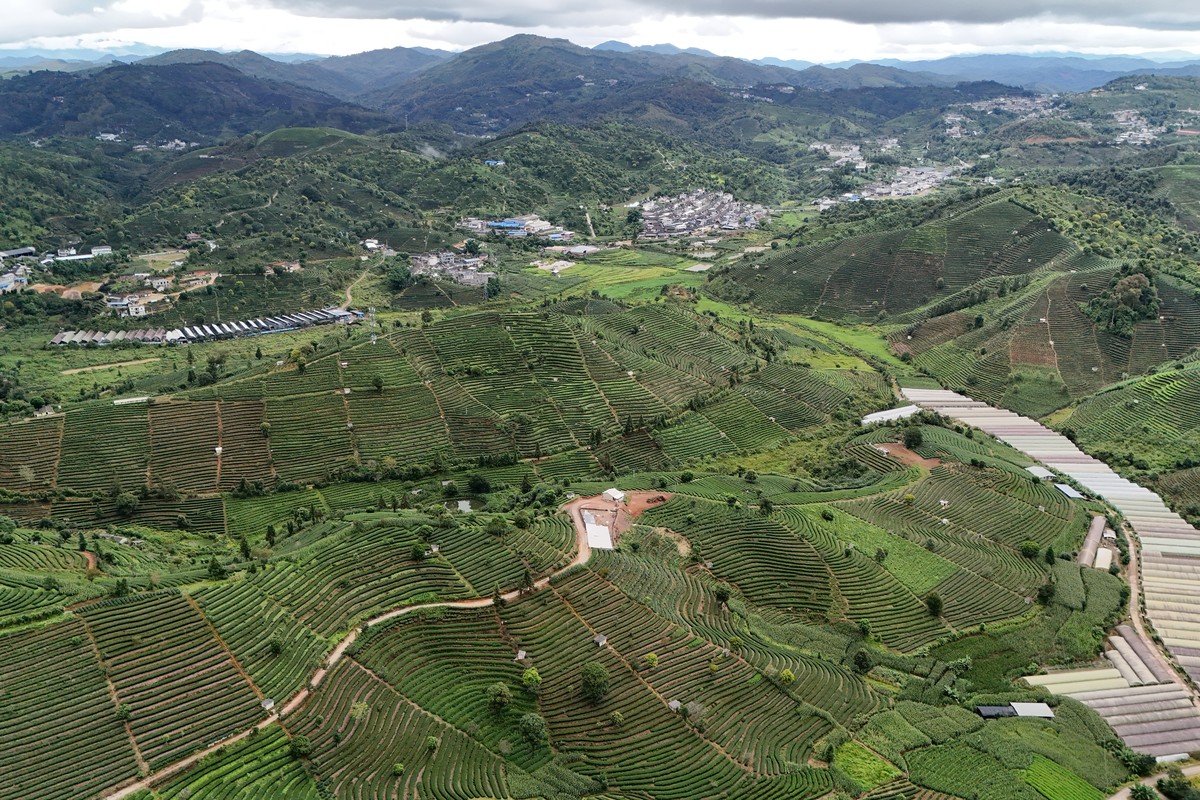
Every cup of black, green or white tea comes from the same plant, Camellia sinensis, an evergreen Asian shrub of the family Theaceae (NLM, 2026). Chamomile, hibiscus and lemongrass, whose infusions are also called tea in Brazil, belong to other species, fall outside the scope of the international standard that classifies tea types (ISO, 2023) and are, strictly speaking, infusions. The distinction may sound like a specialist’s quibble, but it gives shape to the history of tea told here, from the Chinese legend to the tea gardens of Rio de Janeiro and the Ribeira Valley and, finally, to yerba mate, the infusion inherited from the Guarani.
The Origins of Tea in China
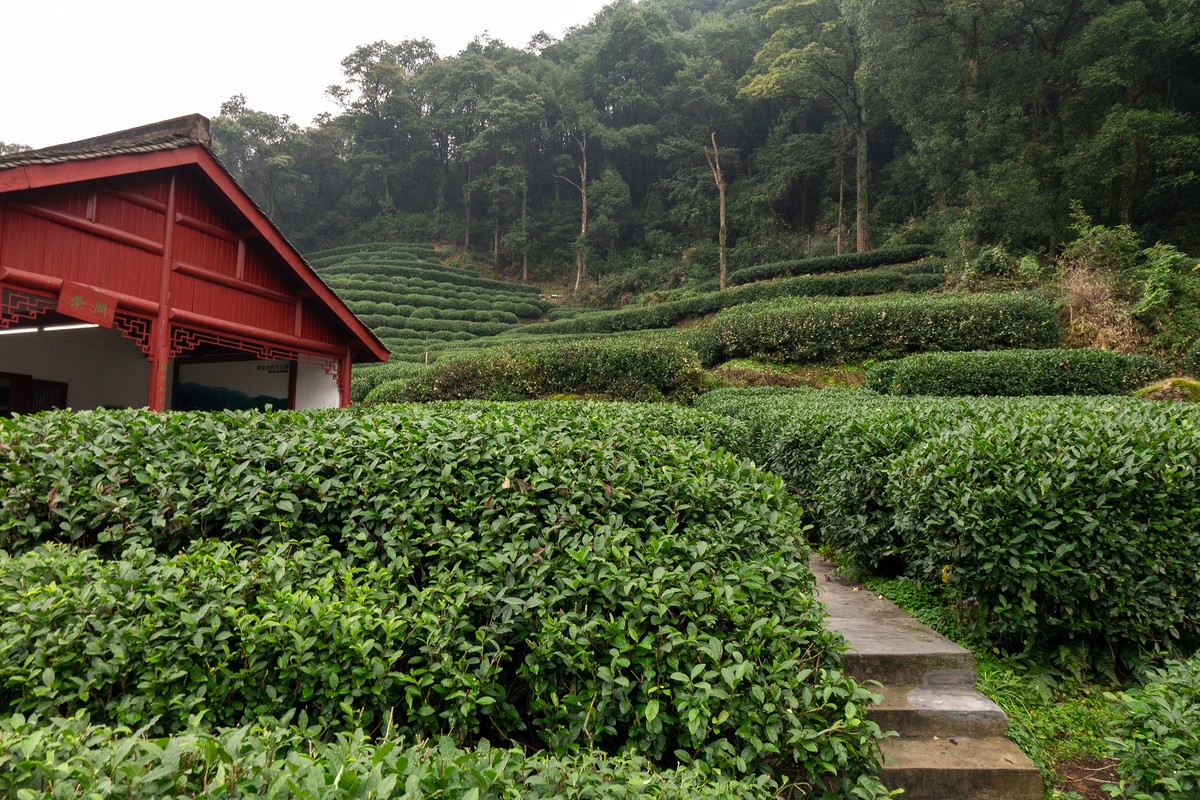
The most widely repeated account of how tea was born is a legend. Around 2737 BC, leaves from a wild plant are said to have fallen by chance into water being boiled for the emperor Shennong, the “Divine Farmer” of Chinese mythology, who supposedly enjoyed the result. The sinologist Victor Mair, of the University of Pennsylvania, writes that there is not a shred of evidence that Shennong ever existed (Mair, 2016).
The link between Shennong and tea is spelled out in the Chájīng (茶經), the “Classic of Tea,” written by Lu Yu in the mid-8th century, some three and a half millennia after the date ascribed to the emperor. Scholars see the connection as a way of giving the drink roots in China’s high antiquity, not as a historical record, and the real achievement of Lu Yu (733-804) lies elsewhere: his book is recognized as the first treatise devoted entirely to tea, from cultivation to preparation (Mair, 2016).
One of the oldest and best-documented pieces of physical evidence came to light in 2016, when researchers from China and from University College London analyzed plant remains from the mausoleum of Emperor Jing of the Western Han dynasty, who died in 141 BC and was buried near present-day Xi’an. Caffeine, calcium oxalate crystals characteristic of the genus Camellia and theanine confirmed that these were tea leaves roughly 2,100 years old, which the authors described as the earliest material record of the drink then known (Lu et al., 2016).
In a 2015 book reviewed by Mair, the historian James A. Benn shows that under the Tang dynasty (618-907) tea went from being mainly a bitter decoction taken as medicine to a refined custom practiced across the whole country, and he sums up the shift in a single line: “tea was essentially a Tang invention” (Mair, 2016). That refinement survives in a complete set of tea utensils in gold and gilded silver, sealed as an imperial offering between 873 and 874 in the crypt of the Famen Temple near Xi’an and uncovered by archaeologists in 1987 (Kan, 2014).
How Tea Spread Across Asia
The same 2016 study identified tea residue in a tomb at Ngari, in western Tibet, dating from the 2nd and 3rd centuries AD, evidence that the leaf was already crossing the Tibetan Plateau toward Central Asia along a branch of the Silk Road. That was centuries before the famous Tea Horse Road, opened in the 7th century, along which Chinese tea was traded for Mongolian and Tibetan horses (Lu et al., 2016).
Korea came to know tea as early as the 7th century, and according to the Samguk sagi, a chronicle from 1145, cultivation began with seeds brought from Tang China in 828. In the Goryeo period (918-1392), tea became central to the culture of the nobility, with a court office dedicated solely to serving it (Song, 2017).
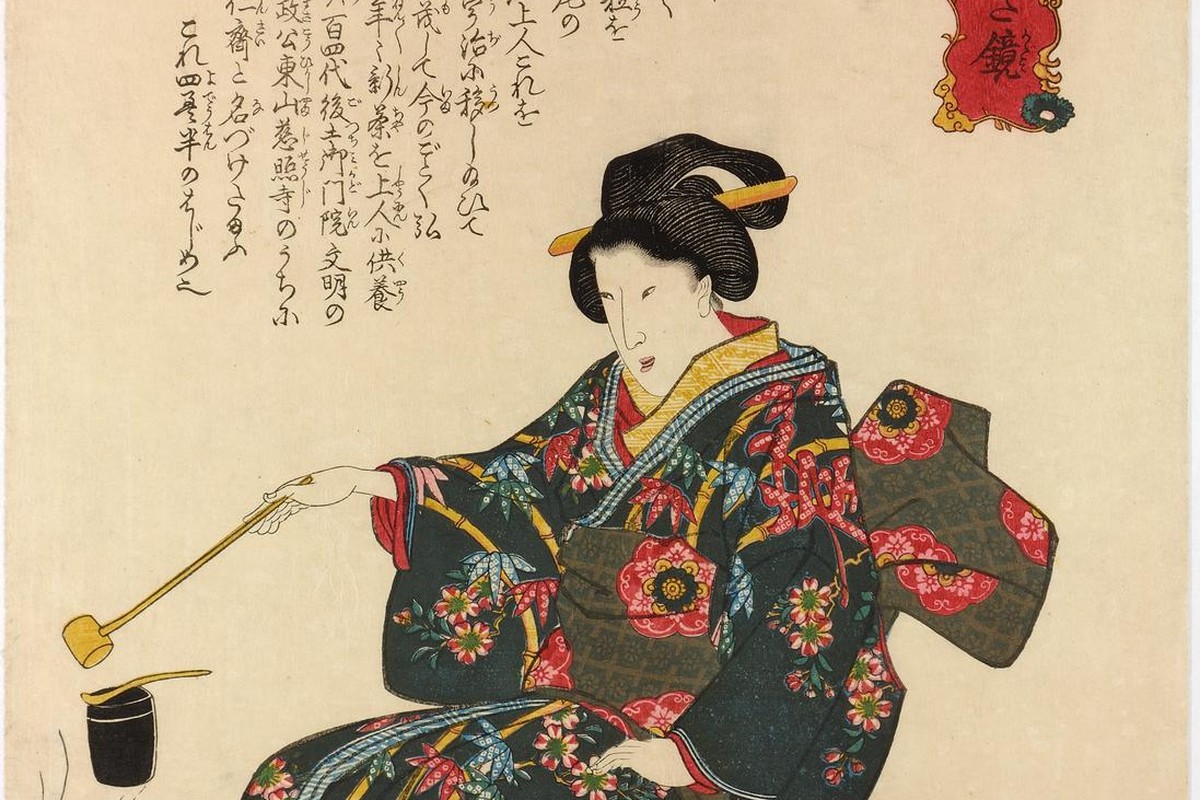
In Japan, tea arrived by way of the monasteries. Chinese Buddhist monks drank it for medicinal purposes and to ward off sleep during meditation, and Kūkai, a Japanese monk who had studied in China, returned in 806 with a block of green tea for the court (Seco, 2021). The decisive step came in 1191, when the Zen monk Myōan Eisai (1141-1215), founder of the Rinzai school, came back from China with tea seeds and the method for preparing powdered green tea, matcha, and later wrote the Kissa Yōjōki, a central work in the tea culture of the Japanese archipelago (Seco, 2021; Mair, 2016).
The tea ceremony, chanoyu, was codified in the 15th and 16th centuries by masters such as Murata Shukō (1423-1502), who championed simplicity, and Takeno Jōō (1502-1555), who brought in the aesthetic of wabi, a rustic and humble beauty. Sen no Rikyū (1522-1591), regarded as the father of the modern ceremony, joined wabi with sabi and standardized the design of the tea house, the procedures and the utensils still in use today, and his Taian tearoom, built in 1582, survives near Kyoto (Seco, 2021).
Tea Arrives in Europe
Tea’s sea route passed first through Portuguese hands. From 1557 the Portuguese held a trading base in Macau, granted by the Ming dynasty, from which they shipped gold, musk, pearls, porcelain and silk to Goa and Lisbon, along with tea, which held particular interest for Europeans (Cartwright, 2021). The Dutch turned the leaf into a business, and in the early 17th century ships of the Dutch East India Company, the VOC, brought the first green tea leaves to Amsterdam (Wikipedia, 2026a). The most commonly cited date is 1610, for a cargo that sailed from the Japanese trading post of Hirado, but the source we consulted that gives the date so precisely, an Amsterdam antiques gallery, cites no document from the period (Aronson, 2026).
In England, tea was already circulating before the English East India Company began ordering it. On September 25, 1660, the diarist Samuel Pepys wrote that he had sent for “a cup of tee (a China drink),” something he had never tasted before (UKTIA, 2026a). The date debunks one of the most often told stories about English tea, that the Portuguese princess Catherine of Braganza brought it to the country, where she arrived on May 13, 1662, to marry Charles II. According to the UK Tea & Infusions Association, the British industry body, it is not true that she introduced tea, although she did help make it fashionable, first at court and then among the aristocracy (UKTIA, 2026a). The question is still debated, and a 2021 academic article by Susana Varela Flor critically reexamines the primary sources that link the queen to tea in Stuart England (Flor, 2021).
The Company, which since 1600 had held the monopoly on British trade with the East Indies, placed its first order in 1664, for 100 pounds of tea from China, and that monopoly, combined with heavy taxes, kept the product expensive and fueled smuggling (UKTIA, 2026b). In 1773, to rescue the debt-ridden Company, Parliament passed the Tea Act, which allowed it to sell tea directly to the American colonies through its own agents, bypassing local merchants, in a market subject to a duty of 3 pence per pound (UKTIA, 2026c).
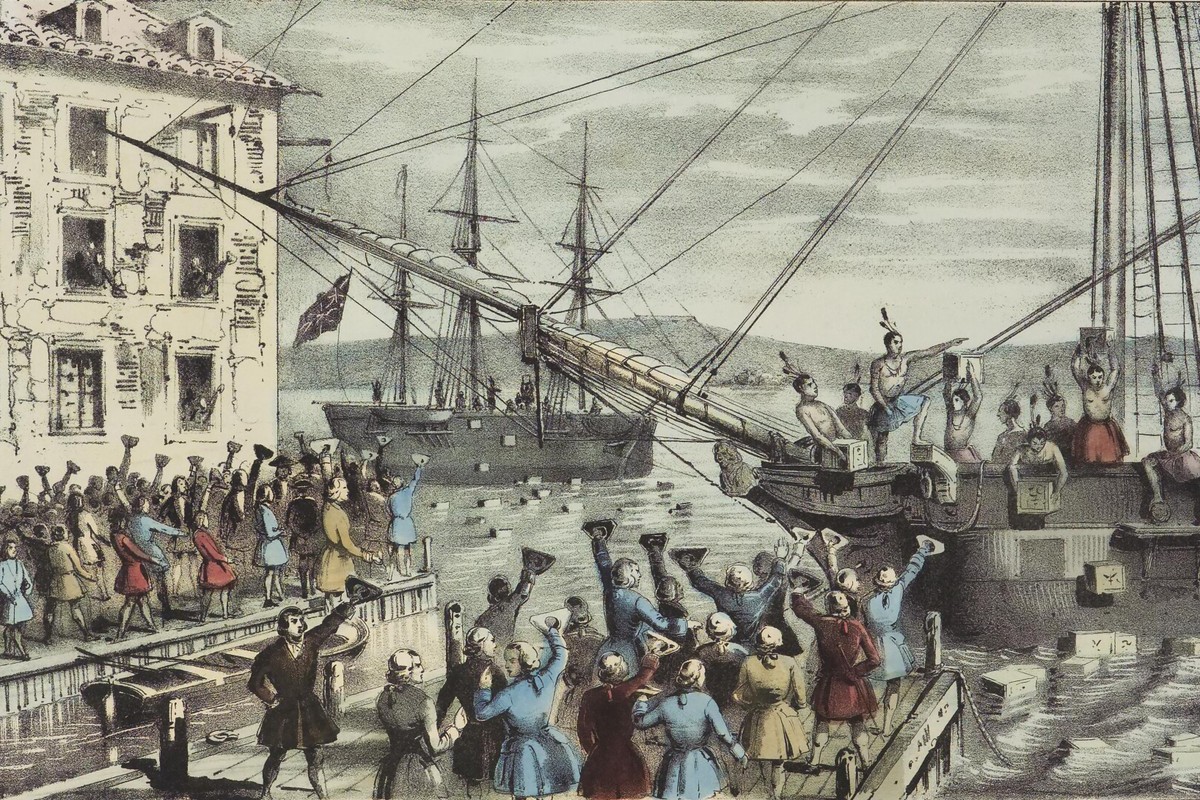
The response came on the night of December 16, 1773, when colonists boarded three ships in Boston Harbor and threw the Company’s tea overboard, 342 chests by the most widely cited count, in protest against a tax passed by a Parliament in which the colonies had no representation. London retaliated in 1774 by closing the port until the tea was paid for, and the episode, the Boston Tea Party, is seen as one of the direct triggers of the American Revolution (NPS, 2025).
Afternoon tea belongs to the Victorian era, and tradition credits it to Anna Maria Russell, the seventh Duchess of Bedford, who around 1841 began calling for tea and a light snack in mid-afternoon to bridge the long gap until dinner, a habit that became established from the 1860s onward (UKTIA, 2026d). The attribution is contested, and the historian Julia Skinner allows that the meal may have existed before the duchess or that she simply formalized an informal custom (Wikipedia, 2026b).
Tea in Brazil: Documented, Then Forgotten
João VI and the First Tea Gardens of Rio de Janeiro
Tea reached Brazil with the Portuguese court. On June 13, 1808, the Prince Regent Dom João, the future João VI, ordered the creation of an Acclimatization Garden in Rio de Janeiro, which in 1811 would become the Botanical Garden, and tea was introduced there in 1810, according to the researcher Marcelo Alves Cerdan of São Paulo State University (Unesp). The Count of Linhares suggested hiring 2,000 Chinese laborers to work the crop, but in the end around 400 came (Cerdan, 2019). The sources disagree, putting the Chinese contingent anywhere between 100 and 400 people and the year of introduction between 1808 and 1814, and no document from the period located for this article settles the question. The closest firsthand account is that of the British traveler Maria Graham, who in the 1820s noted that the king had intended the garden, above all, for tea, which he had sent for from China (Cerdan, 2019).
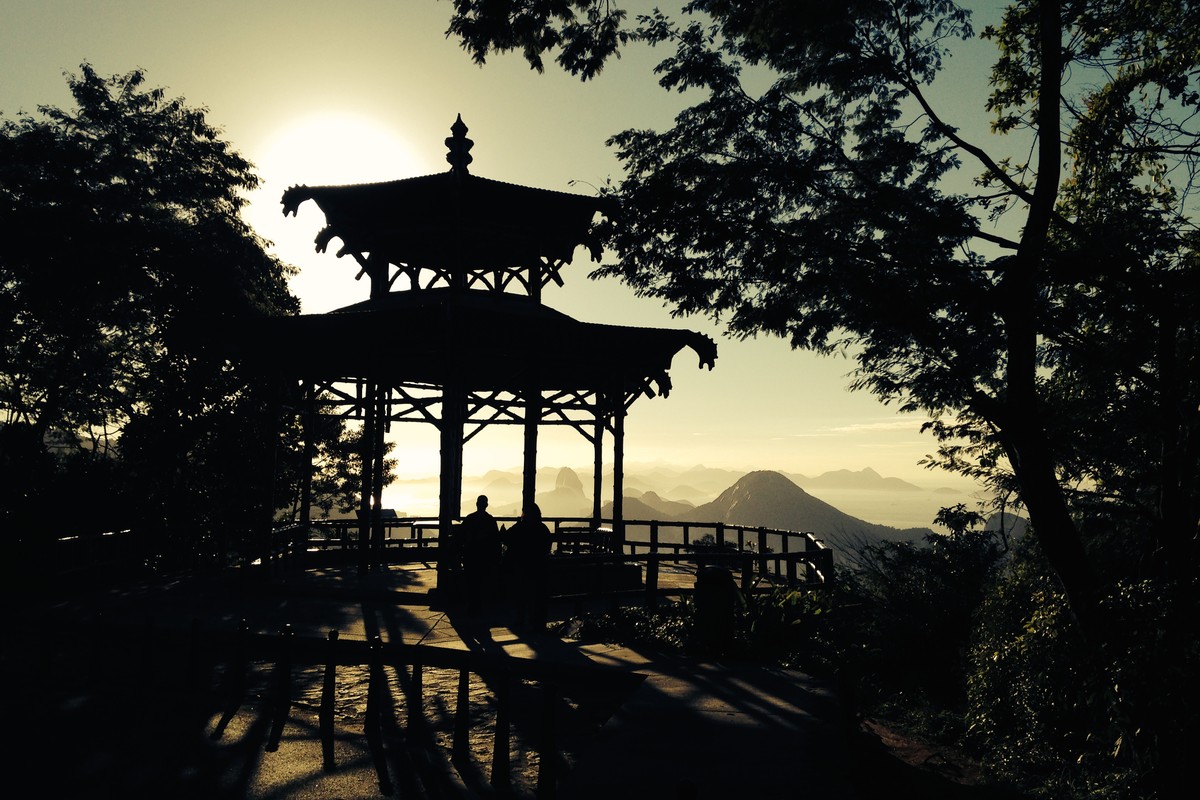
Dom João exempted materials for tea growing from customs duties and created medals for tea growers, but the crop lost its main backer when he returned to Portugal in 1821. Friar Leandro do Sacramento, director of the Botanical Garden from 1824, resumed the trials and sent seeds to other provinces, and in 1825 the painter Johann Moritz Rugendas recorded some 6,000 bushes along the shores of the Rodrigo de Freitas Lagoon (Cerdan, 2019). The Chinese presence left its mark on Rio’s landscape: the Vista Chinesa (“Chinese View”) lookout, in the Tijuca Forest, was built in 1903 in honor of the Chinese who came to grow tea (Diário do Rio, 2026).
São Paulo’s Brief 19th-Century Tea Boom
In São Paulo, surveys from 1851 and 1852 counted between 32 and 37 tea factories in towns such as Atibaia, Itu, Porto Feliz and São Roque. The province exported 3,209 arrobas of tea (the arroba being an old Portuguese unit of about 15 kilograms) in 1857/1858, but by 1862/1863 the product no longer had any recorded value as coffee surged, and in 1873 only Itu still appeared as a producer in the provincial almanac (Cerdan, 2019). An unpublished 1955 thesis, cited by researchers at the Federal University of Minas Gerais (UFMG), offers data that still need confirmation: Brazilian tea reportedly took second place at an exhibition in Vienna in 1873, and production supposedly fell to negligible levels after the abolition of slavery in 1888 (Paganini-Costa and Carvalho-da-Silva, 2011).
The Ribeira Valley and Its Japanese Heritage
The most enduring chapter was written by Japanese immigrants, starting with the planned settlement of the Ribeira Valley (Vale do Ribeira), launched in 1912 and 1913. Registro is recognized as Brazil’s first planned Japanese colony to become firmly established and was chosen in 1918 as the headquarters of the company that ran the settlement of the region (Aoki and Lima, 2011). The town’s tea pioneer was the immigrant Torazo Okamoto, who planted the first seeds (Aoki and Lima, 2011), and the story that he brought Assam seedlings from Sri Lanka in 1913 comes from a news report by the São Paulo State Legislative Assembly and is not confirmed in the academic sources consulted (Alesp, 2023).
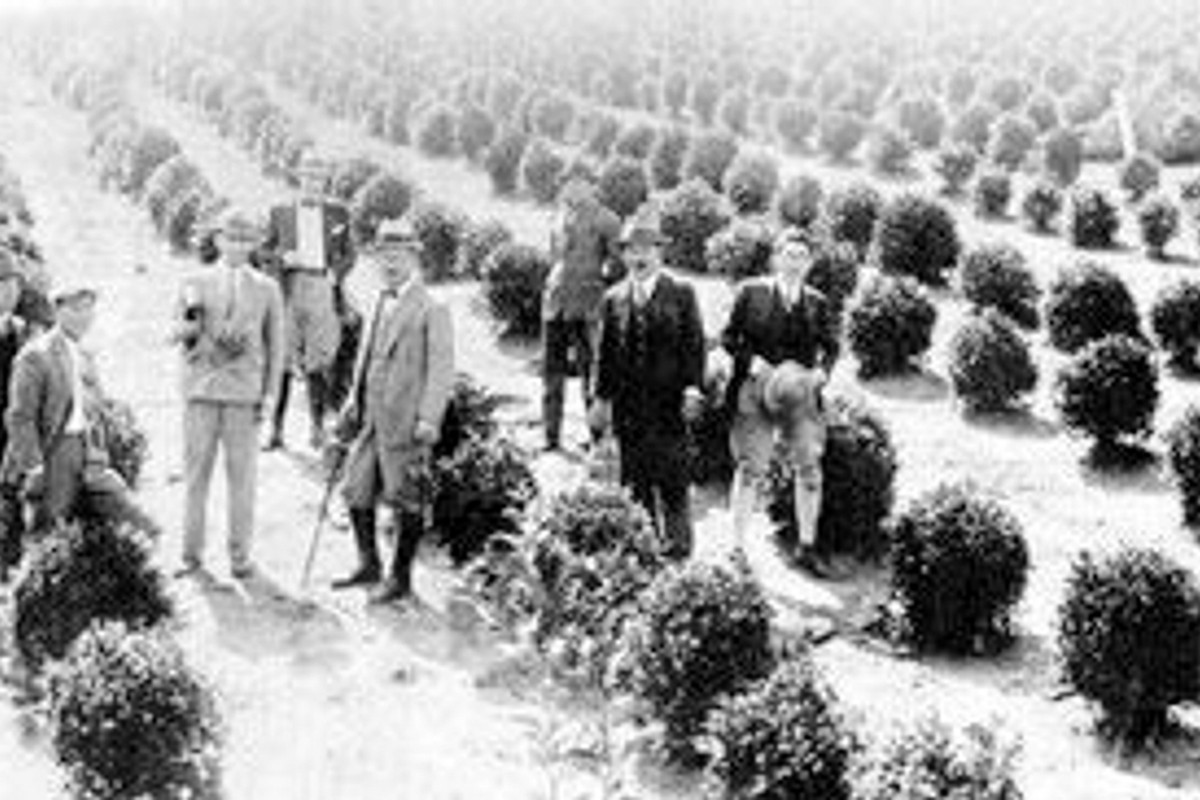
The first trials date from 1918, but commercial cultivation took off in the 1930s, after coffee collapsed in the region, and reached export markets in 1960. Ten years later, Registro was producing 7 million kilograms of tea, against 2.4 million kilograms of hearts of palm and 800,000 kilograms of rice (Aoki and Lima, 2011). Between 1930 and 1990, tea growing in the valley involved more than 1,500 producers, covered some 5,000 hectares and supplied seven factories (Resende et al., 2024). According to the São Paulo State Legislative Assembly, the town pioneered black tea production in Latin America and exported about 90% of its historical output, and a 1984 state law named it the State Capital of Tea (Alesp, 2023).
A Nearly Forgotten Chapter
The decline came in the 1990s, driven by crop management problems and, above all, by an unfavorable exchange rate that priced exports out of the market (Resende et al., 2024), as well as by competition from countries such as Argentina (Alesp, 2023). The Agrochá factory, which at one point sold nearly 60% of its output to the United Kingdom, closed in 2000 (Aoki and Lima, 2011). In the data series of IBGE, Brazil’s national statistics agency, however, the collapse in harvested volume only shows up after the turn of the century: Registro’s harvest still totaled about 24,000 metric tons of fresh-plucked tea leaf in 1990 and almost 25,900 in 2000, but fell to 450 metric tons in 2015 and stayed at around 150 metric tons a year between 2019 and 2024, a drop of more than 99% (IBGE, 2026).
Even so, the town exported more than US$68 million worth of tea between 1997 and 2023, although bananas and hearts of palm have taken over the lead in local agriculture (Alesp, 2023). Some families have gone back to the crop, such as the Yamamaru family, who returned to tea in 2014 with an agroforestry system (CNA, 2023). According to a report by the Brazilian broadcaster Band, commercial production of true tea in the country is now in the hands of three families and one family business, all of Japanese descent and based in rural São Paulo state, and the Brazilian Tea Association estimates the cultivated area at about 218 hectares, yielding 1,800 metric tons a year (Band, 2024).
Tea or Infusion? The Difference Lies in the Plant
In Brazil, almost any drink made by steeping a plant in hot water is called “chá,” much as English speakers talk about herbal tea, but the ISO 20715:2023 standard, which classifies tea types, is based exclusively on the processing of Camellia sinensis leaves and excludes infusions of other plants and of fruit from its scope (ISO, 2023).
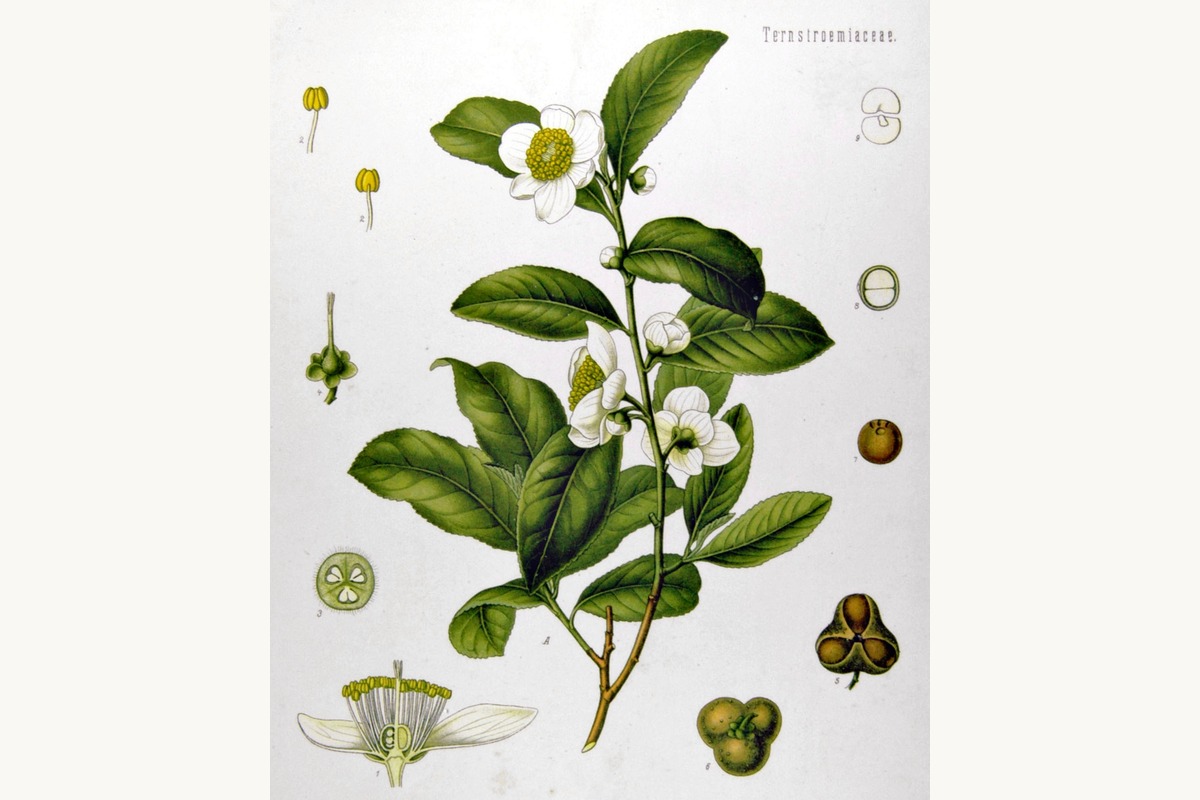
In the specialty trade, three terms are commonly kept apart, as in the glossary of the American importer Upton Tea Imports: tea is the drink made from processed, dried leaves of Camellia sinensis; an herbal infusion uses parts of other plants and may contain caffeine, as with guarana, guayusa and yerba mate; and a tisane is a caffeine-free plant infusion (Upton Tea Imports, 2024). In India, the distinction carries the force of law: in December 2025, the country’s food safety authority, the FSSAI, reminded businesses that India’s 2011 regulations reserve the term “tea” for drinks made from Camellia sinensis, and classified products sold as flower, hibiscus or rooibos tea as misleading labeling (Business Standard, 2025). That is why, in this article, tea always means Camellia sinensis and other plants appear as infusions, a botanical distinction that implies no judgment of quality.
The Six Types of True Tea
The ISO standard recognizes six types of tea, all from the same plant and distinguished by processing: black, dark (a category that includes pu-erh), green, oolong, white and yellow (ISO, 2023). A 2022 review in the Journal of Food Science identifies oxidation as the central factor, since green tea undergoes minimal oxidation and retains many of the leaf’s original catechins, oolong sits somewhere in between and black tea is extensively oxidized (Wong et al., 2022). In professional tasting, oxidation is estimated to be minimal in green and white teas, between 10% and 80% in oolong and nearly complete in black tea, while pu-erh also goes through microbial fermentation and can be aged for decades (Professional Tea Taster, 2026).
Popular Infusions and Their Scientific Names
For the infusions most often drunk in Brazil, common names tend to muddy the waters, and the scientific name clears things up:
- Chamomile (Matricaria chamomilla L.): the name accepted by the Royal Botanic Gardens, Kew, which treats Matricaria recutita as a synonym (Kew, 2026a).
- Ginger (Zingiber officinale Roscoe): native to a range stretching from the eastern Himalayas to south-central China (Kew, 2026d).
- Hibiscus (Hibiscus sabdariffa L.): also known as roselle (vinagreira in Brazil), it has its scientific name recorded in the International Plant Names Index on the basis of the description published by Linnaeus in 1753 (IPNI, 2026).
- Lemon balm (Melissa officinalis L.): also called melissa, it belongs to the family Lamiaceae and is native to the region stretching from the Mediterranean to Central Asia, and in Brazil its common name, erva-cidreira, is shared with lemongrass and other plants, although it is a different species (Kew, 2026c).
- Lemongrass (Cymbopogon citratus (DC.) Stapf): known in Brazil as capim-limão or capim-santo and, in many regions, as erva-cidreira, it is native to southern India and Sri Lanka (Kew, 2026b).
- Mint (genus Mentha L.): comprises 18 to 24 species, depending on the source, and the ones most used in infusions are spearmint (Mentha spicata) and peppermint (Mentha × piperita) (Kew, 2026e).
Yerba Mate, a Guarani Legacy
By the same criterion, the leaf drink most deeply rooted in southern Brazil is not tea either. Yerba mate, Ilex paraguariensis A.St.-Hil., belongs to the family Aquifoliaceae and is native to an area stretching from Brazil to northeastern Argentina, as well as Paraguay and Uruguay (Kew, 2026f). Like guarana, it is a caffeinated herbal infusion (Upton Tea Imports, 2024).
From the Guarani to the Jesuit Missions
Drinking yerba mate is considered a direct legacy of the Guarani, who lived in the basins of the Paraná, Paraguay and Uruguay rivers and valued the plant as currency in certain contexts, as food and as an object of worship (National Geographic Brasil, 2023). Before the Spanish conquest, its consumption served a ritual function under the control of shamans (Mayer, 2019).
The origin of the bomba (bombilla in Spanish), the filtered straw used to sip chimarrão, southern Brazil’s hot mate, divides the sources. One common version traces it to the tacuapi, a perforated bamboo straw the Guarani used to drink the infusion from gourds (National Geographic Brasil, 2023). The researcher Ricardo da Silva Mayer, after reviewing accounts by Jesuits and travelers, mostly from the 18th century, proposes a different reading, in which today’s way of drinking mate is the product of hybridization between Indigenous traditions and solutions devised by the colonizers (Mayer, 2019).
The Jesuits tried to ban its consumption among Indigenous people in the 17th century but backed down around 1630, and the yerba mate trade became one of the missions’ main economic activities (National Geographic Brasil, 2023). The missionaries also began cultivating yerba mate groves near the reductions, though the date of the first plantings varies from study to study, from 1610 to 1660 (Vegro, 1994; Mayer, 2019). The trade gave the missions a near monopoly in the markets of Asunción, Buenos Aires and Montevideo and made the drink cheaper throughout the Spanish colonies, until the expulsion of the Jesuits, decreed in 1767 and carried out in 1768, returned the activity to wild harvesting (Vegro, 1994; Museu das Missões, n.d.).
Chimarrão and Tereré
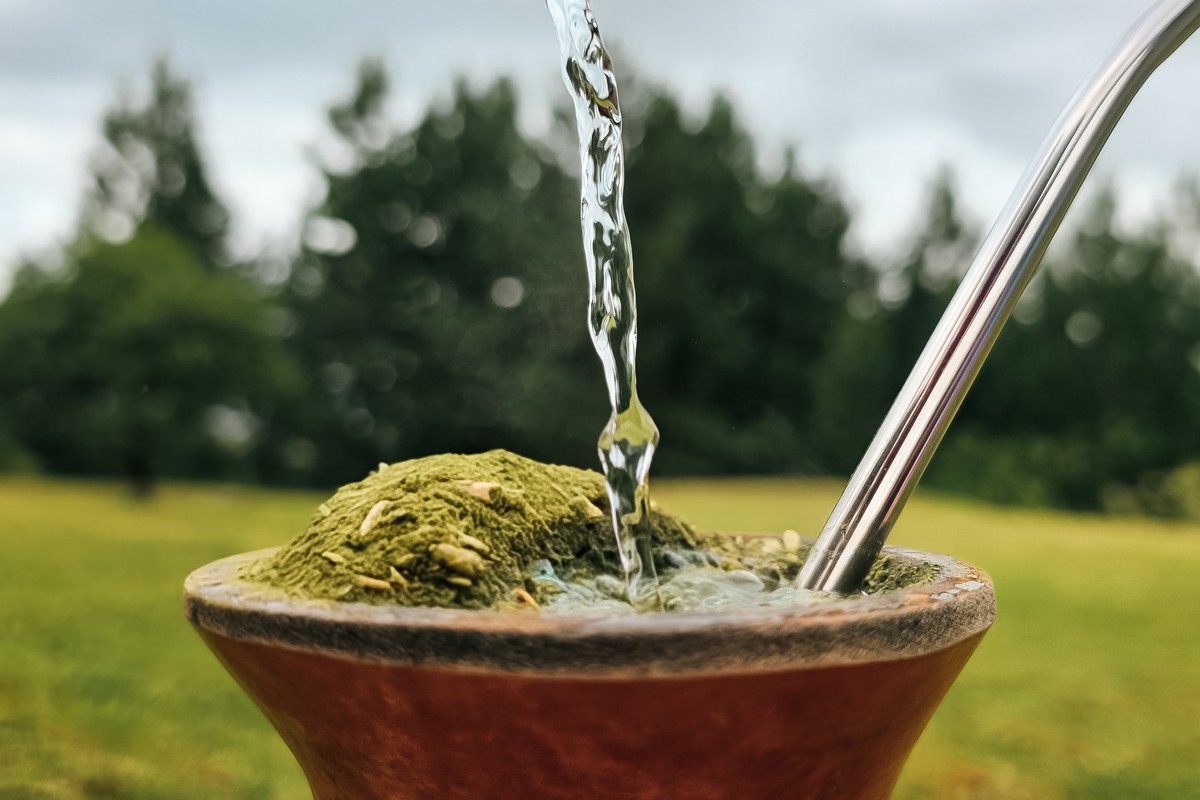
The same leaf gives rise to two rituals. Chimarrão, common in southern Brazil and Uruguay, is made with hot water, at around 70 °C (158 °F), in a cuia, a vessel made from a porongo gourd or from the fruit of the calabash tree, and sipped through the bomba. Tereré, popular in Mato Grosso do Sul and Paraguay, calls for cold water, a coarser grind of yerba and often lime and mint, and is served in a guampa, a cup usually made of horn (Band, 2025). The word tereré comes from Guarani and means “cold-water mate,” and in Mato Grosso do Sul the Paraguayan influence arrived mainly across the border between Ponta Porã and Pedro Juan Caballero (Lima, Pereira and Barros, 2024).
Heritage and Economy
In 2020, UNESCO added to its Representative List of the Intangible Cultural Heritage of Humanity the practices and traditional knowledge of tereré, the ancestral Guarani drink of Paraguay, in the culture of Pohã Ñana, following a nomination by Paraguay, which means the recognition belongs to Paraguayan tereré and not to chimarrão (UNESCO, 2020). In Brazil, Rio Grande do Sul registered its first intangible cultural heritage in June 2023, the Cultural and Socio-Environmental System of Traditional Yerba Mate (Tkatch, 2023), and that same month Mato Grosso do Sul declared tereré part of the state’s cultural and intangible heritage (Rosel, 2023).
In economic terms, the harvest of native yerba mate brought in R$589.6 million (Brazilian reais) in 2023, the second-highest value among non-timber plant extraction products after açaí, with 87% of the volume coming from Paraná, although IBGE points out that the largest volumes now come from cultivated plantations, which are measured in a separate survey (IBGE, 2024). In 2019, Brazil was the world’s largest producer, but Argentina led exports by value, since most Brazilian yerba mate stays in the domestic market (Favaretto et al., 2023).
From Leaf to Cup With Natublend’s Curated Blends
Natublend’s curated selection brings together fifteen signature blends named after deities from Greco-Roman mythology: Apollo, Ares, Athena, Aurora, Bacchus, Epione, Gaia, Harmonia, Hermes, Hestia, Hypnos, Iaso, Salus, Venus and Zeus. The names are a brand identity choice and have no historical connection to the drink, which the Greeks and Romans never knew and which only reached Europe with the sea voyages of the 16th and 17th centuries. Each blend starts from a theme and a time of day, with a sensory profile of its own.
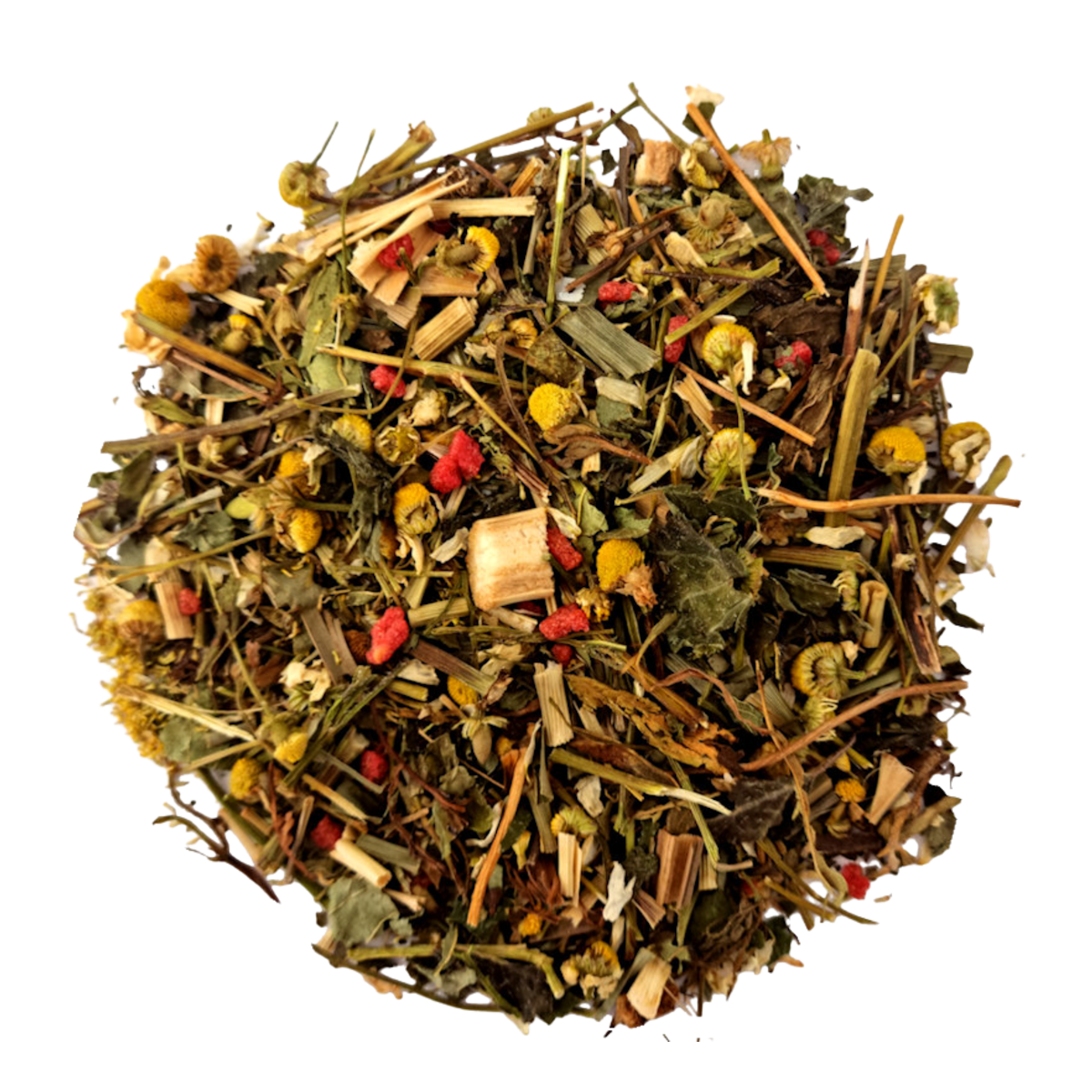
True to the distinction between tea and infusion, the range brings both families of drink together. Some blends contain Camellia sinensis leaves and are tea in the technical sense: Athena has a black tea base with anise (Pimpinella anisum), cloves and rosemary, while Ares and Aurora start from white tea, the first with cloves, ginger and peppermint, the second with chamomile, hibiscus and jasmine. Others leave out the tea leaf and are infusions, such as Harmonia, with jasmine, lemon balm (Melissa officinalis), lemongrass and peppermint; Hypnos, with chamomile, lavender, lemon balm and raspberry; and Zeus, a minty blend of chamomile, jasmine, lemongrass and peppermint.
Each blend is built around an intended moment of use, not a promised effect. Athena, full-bodied thanks to its black tea base, was designed to keep you company through hours of study and work, Hestia for the pause after a meal and Hypnos, which contains no tea leaf, for the end-of-day ritual. The full collection, with the ingredients of every blend, is on Natublend’s premium teas and infusions page.
Frequently Asked Questions
Do Green Tea and Black Tea Come From the Same Plant?
Yes. Both come from Camellia sinensis, as do dark, oolong, white and yellow teas, and what changes is the processing, above all the degree of oxidation (ISO, 2023; Wong et al., 2022).
Is Chamomile a Tea?
In everyday speech, yes. By the technical criterion of the ISO 20715:2023 standard, no, because chamomile (Matricaria chamomilla) does not come from Camellia sinensis and is therefore an infusion (ISO, 2023; Kew, 2026a).
Did Emperor Shennong Discover Tea?
That is a legend. There is no evidence that Shennong ever existed, and one of the oldest physical records of tea, the leaves from the mausoleum of Emperor Jing of the Han dynasty, is about 2,100 years old (Mair, 2016; Lu et al., 2016).
Did Catherine of Braganza Bring Tea to England?
No. Samuel Pepys mentioned a cup of tea in his diary in 1660, two years before Catherine arrived, and according to the British industry association her role was to help make the drink fashionable at court, a point historians still debate (UKTIA, 2026a; Flor, 2021).
Does Brazil Grow Real Tea?
Yes, on a small scale. Commercial production of Camellia sinensis is concentrated among a few families of Japanese descent in rural São Paulo state, especially in the Ribeira Valley, and covers about 218 hectares (Band, 2024).
Is Yerba Mate a Tea?
Technically, no. Yerba mate (Ilex paraguariensis) is a caffeinated herbal infusion, like guarana (Kew, 2026f; Upton Tea Imports, 2024).
References
View All 48 Cited References
Peer-Reviewed Scientific Studies (3)
- PMC2016 LU, Houyuan et al. Earliest tea as evidence for one branch of the Silk Road across the Tibetan Plateau. Scientific Reports, vol. 6, art. 18955, 7 Jan. 2016. Available at: pmc.ncbi.nlm.nih.gov.
- PMC1925 WONG, M.; SIRISENA, S.; NG, K. Phytochemical profile of differently processed tea: A review. Journal of Food Science, vol. 87, no. 5, pp. 1925-1942, 2022. DOI 10.1111/1750-3841.16137. Available at: pubmed.ncbi.nlm.nih.gov.
- DOI2000 FAVARETTO, Leticia; FAVARETTO, Juliana; LISBINSKI, Fernanda Cigainski; CORONEL, Daniel Arruda. Desempenho dos principais estados brasileiros exportadores de erva-mate (2000-2020). Gestão & Regionalidade, vol. 39, e20237824, 2023. Available at: doi.org.
Institutional Sources (9)
- GOV2026 NATIONAL LIBRARY OF MEDICINE. MeSH Descriptor Data: Camellia sinensis (D028241). Bethesda: National Library of Medicine, National Institutes of Health, 2026. Available at: meshb.nlm.nih.gov.
- GOV2014 KAN, Shuyi. Secrets of the Fallen Pagoda: Uncovering a 1000-Year-Old Treasure Trove. BeMuse, Singapore, National Heritage Board, vol. 7, no. 2, Apr./June 2014. Available at: roots.gov.sg.
- GOV2025 NATIONAL PARK SERVICE. Boston Tea Party 250. Boston National Historical Park, updated 7 Mar. 2025. Available at: nps.gov.
- GOV2023 ASSEMBLEIA LEGISLATIVA DO ESTADO DE SÃO PAULO. O chá dos chás: conheça Registro, capital paulista da bebida. São Paulo, 21 Aug. 2023. Available at: al.sp.gov.br.
- GOV1613 INSTITUTO BRASILEIRO DE GEOGRAFIA E ESTATÍSTICA. Produção Agrícola Municipal: Tabela 1613. Chá-da-índia (folha verde), municipality of Registro (SP), series 1990-2024. Rio de Janeiro: IBGE, Sidra, 2026. Available at: sidra.ibge.gov.br.
- GOV1994 VEGRO, Celso Luis Rodrigues. Mercado de erva-mate no Brasil: história, situação e perspectivas. Informações Econômicas, São Paulo, Instituto de Economia Agrícola, vol. 24, no. 12, Dec. 1994. Available at: iea.agricultura.sp.gov.br.
- GOV MUSEU DAS MISSÕES. História missioneira em tópicos: parte 2. São Miguel das Missões: Instituto Brasileiro de Museus, [n.d.]. Available at: museudasmissoes.museus.gov.br.
- GOV2020 UNESCO. Practices and traditional knowledge of Terere in the culture of Pohã Ñana, Guaraní ancestral drink in Paraguay. Intangible Cultural Heritage, element 01603, 2020. Available at: ich.unesco.org.
- GOV2023 INSTITUTO BRASILEIRO DE GEOGRAFIA E ESTATÍSTICA. Produção da Extração Vegetal e da Silvicultura 2023 (PEVS 2023): informativo. Rio de Janeiro: IBGE, 2024. Available at: biblioteca.ibge.gov.br.
Supplementary Readings (36)
- 2023 INTERNATIONAL ORGANIZATION FOR STANDARDIZATION. ISO 20715:2023. Tea: classification of tea types. Geneva: ISO, 2023. Available at: iso.org.
- 2015 MAIR, Victor H. Review of: BENN, James A. Tea in China: A Religious and Cultural History. Honolulu: University of Hawai’i Press, 2015. Journal of Chinese Studies, Hong Kong, no. 63, pp. 308-316, July 2016. Available at: cuhk.edu.hk.
- 2017 SONG, In-Hee. Celadon Wares and Tea Culture. Cleveland Art, Cleveland Museum of Art, July/Aug. 2017. Available at: clevelandart.org.
- 2021 SECO, Irene. How samurai, statesmen, and scholars shaped the Japanese tea ceremony. National Geographic, 18 Nov. 2021. Available at: nationalgeographic.com.
- 2021 CARTWRIGHT, Mark. Portuguese Macao. World History Encyclopedia, 21 June 2021. Available at: worldhistory.org.
- 2026 HISTORY of tea. In: WIKIPEDIA: the free encyclopedia. Accessed Oct. 2026. Available at: en.wikipedia.org.
- 2026 ARONSON ANTIQUAIRS OF AMSTERDAM. D2113. Blue and White Tea Canister. Amsterdam, [n.d.]. Accessed 2026. Available at: aronson.com.
- 2026 UK TEA & INFUSIONS ASSOCIATION. Catherine of Braganza. London: UKTIA, [n.d.]. Accessed 2026. Available at: tea.co.uk.
- 1662 FLOR, Susana Varela. “The Palace of the Soul Serene”: Queen Catherine of Braganza and the Consumption of Tea in Stuart England (1662-1693). e-Journal of Portuguese History, vol. 19, no. 2, Dec. 2021. Available at: scielo.pt.
- 2026 UK TEA & INFUSIONS ASSOCIATION. East India Company. London: UKTIA, [n.d.]. Accessed 2026. Available at: tea.co.uk.
- 2026 UK TEA & INFUSIONS ASSOCIATION. The Boston Tea Party. London: UKTIA, [n.d.]. Accessed 2026. Available at: tea.co.uk.
- 2026 UK TEA & INFUSIONS ASSOCIATION. A Social History. London: UKTIA, [n.d.]. Accessed 2026. Available at: tea.co.uk.
- 2026 TEA (meal). In: WIKIPEDIA: the free encyclopedia. Accessed Oct. 2026. Entry citing SKINNER, Julia. Afternoon Tea: A History. 2019, pp. 30-31. Available at: en.wikipedia.org.
- 2019 CERDAN, Marcelo Alves. O cultivo do chá: breves considerações a partir do município de Itu, século XIX. Semina: Ciências Sociais e Humanas, Londrina, vol. 40, no. 1, pp. 121-138, Jan./June 2019. Available at: ojs.uel.br.
- 2026 DIÁRIO DO RIO. História do Mirante da Vista Chinesa. Rio de Janeiro, [n.d.]. Accessed 2026. Available at: diariodorio.com.
- 2011 PAGANINI-COSTA, Paula; CARVALHO-DA-SILVA, Dayse. Uma Xícara (chá) de Química. Revista Virtual de Química, vol. 3, no. 1, pp. 27-36, 2011. DOI 10.5935/1984-6835.20110004. Available at: rvq-sub.sbq.org.br.
- 2011 AOKI, Alessandro; LIMA, Maria das Graças de. Os japoneses e a teicultura no município de Registro: a paisagem como resultado de um processo migratório. Geografia, Londrina, vol. 20, no. 2, pp. 129-150, May/Aug. 2011. Available at: ojs.uel.br.
- 2024 RESENDE, Roberto Ulisses; CARDOZO, Ana Carolina Dias; NASCIMENTO, Margareth Rosselli. Projeto SAF Chá Juçara: manejo agroflorestal como resgate de uma cultura tradicional no Vale do Ribeira, SP. Poster. São Paulo: Iniciativa Verde, 2024. Available at: iniciativaverde.org.br.
- 2023 CONFEDERAÇÃO DA AGRICULTURA E PECUÁRIA DO BRASIL. Tradição e história: produção de chás em sítios do Vale do Ribeira vira atração turística. Brasília: CNA, 21 Aug. 2023. Content from Sistema Faesp/Senar-SP. Available at: cnabrasil.org.br.
- 2024 BAND AGRO. Conheça as quatro famílias que produzem o verdadeiro chá no Brasil. São Paulo: Band, 2024. Available at: band.com.br.
- 2024 UPTON TEA IMPORTS. A Closer Look at the Difference Between Teas, Tisanes and Herbal Infusions. Tea Consultant’s Notes, 9 Jan. 2024. Available at: uptontea.com.
- 2025 BUSINESS STANDARD. FSSAI asks food businesses to stop calling herbal infusions ‘tea’. New Delhi, 25 Dec. 2025. Available at: business-standard.com.
- 2026 PROFESSIONAL TEA TASTER. Oxidation Levels of Traditional Types of Tea. [n.p.], [n.d.]. Accessed 2026. Available at: professionalteataster.com.
- 2026 ROYAL BOTANIC GARDENS, KEW. Matricaria chamomilla L. Plants of the World Online (POWO). 2026. Available at: powo.science.kew.org.
- 2026 ROYAL BOTANIC GARDENS, KEW. Cymbopogon citratus (DC.) Stapf. Plants of the World Online (POWO). 2026. Available at: powo.science.kew.org.
- 2026 ROYAL BOTANIC GARDENS, KEW. Melissa officinalis L. Plants of the World Online (POWO). 2026. Available at: powo.science.kew.org.
- 2026 ROYAL BOTANIC GARDENS, KEW. Zingiber officinale Roscoe. Plants of the World Online (POWO). 2026. Available at: powo.science.kew.org.
- 2026 INTERNATIONAL PLANT NAMES INDEX. Hibiscus sabdariffa L. Royal Botanic Gardens, Kew; Harvard University Herbaria; Australian National Herbarium, 2026. Available at: ipni.org.
- 2026 ROYAL BOTANIC GARDENS, KEW. Mentha L. Plants of the World Online (POWO). 2026. Available at: powo.science.kew.org.
- 2026 ROYAL BOTANIC GARDENS, KEW. Ilex paraguariensis A.St.-Hil. Plants of the World Online (POWO). 2026. Available at: powo.science.kew.org.
- 2023 NATIONAL GEOGRAPHIC BRASIL. Qual é a origem da erva-mate segundo a história? 11 Dec. 2023. Available at: nationalgeographicbrasil.com.
- 2019 MAYER, Ricardo da Silva. Bomba de chimarrão: uma gênese a partir de missionários jesuítas e viajantes. Revista Latino-Americana de História, vol. 8, no. 22, Aug./Dec. 2019. Available at: revistas.unisinos.br.
- 2025 BAND. Qual é a diferença entre o chimarrão e o tererê? São Paulo: Band, Sept. 2025. Available at: band.com.br.
- 2024 LIMA, Nathália Soares; PEREIRA, Ricardo Henrique Gentil; BARROS, Adriana de. Análises das condições sanitárias da Erva-Mate (Ilex paraguariensis St. Hil.) comercializada na cidade de Aquidauana, MS. Revista Pantaneira, vol. 23, 2024. Available at: periodicos.ufms.br.
- 2023 TKATCH, Bruna. Erva-mate é patrimônio cultural imaterial do Rio Grande do Sul. Jornal do Comércio, Porto Alegre, 13 June 2023. Available at: jornaldocomercio.com.
- 2023 ROSEL, Patrick. Tereré é declarado patrimônio cultural e imaterial de Mato Grosso do Sul. Correio do Estado, Campo Grande, 29 June 2023. Available at: correiodoestado.com.br.