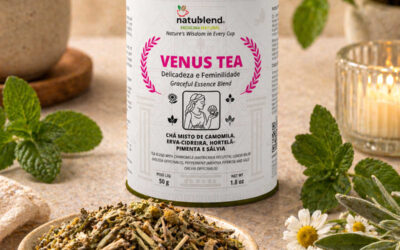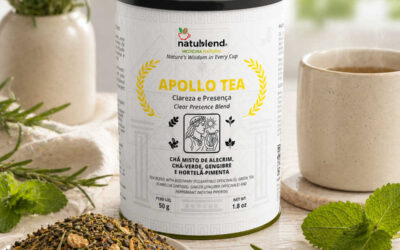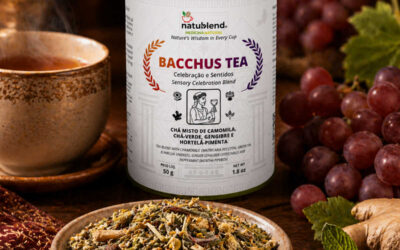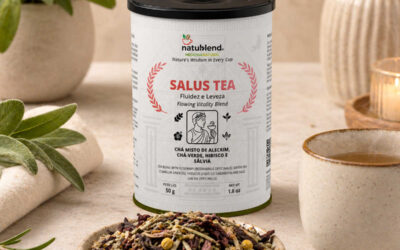
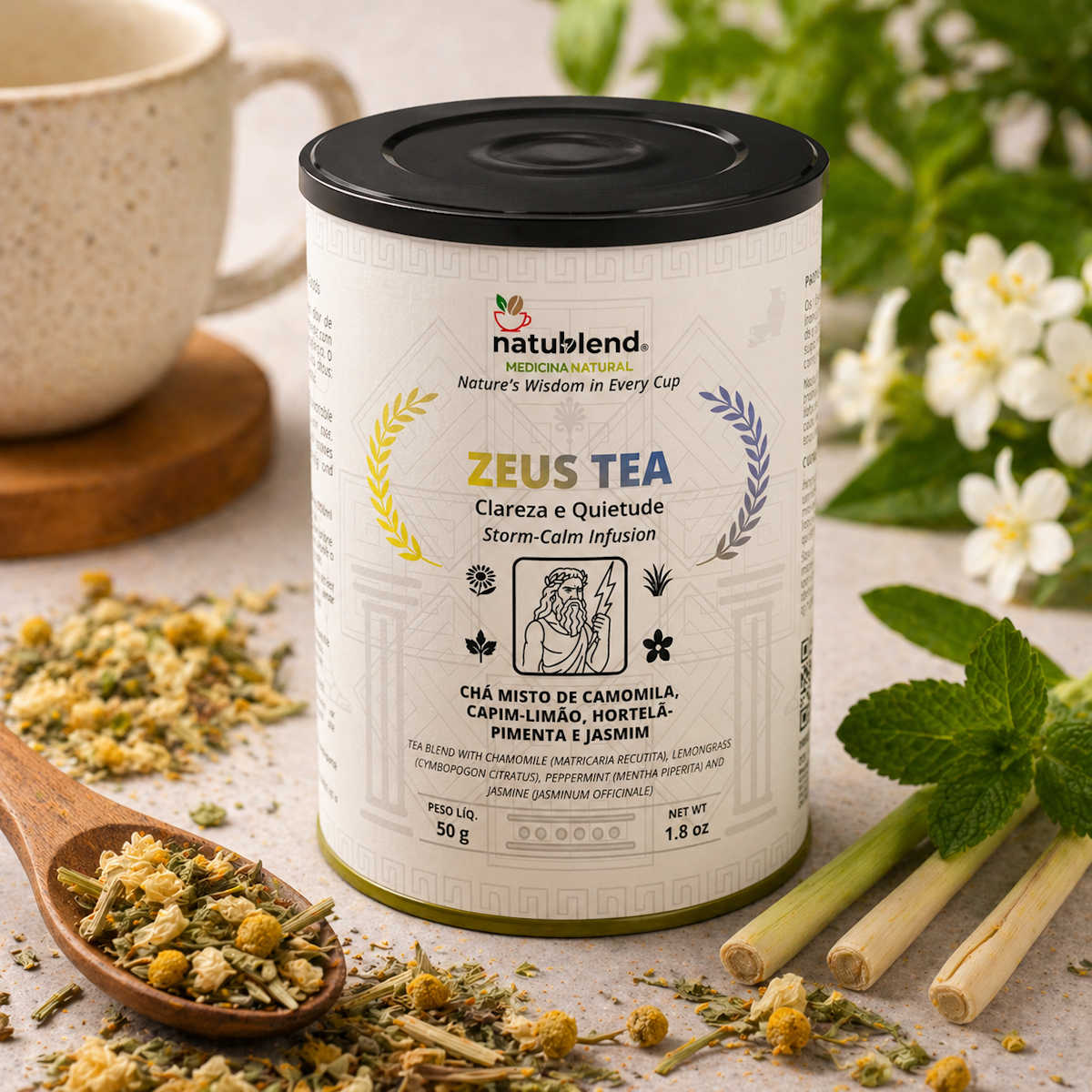
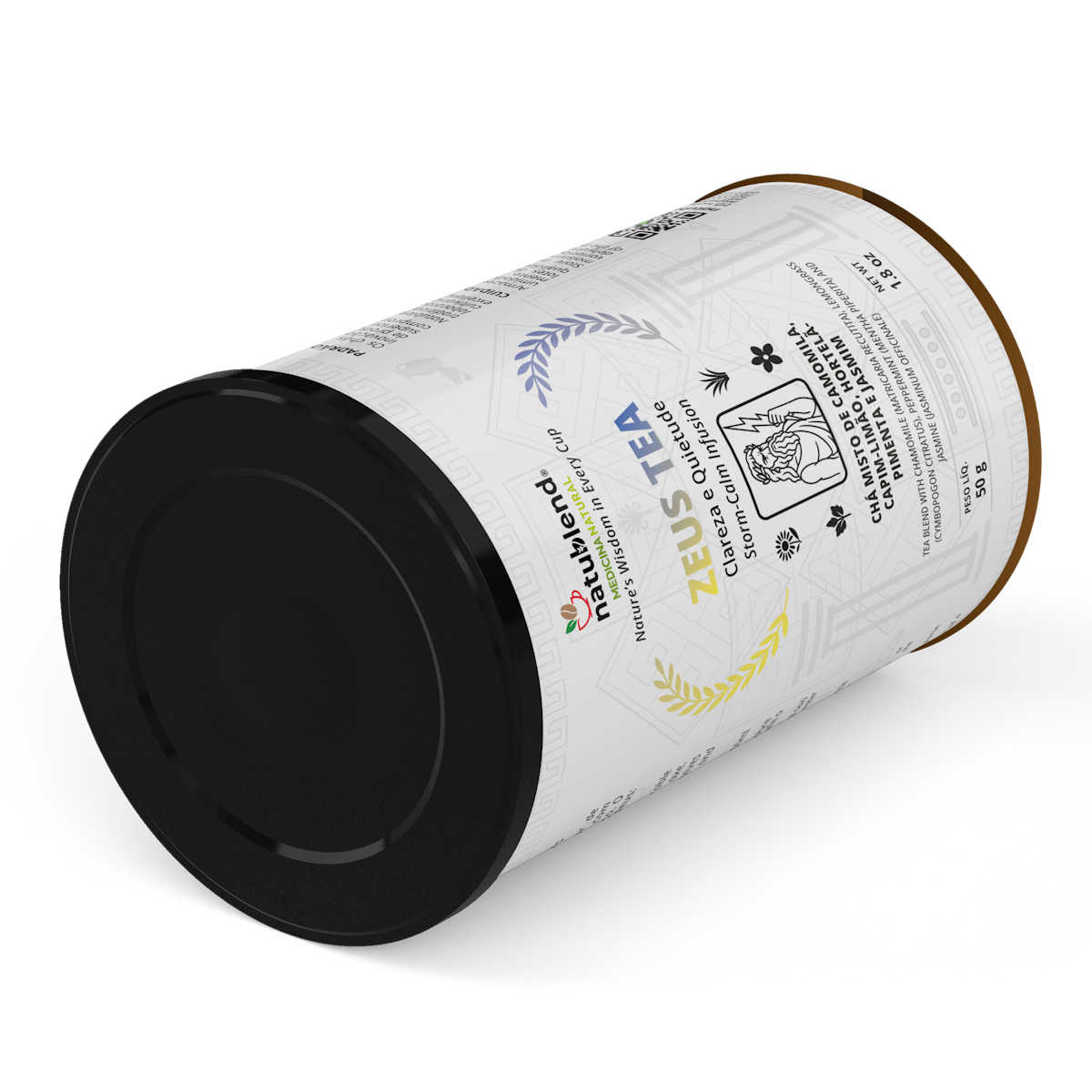
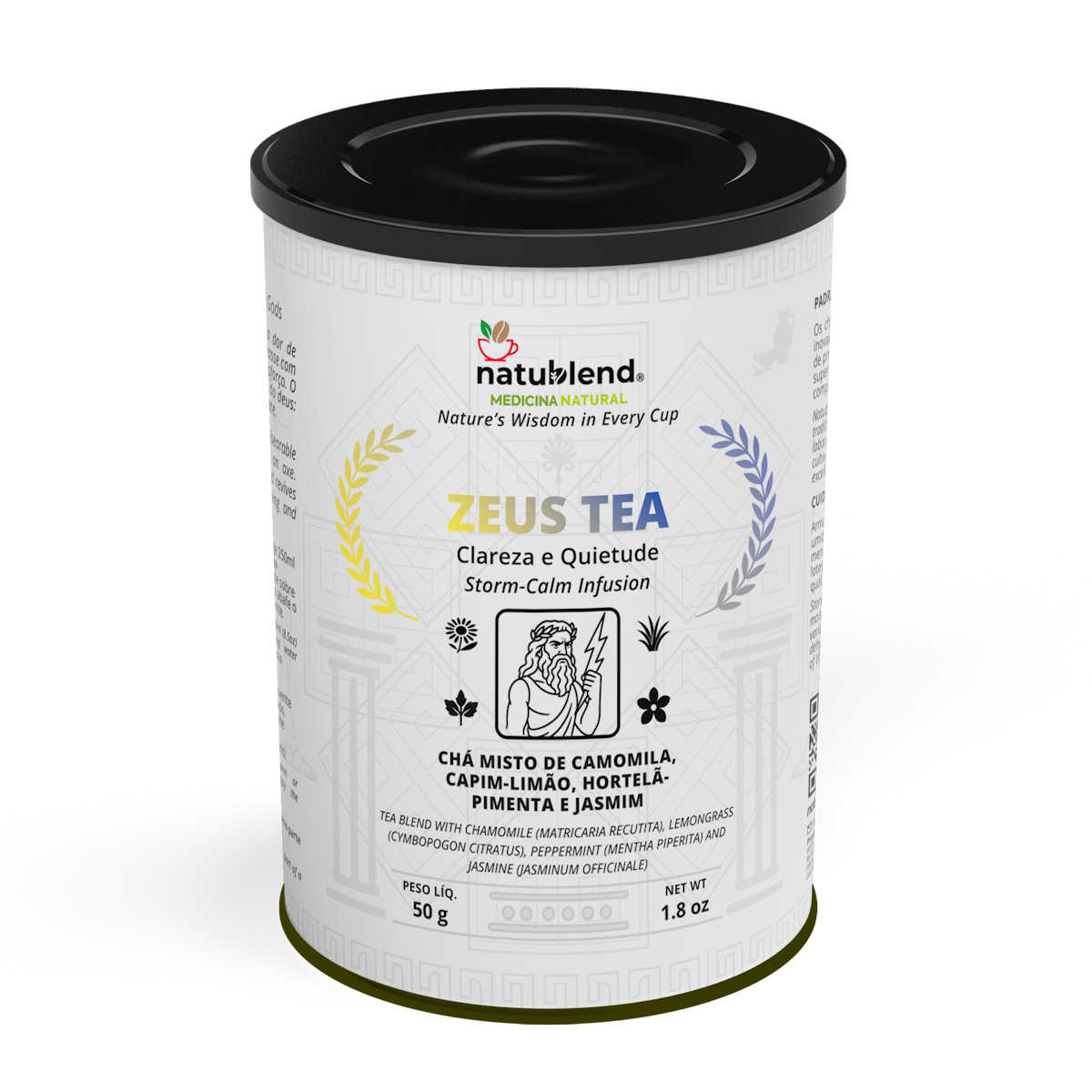
Zeus Tea brings together chamomile, jasmine, lemongrass, and peppermint in a 50 g tin from Natublend’s Sabedoria dos Deuses (Wisdom of the Gods) collection. The blend does without the leaf of Camellia sinensis, which gives rise to black, green, and white teas and is the source of their caffeine, and the result is a caffeine-free infusion of herbs and flowers; the story of the plant that was left out is told in the article on the history of tea, from China to the Ribeira Valley.
The name pays tribute to Zeus, the god of law and of the sky in Greek mythology. Natublend does not link Zeus Tea to any particular time of day, and the brand guidance reproduced here concerns preparation: serving it warm and unsweetened, plus a second infusion with its own recipe. It is also here that the series on the collection takes an in-depth look at lemongrass, which appears in three tins and is responsible for the citrus opening of this cup.
Why Zeus

In Greek mythology, Zeus is the supreme god of fate, kingship, law, the sky, and the weather, usually depicted with the eagle, the royal scepter, and the thunderbolt (Theoi Project, n.d.). According to Hesiod’s Theogony, he was the youngest of the six children of the Titans Cronus and Rhea (Hesiod, n.d.). Cronus swallowed his children as soon as they were born, and Zeus was the only one to escape; once grown, he defeated his father in the war against the Titans, known as the Titanomachy, and took over the rule of the cosmos (Theoi Project, n.d.). Natublend named the blend in his honor, and the reference lies in the name and in the illustration the brand uses for the blend, which shows the white-bearded god with the golden thunderbolt in his hand and an eagle at his side.
The Four Ingredients of Zeus Tea
Three of the four components of Zeus Tea are also found in Harmonia Tea, and what changes the cup’s profile is chamomile in place of lemon balm. Lemongrass gets its full presentation here; the other three have reference articles under other blends, noted at the end of each entry.
Lemongrass
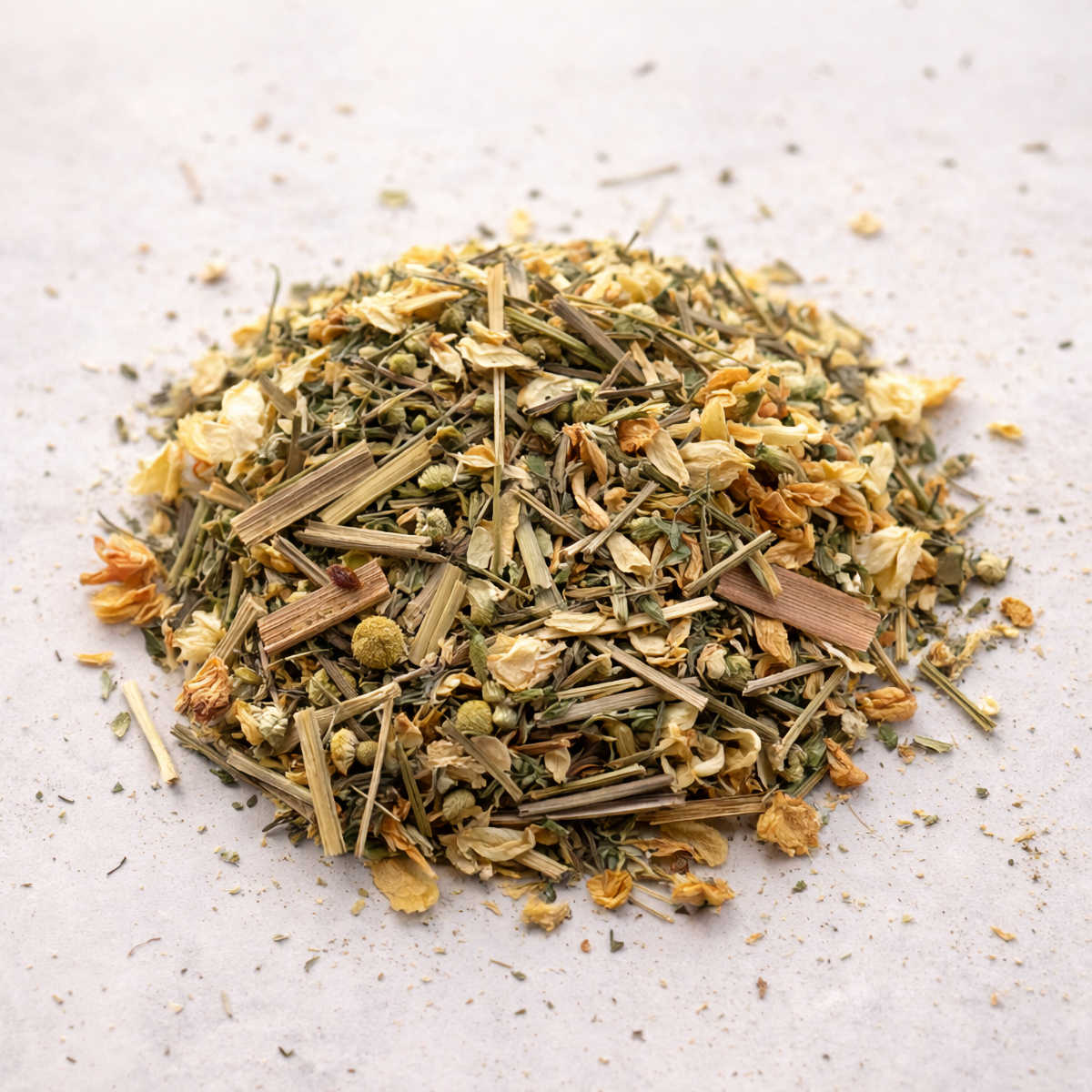
Lemongrass is Cymbopogon citratus (DC.) Stapf, a perennial grass in the family Poaceae, the same family as corn, rice, and sugarcane (POWO, n.d.); for preparing teas, the part authorized by ANVISA, Brazil’s health regulatory agency, is the leaf (ANVISA, 2022). The Royal Botanic Gardens, Kew, places the species’ native range in southern India and Sri Lanka, and from there the plant spread, carried by people, across most of the tropics, where it is grown as an aromatic and culinary herb (COLPLANTA, n.d.).
In Brazil, the species also goes by capim-cidreira, a name that brings it closer, at least in popular vocabulary, to the broad-leaved herb called erva-cidreira, to which it is not closely related. In the cup, the sensory lexicon for blended teas by Kim and colleagues defines lemongrass by a light lemon scent combined with a note of dry hay (Kim et al., 2018), and it is this pairing, lemon up front and dry herbaceousness behind, that opens Zeus Tea, in the register the brand describes as citrus freshness.
Chamomile
Chamomile is Matricaria chamomilla L., in the family Asteraceae, and reaches the blend as dried flower heads; Matricaria recutita, a name often seen on labels, is considered a synonym by Plants of the World Online (POWO, n.d.). In Zeus Tea, it adds to the citrus opening a floral sweetness that, in 7-minute infusions, takes on slightly woody notes, according to Natublend. Its full story is in the Bacchus Tea article.
Peppermint
The result of a natural cross between Mentha aquatica and Mentha spicata, peppermint, Mentha × piperita L., belongs to the family Lamiaceae (POWO, n.d.) and goes into the blend as dried leaves. In Zeus Tea, it is not the finishing note: it sits on the mid-palate, with the refreshing sensation that the lexicon by Kim and colleagues records under the attribute cooling (Kim et al., 2018), between the citrus of the first sip and the floral finish. Its reference article is the one for Venus Tea.
Jasmine
The jasmine in Zeus Tea is Jasminum officinale L., in the family Oleaceae (POWO, n.d.), the species Natublend declares on the label and whose flowers appear on ANVISA’s list of plant parts authorized for preparing teas (ANVISA, 2022). The PROSEA compendium places the species’ origin in the Sino-Himalayan region and records its commercial cultivation in Europe for perfumery (PROSEA, n.d.). Here, the flowers go in without a tea-leaf base and account for the floral finish that Natublend describes as lingering. The plant’s story is in the Aurora Tea article.
Sensory Profile
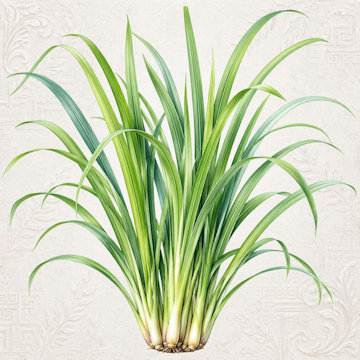
Aroma of the dry blend. The Zeus Tea tin holds two flowers and two leaves, and the nose picks up both sides at once: on one side, the sweet floral note of jasmine and the slightly muted dried-flower scent that the lexicon by Kim and colleagues associates with chamomile (Kim et al., 2018); on the other, the hay-tinged lemon of lemongrass and the menthol of peppermint, which Natublend places at the front of the dry aroma.
Aroma of the infusion. With hot water, lemongrass and chamomile rise together, and the aroma of the cup turns citrusy and floral at once. The minty note of peppermint shows up in the steam, and jasmine, which the brand places in the finish, reveals itself more in the aftertaste than in the first scent.
Liquor color. The brand describes a pale, translucent golden-yellow liquor with greenish glints. In sensory-panel language, the word for this quality is clarity, which the lexicon by Monteiro and colleagues defines as the ability to see through the sample (Monteiro et al., 2017), and it is clarity that lets the green glints described by the brand show through.
Flavor. The attack pairs the lively citrus of lemongrass with the floral sweetness of chamomile. Peppermint comes in on the mid-palate with the refreshing sensation of menthol, and the finish belongs to jasmine, floral and lingering; according to Natublend, its aroma is what stays in the mouth after the sip. It is the reverse of the path taken by Harmonia Tea, which begins with jasmine and ends with mint.
Body. Light, but with a little more structure than the ingredient list would suggest, thanks to the chamomile, which rounds out the texture. Served warm, as the brand recommends, Zeus Tea lets you follow the passage from citrus to floral sip by sip.
How to Brew Zeus Tea
For Zeus Tea, Natublend offers a main recipe and two variations, which appear right after the steps.
- Heat the water to between 90 and 95 °C.
- Measure out about 2 g of the blend for every 200 ml of water.
- Pour the water over the herbs and cover the vessel right away.
- Let it steep for 5 to 7 minutes.
- Strain without pressing the ingredients and serve warm, unsweetened.
The same ingredients can be reused once or twice, and the brand gives the recipe for the second hot infusion: water at 92 °C, for 6 minutes. The other variation is the cold version, with the blend left in cold water in the refrigerator for 6 to 8 hours.
Near-boiling water works well here because the tin contains no leaf of Camellia sinensis. The recommendation of lower temperatures for green tea exists because of catechins, which remain almost intact in the unoxidized leaf, dissolve easily in very hot water, and pull the flavor toward bitterness and astringency (My Japanese Green Tea, n.d.); without that leaf, the water can go as high as 95 °C.
The Ritual Natublend Proposes
Unlike blends in the collection that come with a set time, Zeus Tea is not tied by Natublend to any period of the day. What the brand describes carefully is the ritual, from covering the cup right after pouring the water to serving it warm and unsweetened, with the second infusion at 92 °C for anyone who wants to extend it. It is a routine that calls for an unhurried pause, whatever the hour, and the tin makes about 25 cups, according to the product page.
None of the four ingredients contains caffeine. In its precautions section, the brand advises against consumption by children under 12 without professional guidance, recommends consulting a health professional in cases of breastfeeding, continuous use of medication, pregnancy, or specific health conditions, and states that the product, exempt from registration under Brazilian regulation RDC 240/2018, contains no artificial colorings, flavorings, or preservatives.
Other Blends in the Collection
Zeus Tea is one of the 15 blends in the Sabedoria dos Deuses collection, and two neighbors help place its profile. Harmonia Tea shares three ingredients with it, jasmine, lemongrass, and peppermint, but swaps chamomile for lemon balm, which makes the mid-palate more herbal. Aurora Tea repeats the pair of flowers, chamomile and jasmine, and adds hibiscus and white tea, which bring a fruity acidity and caffeine that Zeus Tea does not have.
Frequently Asked Questions
Does Zeus Tea Include Any Leaf with Caffeine?
No. None of the four ingredients contains caffeine, and the leaf of Camellia sinensis, the source of caffeine in black, green, and white teas, is not part of the blend. Even without it, the drink can be called chá (tea) in Brazil, because ANVISA maintains, in Normative Instruction No. 159/2022, a list of plant species and parts authorized for preparing teas that goes well beyond that leaf (ANVISA, 2022).
Is It Worth Cold-Brewing Zeus Tea?
It is, and the cold version is one of the variations Natublend itself proposes: the blend sits in cold water in the refrigerator for 6 to 8 hours, because without heat the extraction happens slowly.
Which Dishes Pair with Zeus Tea?
Lemongrass points toward Southeast Asian cooking, where it is a staple seasoning: Thai broths and curries or Vietnamese dishes with fresh herbs make a natural match for the citrus side of the cup. For something sweet, fruits such as lychee and mango go well with the floral jasmine without masking it.
Why Did Natublend Name the Blend After Zeus?
The name follows the concept of the Sabedoria dos Deuses collection, in which each of the 15 blends honors a Greco-Roman deity. Here, the honoree is Zeus, god of kingship, law, and the sky in Greek mythology, and the reference lies in the name and the imagery: the illustration the brand uses for the blend shows the god with the eagle and the golden thunderbolt.
This content is informational and describes teas and infusions as foods. It does not replace professional health guidance. Pregnant women, breastfeeding women, children, and people undergoing medical treatment should consult a health professional before adding any infusion to their routine.
References
View All 12 Cited References
Peer-Reviewed Scientific Studies (1)
- PMC2018 KIM, J. H. et al. A Lexicon for Descriptive Sensory Evaluation of Blended Tea. Preventive Nutrition and Food Science, vol. 23, no. 4, pp. 364-373, 2018. Available at: pmc.ncbi.nlm.nih.gov.
Institutional Sources (1)
- GOV2022 AGÊNCIA NACIONAL DE VIGILÂNCIA SANITÁRIA (ANVISA). Instrução Normativa nº 159, de 1º de julho de 2022 [Normative Instruction No. 159 of July 1, 2022]. In Portuguese. Available at: antigo.anvisa.gov.br.
Supplementary Readings (10)
- THEOI PROJECT. Zeus. Theoi Greek Mythology, n.d. Available at: theoi.com.
- HESIOD. Theogony. English translation hosted by the Theoi Project, n.d. Available at: theoi.com.
- ROYAL BOTANIC GARDENS, KEW. Cymbopogon citratus (DC.) Stapf. Plants of the World Online (POWO), n.d. Available at: powo.science.kew.org.
- COLPLANTA. Cymbopogon citratus: general information (species profile from the Royal Botanic Gardens, Kew). n.d. Available at: colplanta.org.
- ROYAL BOTANIC GARDENS, KEW. Matricaria chamomilla L. Plants of the World Online (POWO), n.d. Available at: powo.science.kew.org.
- ROYAL BOTANIC GARDENS, KEW. Mentha × piperita L. Plants of the World Online (POWO), n.d. Available at: powo.science.kew.org.
- ROYAL BOTANIC GARDENS, KEW. Jasminum officinale L. Plants of the World Online (POWO), n.d. Available at: powo.science.kew.org.
- PROSEA. Jasminum (Plant Resources of South-East Asia). Pl@ntUse, n.d. Available at: plantuse.plantnet.org.
- 2017 MONTEIRO, M. J. P. et al. Cross-cultural development of hibiscus tea sensory lexicons for trained and untrained panelists (Table 3). Journal of Sensory Studies, vol. 32, no. 5, e12297, 2017. Available at: gala.gre.ac.uk.
- MY JAPANESE GREEN TEA. Bitterness in Green Tea. n.d. Available at: myjapanesegreentea.com.