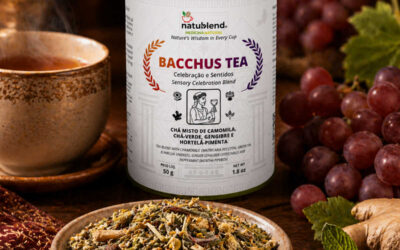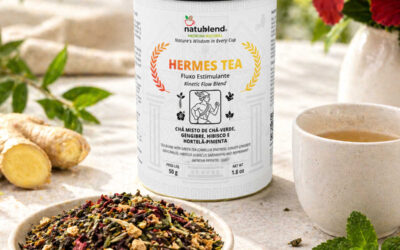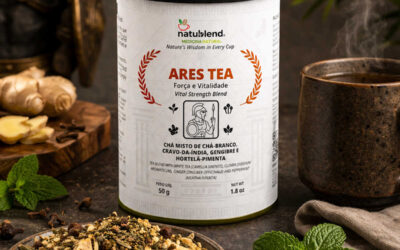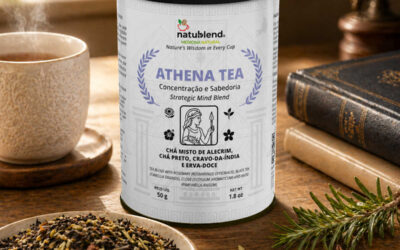
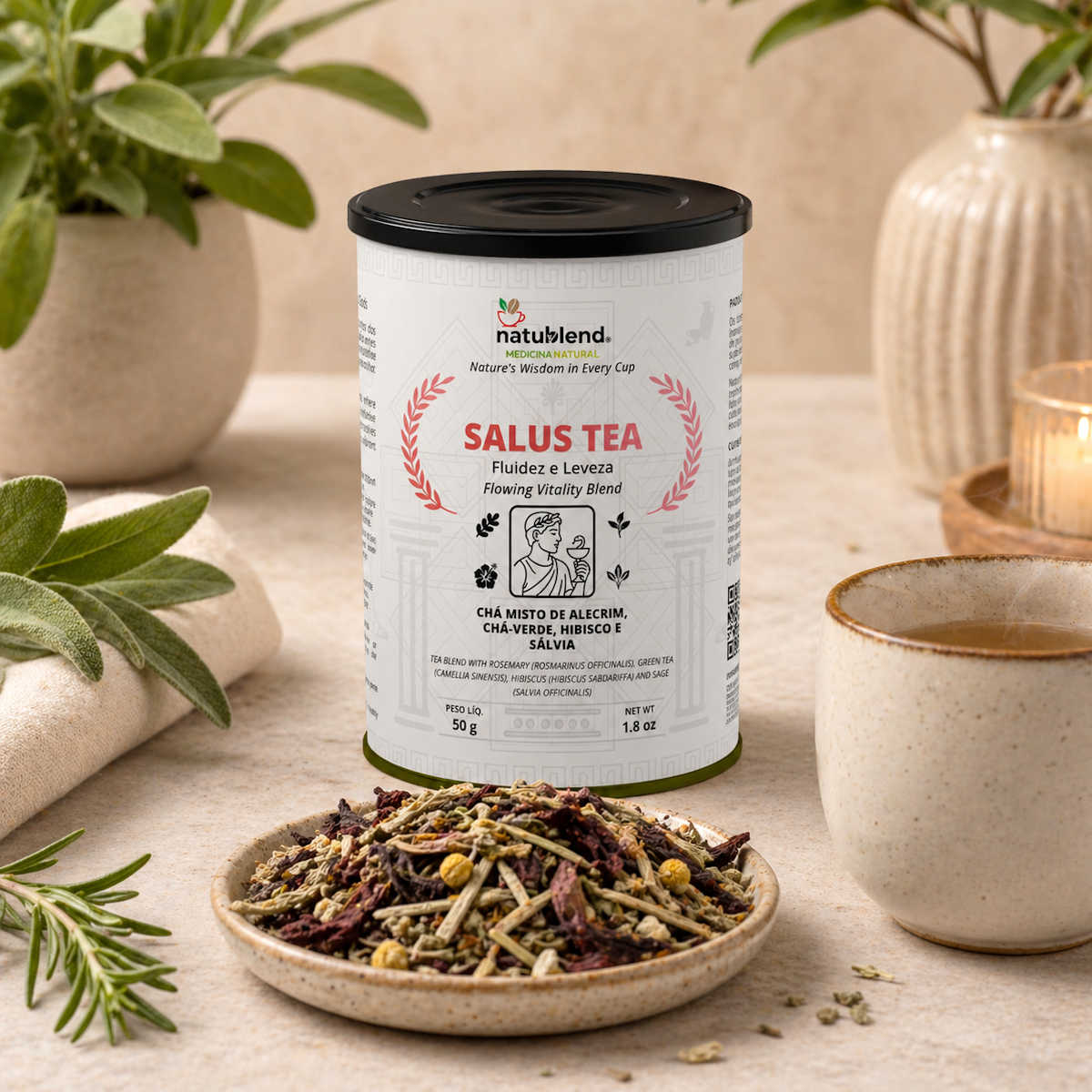
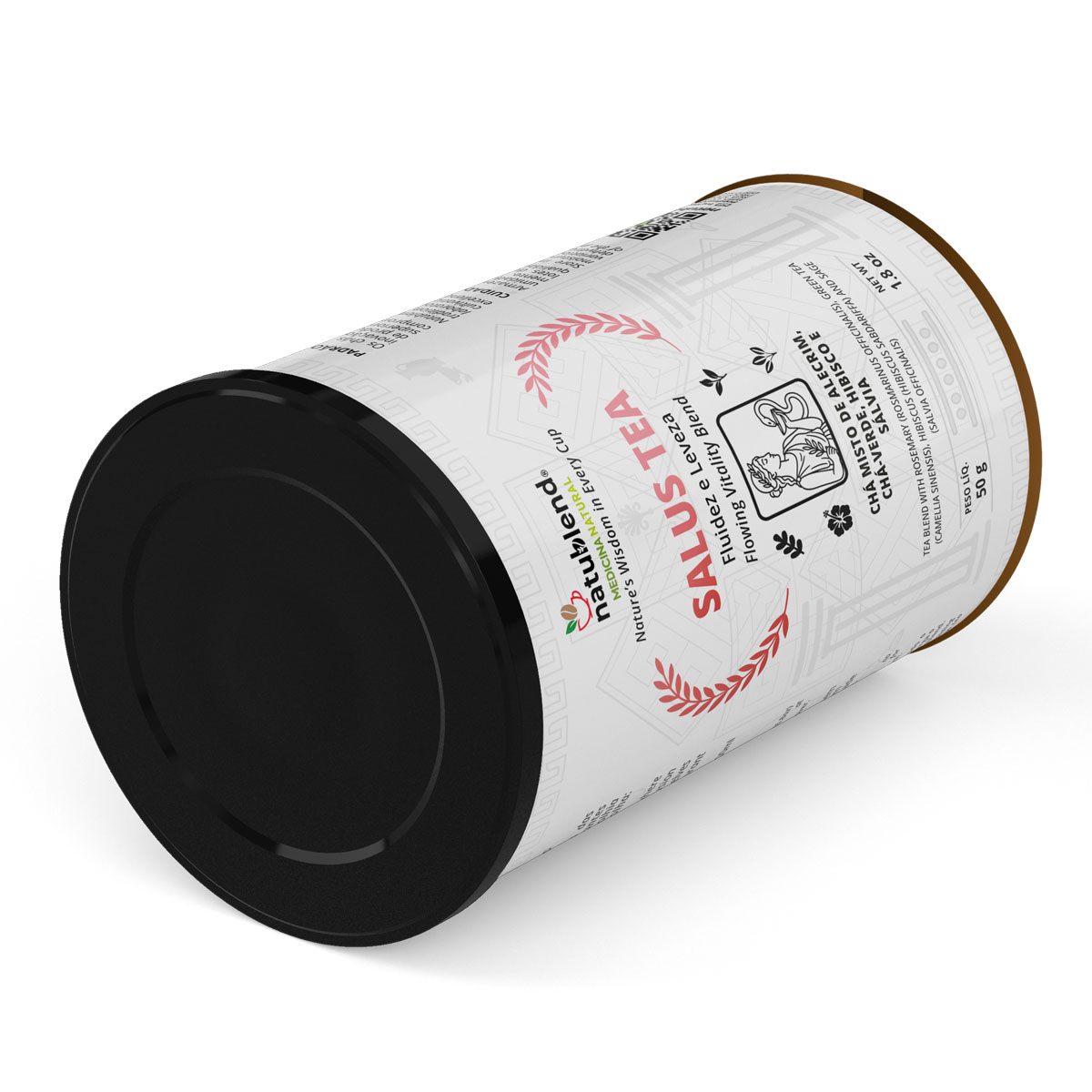
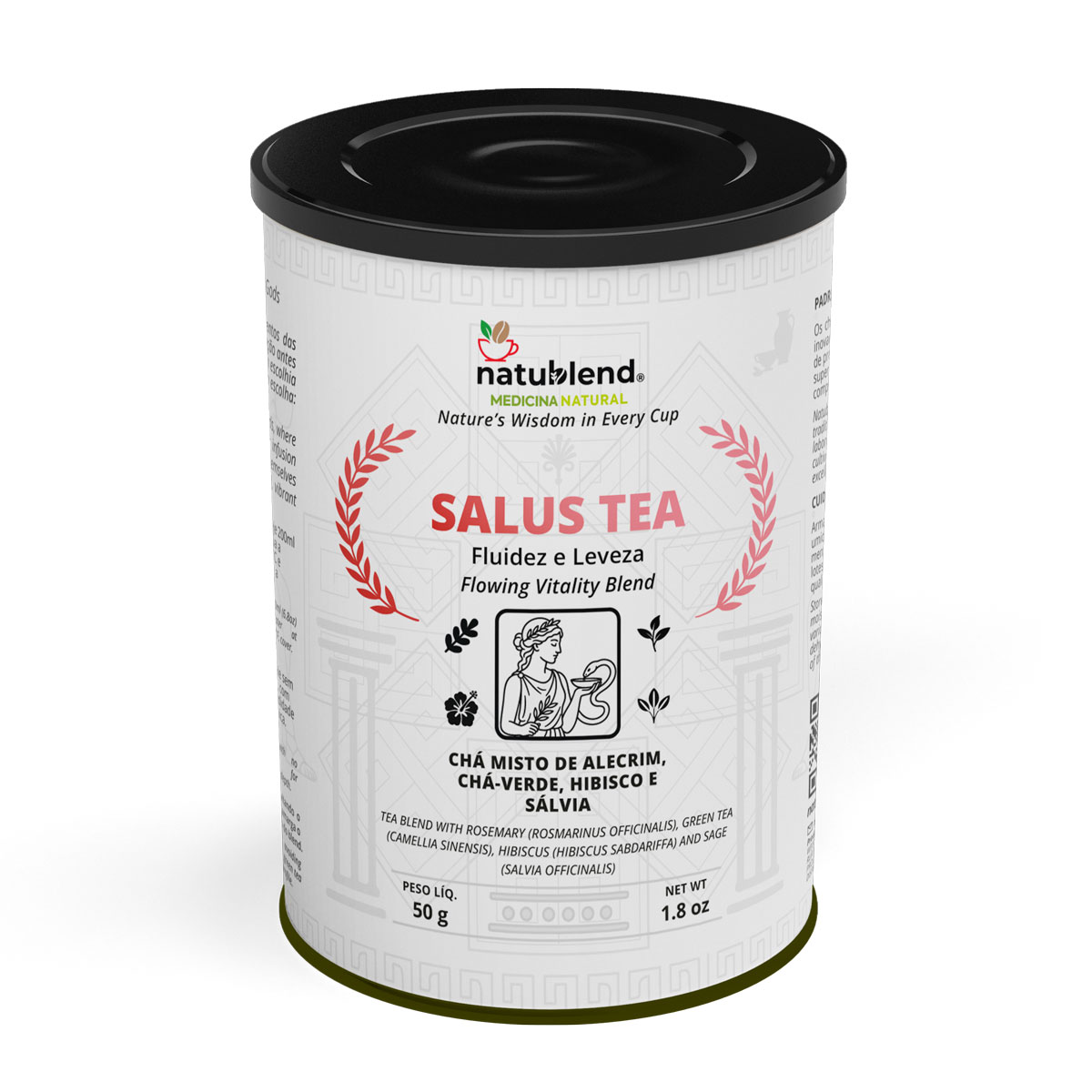
Salus Tea brings together green tea, hibiscus, rosemary, and sage in a 50 g tin from the Wisdom of the Gods collection by Natublend. The base is green tea, the leaf of Camellia sinensis, a plant that naturally contains caffeine, which is why the blend has caffeine even with three herbs in the mix; the path this plant took to Brazil is traced in the article on the history of tea, from China to the Ribeira Valley.
The name honors Salus, the Roman goddess of public welfare and safety, and this is the article in the series where green tea gets a section of its own, alongside the sensory profile, the brewing method, and the time of day the brand suggests for the cup.
Why Salus
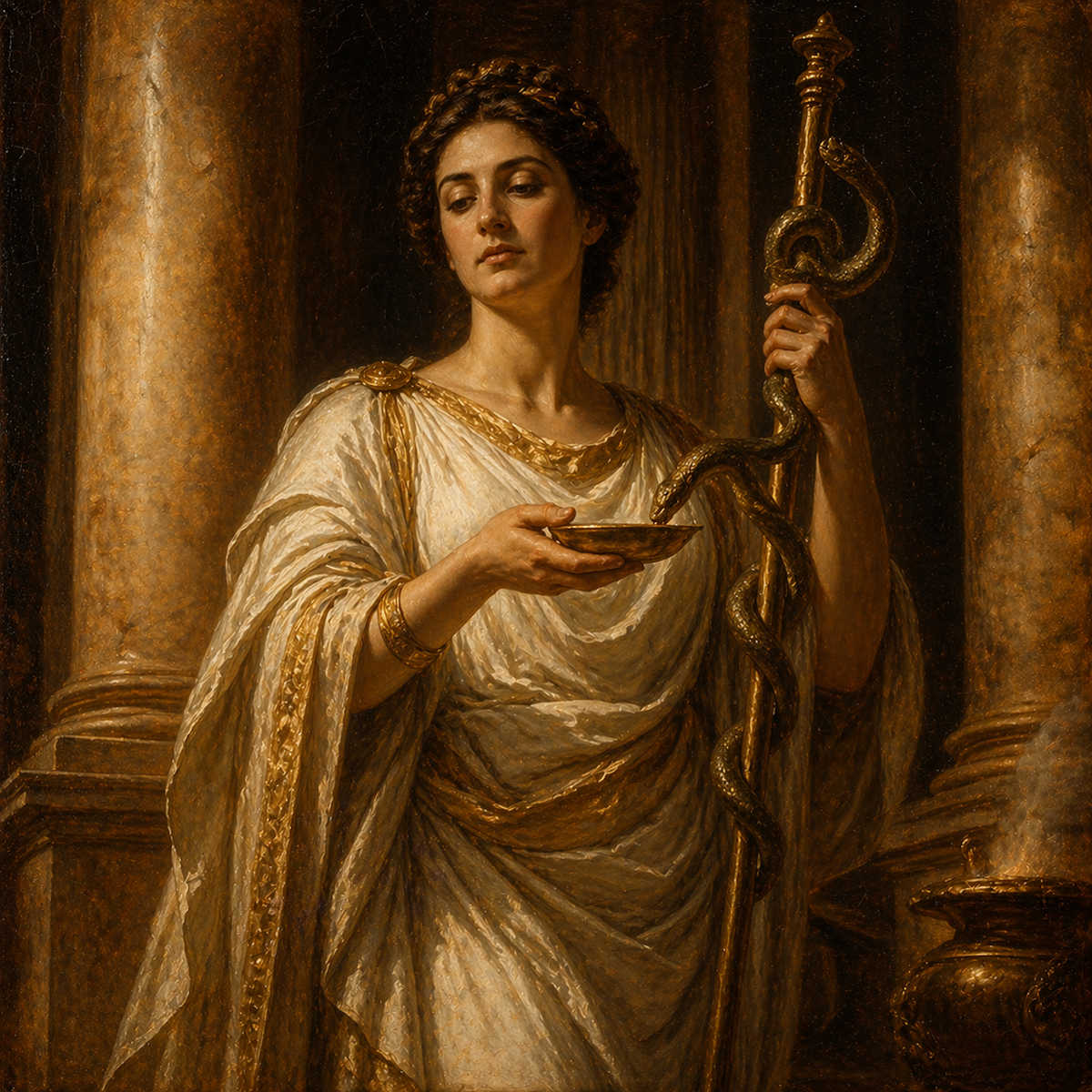
In Roman religion, Salus was the goddess of public welfare and safety. According to Encyclopaedia Britannica, her temple on the Quirinal Hill in Rome was dedicated in 302 BC and received an annual sacrifice on August 5; the goddess was later identified with the Greek Hygieia and, under the Empire, also appeared as Salus Publica (Britannica, n.d.). In Greek tradition, Hygieia was the daughter of Asclepius and was usually worshipped in the same temples as her father, although one of the Orphic Hymns presents her as the god’s wife (Theoi Project, n.d.). Natublend named the blend in honor of Salus, and the connection lives in the name and in the collection’s illustrations, as a cultural reference.
The Four Ingredients in Salus
Green tea, the base of Salus, gets its own introduction here. Hibiscus, rosemary, and sage are covered in detail in the articles on other blends, noted under each entry, and appear here for the role they play in this tin: turning a vegetal base into something colorful, herbaceous, and tart.
Green Tea
Green tea is the leaf of Camellia sinensis (L.) Kuntze, of the Theaceae family, the same species as black and white tea. What sets it apart from the other two is processing: the young leaves are heated soon after harvest, which halts oxidation early and preserves the green color (WSU Extension, n.d.). Native from the eastern Himalaya to southern China, Hainan, and northern Indochina, the species has five varieties accepted by Plants of the World Online, among them sinensis, from southern China, and assamica, which ranges from the eastern Himalaya to northern Indochina (POWO, n.d.). Chinese tea culture grew from this plant, and the Cha Jing, the Classic of Tea, written by Lu Yu during the Tang dynasty (618 to 907), is cited by the Smithsonian’s National Museum of Asian Art as the first known book about the drink (Smithsonian, n.d.).
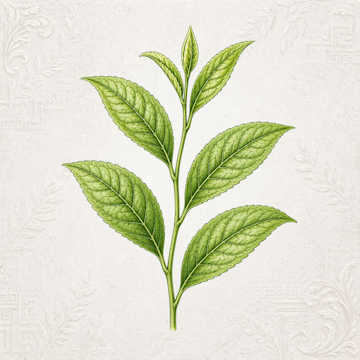
In the blend, green tea opens the cup with the light astringency and vegetal freshness that Natublend describes, and it serves as a canvas for the color that the hibiscus spreads through the liquor as it steeps.
Rosemary
Rosemary’s accepted name today is Salvia rosmarinus Spenn., and the familiar Rosmarinus officinalis L. is now treated as a synonym (POWO, n.d.). A member of the Lamiaceae family from the Mediterranean basin, it goes into the tin as dried leaves. In Salus, it brings the balsamic, resinous aroma the brand describes and pairs with sage, which has shared its genus since the name change. The plant is covered in detail in the article on Apollo Tea.
Hibiscus
Of the hibiscus plant, the blend uses the calyces, the fleshy sepals that enclose the fruit after the flower drops, rather than the petals. The plant is known as Hibiscus sabdariffa L., of the Malvaceae family, a name that Plants of the World Online now lists as a synonym of Sabdariffa gossypiifolia (Mill.) M.M.Hanes & R.L.Barrett, following the revision published in 2025 (POWO, n.d.). It is hibiscus that gives Salus the fruity tartness and the color shift that Natublend highlights as the blend’s visual signature. On the nose, the sensory lexicon by Monteiro and colleagues records notes of acidity, candy, red fruit, and sweetness for hibiscus tea (Monteiro et al., 2017). The full story is in the article on Hermes Tea.
Sage
Sage, Salvia officinalis L., is another member of the Lamiaceae family and goes into the tin as dried leaf. Native to southwestern Germany and southern Europe, from Spain to Greece and the Balkans (POWO, n.d.), it closes Salus with the slightly peppery, earthy notes the brand describes, a counterpoint to the tartness of the hibiscus. The plant’s story is told in the article on Epione Tea.
Sensory Profile
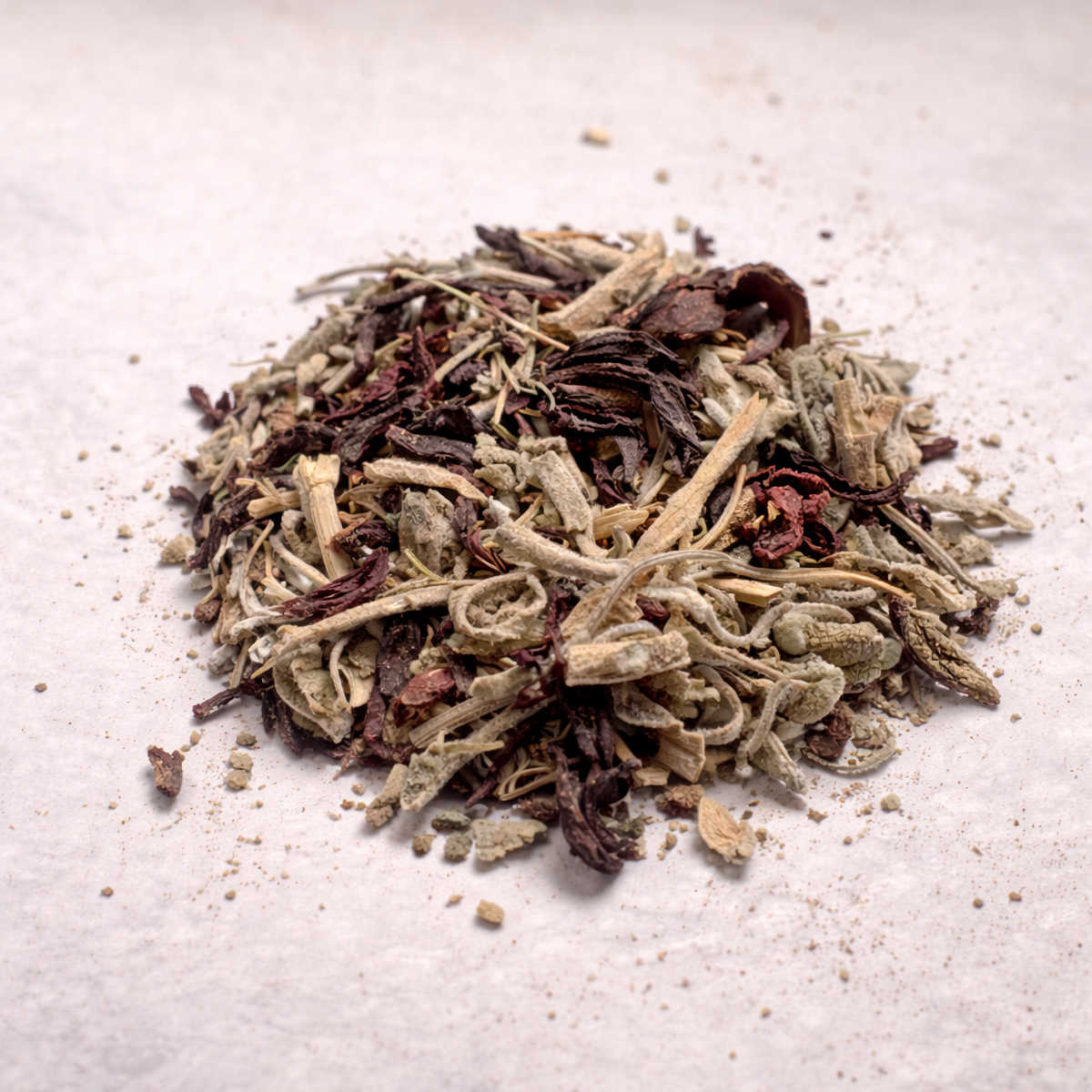
Dry aroma. In the tin, the herbs speak first: rosemary and sage form a resinous herbal note reminiscent of a Mediterranean kitchen garden, which Natublend describes as intense. Underneath, the green tea provides a vegetal backdrop, and the pieces of hibiscus calyx add a tart scent of dried red fruit.
Infusion aroma. In hot water, the hibiscus gains strength and takes over the nose with the profile of acidity, red fruit, and sweetness that trained panelists associate with hibiscus tea (Monteiro et al., 2017), while the rosemary keeps its balsamic note on top and the green tea stays in the background as a vegetal base.
Liquor color. This is the trait Natublend highlights most in Salus, whose infusion, according to the brand, starts out green and turns ruby as the hibiscus releases its color. The hibiscus lexicon measures this color by intensity, from lightest to deepest, and by hue, on a scale that runs from red to purple to blue (Monteiro et al., 2017), and the longer the steep, the further Salus tends to move toward the deep end of the scale.
Flavor. The attack belongs to the green tea, with a light astringency that gently puckers the mouth. On the mid-palate, the hibiscus tartness cuts through the blend, in a register close to the malic acid the lexicon uses as a reference, and the rosemary sustains the resinous note; the finish belongs to the sage, slightly peppery and earthy, and lingers after the sip.
Body. Light and bright, with the green tea’s astringency in just the right measure and no harshness. It is what the SV Tea tasting glossary calls brisk, a lively taste that does not fall flat on the palate (SV Tea, n.d.), and the tartness of the hibiscus reinforces that vivacity.
How to Brew Salus
Salus follows the brewing logic of green tea, the ingredient that demands the most attention to temperature.
- Heat the water to between 80 and 85 °C without letting it boil.
- Measure out 2 g of the blend for every 200 ml of water.
- Cover the cup and let it steep for 3 to 4 minutes.
- Strain without pressing the leaves, preferably using a ceramic or glass infuser.
- Serve without sugar and, if you like, use the same portion for one or two more infusions.
The 80 to 85 °C range is the one Natublend recommends for Salus, and heat and time shape the result together. Tannins are released from the leaves more slowly than the other flavor compounds, so the longer and hotter the steep, the more of them end up in the cup, bringing the bitterness and dry mouthfeel of an overbrewed tea (Red Blossom Tea Company, n.d.). For an iced version, Natublend recommends 2 g in 200 ml of cold water, left in the refrigerator for 6 to 8 hours.
The Moment Natublend Suggests
Natublend suggests Salus for the first cup of the day, right after waking up or alongside breakfast. It is a time of day usually ruled by hurry, and the ritual the brand proposes runs the other way: the water is heated without boiling, the cup stays covered, and the wait lasts three or four minutes. In a glass infuser, you can watch the liquor come out green and take on a ruby tone while the table is being set, which helps explain why the product page calls the blend visually striking.
Because the base is green tea, Salus contains caffeine, in an amount the brand does not disclose and that changes with steeping temperature and time. Anyone who already drinks coffee at the same hour should keep in mind that the caffeine from both drinks adds up. Natublend also notes that the blend is not recommended for children under 12 without professional guidance.
Other Blends in the Collection
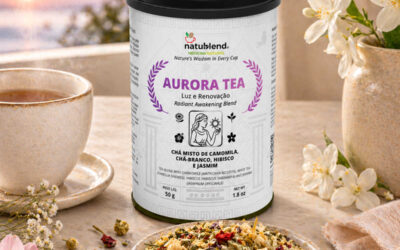
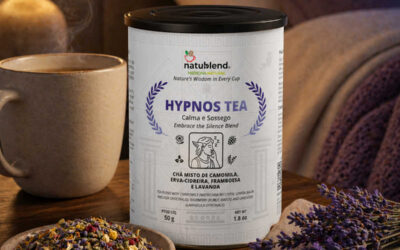
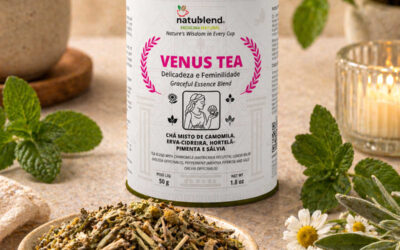
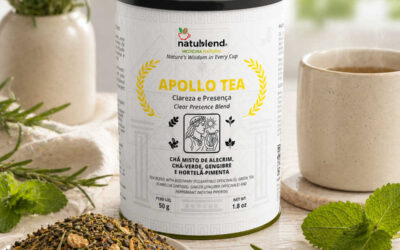
Salus is one of the 15 blends in the Wisdom of the Gods collection, and two of them share two ingredients each with it. Apollo Tea repeats the pairing of green tea and rosemary, but swaps hibiscus and sage for ginger and peppermint, for a minty, spicy profile without the ruby color. Hermes Tea keeps the green tea and hibiscus and adds ginger and peppermint, leaving out rosemary and sage.
Frequently Asked Questions
Does Salus Have Caffeine Even with Three Herbs in the Mix?
It does. Hibiscus, rosemary, and sage contain no caffeine, but the base of the blend is green tea, the leaf of Camellia sinensis, which naturally contains caffeine. Natublend does not state the content per cup, and it varies with steeping temperature and time.
Is Salus Good Iced?
It is, and the brand recommends a cold brew: 2 g of the blend in 200 ml of cold water, 6 to 8 hours in the refrigerator. Because hibiscus also releases color in cold water, the iced version keeps the reddish tone of the liquor, which looks great in a glass pitcher.
What Foods Go with Salus at Breakfast?
The tartness of the hibiscus pairs well with berries, granola, and plain yogurt, and the herbal side of rosemary and sage calls for something savory, such as herbed scrambled eggs or a slice of whole-wheat bread with fresh white cheese. Served without sugar, Salus leaves room for the natural sweetness of the fruit.
Is Salus a Greek or a Roman Goddess?
Roman. Salus was the goddess of public welfare and safety in Rome, with a temple on the Quirinal Hill, and she was later identified with the Greek Hygieia, according to Encyclopaedia Britannica. Natublend named the blend in her honor, and the reference lives in the name and in the collection’s illustrations.
This content is informational and describes teas and infusions as foods. It does not replace professional health guidance. Pregnant women, breastfeeding women, children, and people undergoing medical treatment should consult a health professional before adding any infusion to their routine.
References
View All 11 Cited References
Institutional Sources (2)
- GOV WASHINGTON STATE UNIVERSITY EXTENSION. Tea Types and Home Processing. n.d. Available at: vegetables.wsu.edu.
- GOV SMITHSONIAN INSTITUTION. National Museum of Asian Art. Exploring Chinese Teas and Tea Wares. Teaching China with the Smithsonian, n.d. Available at: asia-archive.si.edu.
Supplementary Readings (9)
- ENCYCLOPAEDIA BRITANNICA. Salus. n.d. Available at: britannica.com.
- THEOI PROJECT. Hygeia. Theoi Greek Mythology, n.d. Available at: theoi.com.
- ROYAL BOTANIC GARDENS, KEW. Camellia sinensis (L.) Kuntze. Plants of the World Online (POWO), n.d. Available at: powo.science.kew.org.
- SV TEA. A Tea Taster’s Glossary. n.d. Available at: svtea.com.
- ROYAL BOTANIC GARDENS, KEW. Salvia rosmarinus Spenn. Plants of the World Online (POWO), n.d. Available at: powo.science.kew.org.
- ROYAL BOTANIC GARDENS, KEW. Hibiscus sabdariffa L. Plants of the World Online (POWO), n.d. Available at: powo.science.kew.org.
- 2017 MONTEIRO, M. J. P. et al. Cross-cultural development of hibiscus tea sensory lexicons for trained and untrained panelists. Journal of Sensory Studies, vol. 32, no. 5, e12297, 2017. DOI 10.1111/joss.12297. Table 3 available at: gala.gre.ac.uk.
- ROYAL BOTANIC GARDENS, KEW. Salvia officinalis L. Plants of the World Online (POWO), n.d. Available at: powo.science.kew.org.
- RED BLOSSOM TEA COMPANY. What Are Tannins in Tea. n.d. Available at: redblossomtea.com.