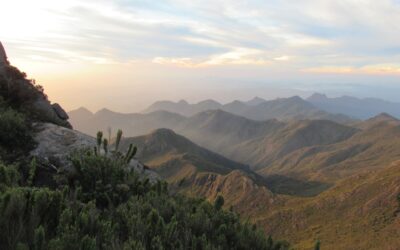
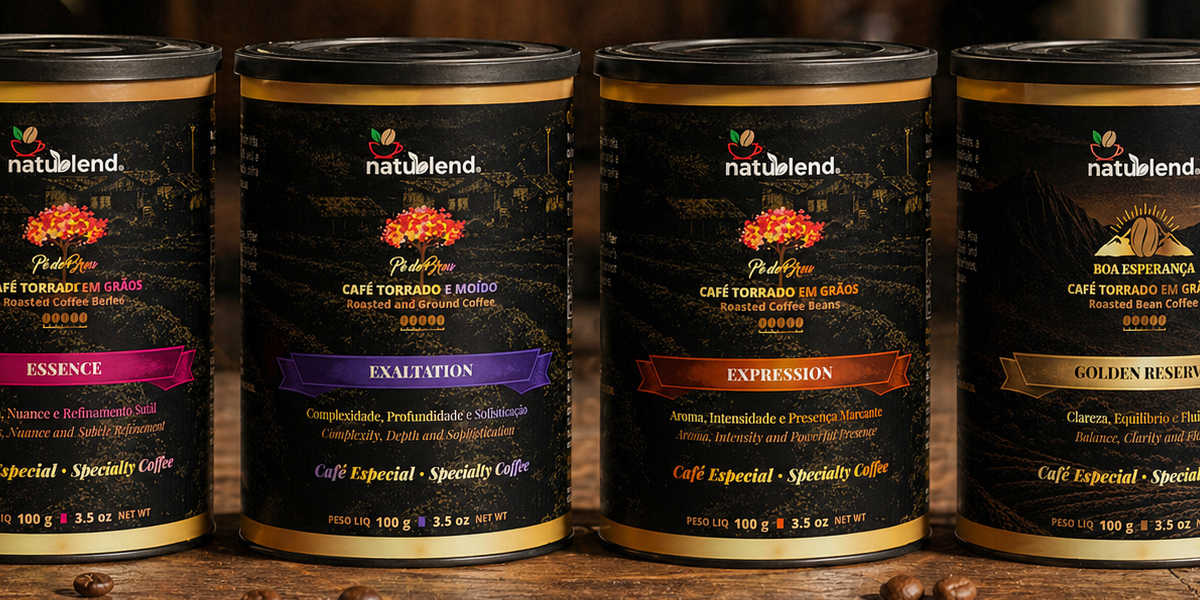
Sítio Pé de Breu is a coffee farm in Alto Caparaó, a municipality on the Minas Gerais side of the Serra do Caparaó. According to Natublend, all of the farm’s coffee is arabica, grown on plots that lie between 1,000 and 1,400 meters above sea level. The farm supplies the beans for three of the four specialty coffees in the brand’s line: Essence, Exaltation and Expression.
Pé de Breu was chosen through Natublend’s own curation. Under the criteria the brand publishes, partner producers are selected for the altitude of their plots, the care they put into managing the crop and the consistency of their coffee in the cup from one harvest to the next, and every lot also goes through a cupping by Natublend Curation.
This article brings together what the three coffees have in common: the story of the family that runs the farm, the mountain terroir, pesticide-free agroforestry management, the SAT certification reported by the producer and the steps that take the harvested fruit all the way to green bean. The brewing suggestions and cup profile of each coffee are covered in the articles devoted to them.
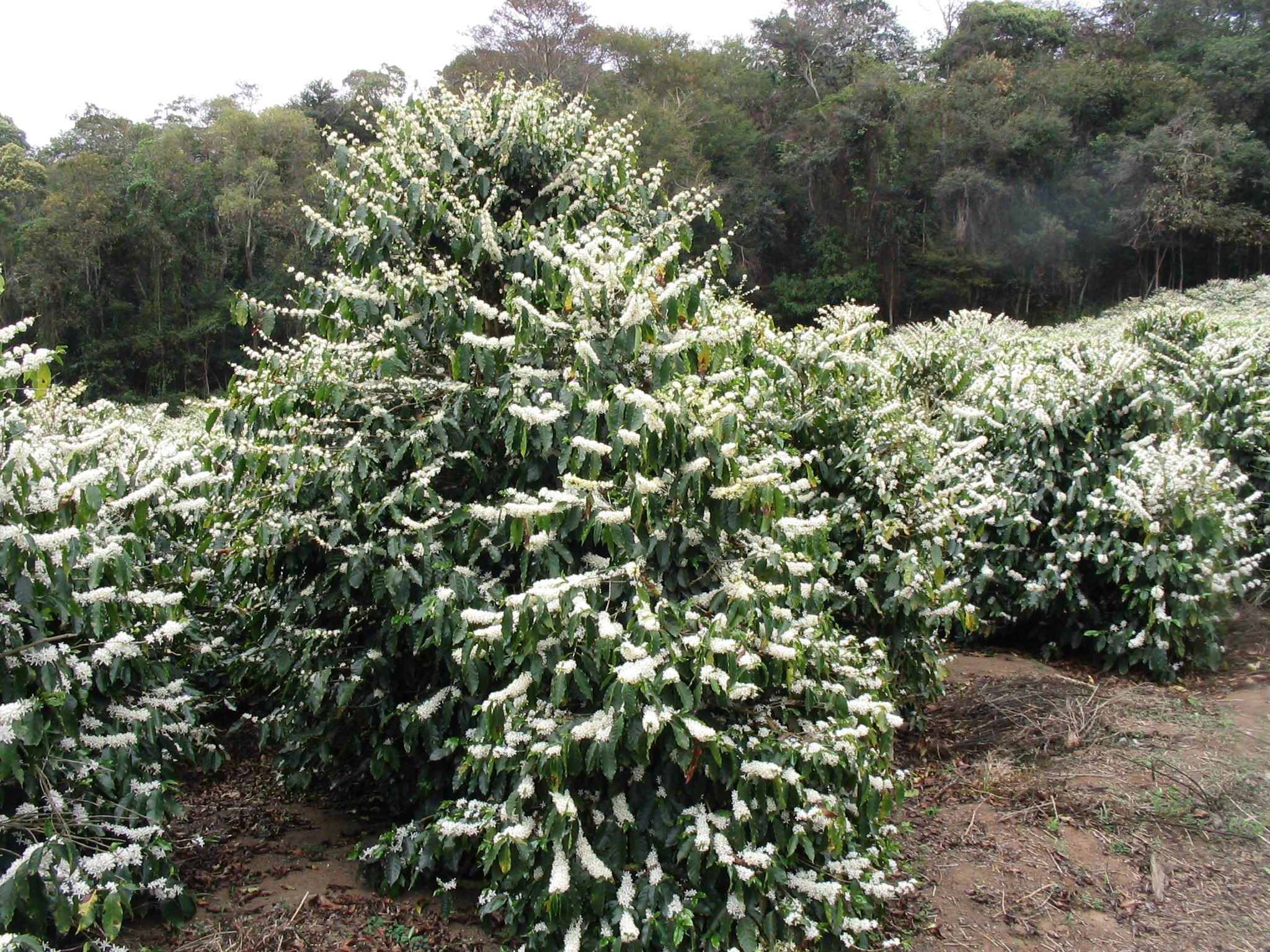
Leaving the City for the Serra do Caparaó
According to Natublend, the family that now looks after Sítio Pé de Breu used to live and run businesses in a large industrial city before deciding to start over in the mountains. They moved to Alto Caparaó with few belongings, and the urban routine gave way to a calendar set by the crop, running from flowering to harvest and on to the days of drying on the patio.
The brand’s fact sheet does not name the family or give the dates of the move or the reasons behind it. What it does record says a good deal about the farm, though: right after harvest, the coffee is still processed by the family itself, as described further on.
The Tree That Gave the Farm Its Name
The property, Natublend says, takes its name from a large breu tree that stands beside the road leading to the farm. Breu, along with almecegueira, is one of the common names for trees of the genus Protium (Silva; Sakuragui, 2024), which belongs to the family Burseraceae, in the order Sapindales (POWO, 2026).
Protium is the largest genus in the family, with about 175 species worldwide, most of them in the tropical Americas, and Brazil is home to 84 of them, 18 of which are endemic (Silva; Sakuragui, 2024). The genus is native to every major region of the country, from the North to the South (POWO, 2026). Common names, however, do not always correspond to a single genus, and the brand’s fact sheet offers no botanical identification. There is therefore no way to confirm that the tree by the road is a Protium, let alone which species it might be.
The same word, breu, also refers to the aromatic resin that trees of this genus exude from their trunks, traditionally used to make incense and perfume (Silva; Sakuragui, 2024).
Altitude, Climate and Mountains: The Farm’s Terroir
The Pé de Breu coffee plots, Natublend reports, sit between 1,000 and 1,400 meters above sea level. Mountain air is cooler than the air in the lowlands, and that climate tends to lengthen the time the fruit takes to ripen on the plant. On Mount Gorongosa, in Mozambique, coffee grown at 935 meters took about four weeks longer to ripen than coffee grown at 650 meters, and its green beans were denser, heavier and of a larger screen size (Cassamo et al., 2022).
Altitude also shows up in the chemistry of the bean, though it rarely acts alone. On large plantations in southwestern Ethiopia, the sucrose content of green beans rose with altitude, but the effect was significant only in wet-processed beans and was stronger in plants grown without shade. Acidity, by contrast, increased with altitude only in shaded plants (Worku et al., 2018). In other words, altitude, post-harvest processing and shade work together.
In Brazil, the effect also appears when the brew itself is evaluated. In Espírito Santo, arabica coffees harvested at 700, 950 and 1,100 meters, in Venda Nova do Imigrante, Domingos Martins and Santa Maria de Jetibá respectively, were blind-tasted by a specialist cupper. The higher-altitude coffees produced better-quality brews, with no significant difference among the cultivars Catuaí Vermelho IAC 44, Catuaí Vermelho IAC 81 and Rubi (Ferrão et al., 2009).
None of this guarantees the outcome of any particular lot. Altitude creates favorable conditions, but what ends up in the cup also depends on the variety, crop management, harvest, post-harvest processing and roast. The authors of the Mozambique study themselves treat the ultimate effect of altitude on cup quality as a question that remains open (Cassamo et al., 2022). For the wider context of the region, from the arrival of coffee in Brazil to the Caparaó mountains, it is worth reading the history of coffee, from Ethiopia to Caparaó.
Agroforestry and Pesticide-Free Farming
The producer says the Pé de Breu coffee is grown under agroforestry management and without pesticides. Here the word agroforestry describes a way of planting, not a seal or a certification: the coffee plants share the land with trees and other vegetation instead of covering the slope on their own. The brand’s fact sheet does not say which species make up this system on the farm.
Pesticide-free farming, on the other hand, does have its own certification in Minas Gerais: the SAT seal (from Sem Agrotóxicos, Portuguese for “without pesticides”), granted by the Instituto Mineiro de Agropecuária (IMA), the state agriculture and livestock agency, under the Certifica Minas program and regulated by IMA Ordinance No. 1861 of August 31, 2018. To obtain it, a producer signs a certification contract, opens the property to audits and commits to standards that go beyond the absence of pesticides, covering environmental and social responsibility, georeferencing, good production practices, operational management and traceability. The certificate is valid for one year, keeping it requires at least one audit a year, and displaying the seal on products is optional (Minas Gerais, 2018).
SAT and organic, however, are not the same thing. On the subject of inputs, the ordinance mentions only pesticides and does not address fertilization (Minas Gerais, 2018), and a study published in Cadernos de Agroecologia notes that organo-mineral fertilizers such as NPK are permitted under the SAT system (Gonçalves; Carmo, 2020). Organic production has a different legal basis, Federal Law No. 10,831/2003 (Gonçalves; Carmo, 2020), and a different certification: IMA itself certifies organic products, with accreditation from Inmetro, Brazil’s national accreditation body, through a service separate from the SAT seal (Seapa, 2021). That is why the Pé de Breu coffees are not presented as organic. What the producer reports is pesticide-free farming, with the SAT seal.
Certifica Minas and the Caparaó Designation of Origin
The Certifica Minas Program
SAT is one of the scopes of Certifica Minas, the Minas Gerais state government’s certification program, which began with coffee and now covers other supply chains such as artisanal Minas cheese, cachaça and honey (IMA, 2020; IMA, 2026). IMA is the official certifying body, responsible for audits, for authorizing use of the seals and for issuing the certificate. Emater-MG, the state rural extension agency, advises producers on the adjustments they need to make, and Epamig, the state agricultural research company, contributes research to evaluate and improve the certification (IMA, 2020).
Joining the program is voluntary, requires a state tax registration (inscrição estadual) in Minas Gerais and is free of charge for family farms (IMA, 2020). Certifica Minas is grounded in State Law No. 22,926/2018 and Decree No. 47,398/2018 (Minas Gerais, 2018). In the case of Pé de Breu, the SAT certification is reported by the producer and by Natublend.
The Delimited Area of the Caparaó DO
Sítio Pé de Breu is in Alto Caparaó, one of the 16 municipalities in the delimited area of the Caparaó Designation of Origin (DO), recognized in 2021 by INPI, Brazil’s National Institute of Industrial Property (INPI, 2021). The registered name of the DO is simply Caparaó. The area covers 4,754.63 km² and takes in ten municipalities in Espírito Santo and six in Minas Gerais. On the Minas Gerais side are Alto Caparaó, Alto Jequitibá, Caparaó, Espera Feliz, Manhumirim and Martins Soares (INPI, 2021; Diário do Comércio, 2021).
The registration was granted on February 2, 2021, and covers arabica coffee in green bean, roasted bean or roasted and ground form. The DO’s legal representative is the Caparaó Specialty Coffee Producers Association, known by its Portuguese acronym APEC, whose Regulatory Council guides and oversees production, issues certificates of origin and carries out periodic audits of the production areas (INPI, 2021).
Being inside the area, however, is not enough for a coffee to use the DO. Under the DO’s technical specifications (caderno de especificações técnicas), participation is voluntary and restricted to producers who comply fully with its rules. The coffee must pass a sensory evaluation to receive the control seal, and using the DO’s graphic mark requires prior approval from the Regulatory Council (INPI, 2021). The farm’s location inside the delimited area is therefore a geographical fact, not a seal on its coffees.
From Harvest to Green Bean
The first three stages of the coffee’s journey take place on the farm itself. As the producer describes it, the harvest is manual and selective, with several passes through the same plants to pick only the fruits that have reached the cherry stage, at the right point of ripeness.
According to the brand’s fact sheet, processing is handled by the family itself, using the wet method, as soon as the cherries come in from the field. The brand does not specify which variation of the method is used on the farm.
Drying, again according to the producer, takes place on a patio, with daily monitoring and the beans turned at regular intervals so that they dry evenly. This fieldwork yields the green bean, still raw, that reaches Natublend Curation.
From Green Bean to Tin: Natublend Curation
Once the coffee reaches the green bean stage, the work passes to Natublend. According to the brand, each of the three coffees has its own roast curve, calibrated for a different sensory goal, and roasting is done in small batches. The brand does not disclose the technical parameters of these curves, but research supports the idea that the complete design of the roast, and not just how dark the bean gets, shapes the coffee in the cup. In a study in which 104 consumers tasted specialty coffee from Cauca, Colombia, the points of the roast profile, from charge through first crack to drop, statistically predicted the scores they gave for acidity and body (Campo-Ceballos; Gaviria-López, 2023).
After roasting, the brand says, the coffee is packed in an airtight tin. The seal matters because, as the literature on the staling of roasted coffee points out, shelf life depends on the state of the bean, on temperature and humidity and, above all, on the availability of oxygen (Sage, 2012).
The full line, including the three Pé de Breu tins, can be seen on Natublend’s specialty coffees page.
Each coffee has its own article, with details on brewing, its specific curation and its sensory profile: Essence, Exaltation and Expression.
Three Coffees from the Same Origin
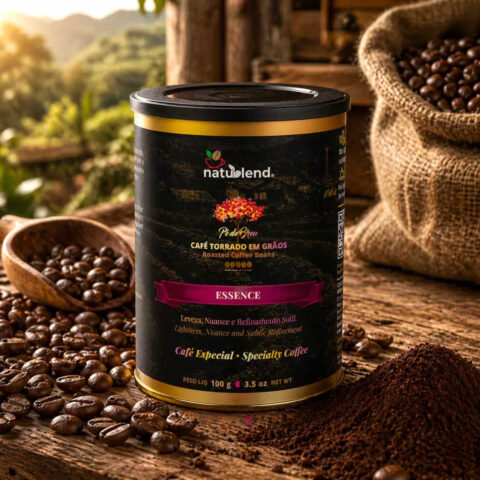
Essence, Exaltation and Expression come from the same farm, and each one, according to Natublend, goes through a roast curve calibrated for its own sensory goal. The brand’s sensory chart sums up the differences as follows:
| Coffee | Sweetness | Body | Bitterness | Acidity |
|---|---|---|---|---|
| Essence | 3 | 3 | 1 | 4 |
| Exaltation | 3 | 5 | 1 | 4 |
| Expression | 4 | 4 | 1 | 4 |
Acidity and bitterness score the same in all three, so the real difference lies in body and sweetness. Essence scores 3 for both body and sweetness and has the lightest body of the trio, in keeping with its focus on lightness and nuance. Exaltation keeps sweetness at 3 and takes body up to 5, the highest body score of the three. Expression has the highest sweetness of the trio, at 4, with body also at 4, in line with its emphasis on intensity and presence.

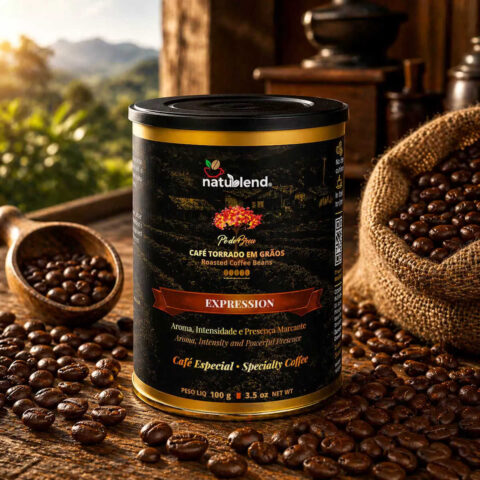
The line also includes a fourth coffee, Golden Reserve, which comes from a different property, Fazenda Boa Esperança, and has its own article.
Descriptions of all four coffees are gathered side by side on Natublend’s specialty coffees page.
Frequently Asked Questions
Where Is Sítio Pé de Breu?
The farm is in Alto Caparaó, a municipality on the Minas Gerais side of the Serra do Caparaó, and its coffee plots lie between 1,000 and 1,400 meters above sea level, according to Natublend. Alto Caparaó is one of the 16 municipalities in the delimited area of the Caparaó Designation of Origin, recognized by INPI in 2021 (INPI, 2021).
Are the Sítio Pé de Breu Coffees Organic?
Natublend does not present them as organic. According to the producer, the farm holds the SAT (Sem Agrotóxicos, or pesticide-free) certification from IMA, which covers the absence of pesticides in production. Organic production follows a different legal basis, Federal Law No. 10,831/2003, with its own rules on farm management and inputs (Gonçalves; Carmo, 2020). The ordinance that regulates SAT, by contrast, does not address fertilization (Minas Gerais, 2018).
What Is the Difference between Essence, Exaltation and Expression?
All three come from Sítio Pé de Breu and, on Natublend’s sensory chart, share the same acidity and bitterness scores. What changes is the combination of body and sweetness, and, according to the brand, each one has its own roast curve. The details are in the articles on Essence, Exaltation and Expression.
What Is the Caparaó Designation of Origin?
It is the geographical indication granted by INPI on February 2, 2021, to arabica coffee from 16 municipalities, ten in Espírito Santo and six in Minas Gerais. Using the designation is voluntary, requires full compliance with the DO’s technical specifications and goes through the Regulatory Council of APEC, which oversees production (INPI, 2021). The region’s story is told in the article on the history of coffee, from Ethiopia to Caparaó.
References
View All 14 Cited References
Peer-Reviewed Scientific Studies (3)
- DOI2022 CASSAMO, C. T. et al. Shade and Altitude Implications on the Physical and Chemical Attributes of Green Coffee Beans from Gorongosa Mountain, Mozambique. Agronomy, vol. 12, no. 10, 2540. 2022. Available at: doi.org.
- DOI2018 WORKU, M.; DE MEULENAER, B.; DUCHATEAU, L.; BOECKX, P. Effect of altitude on biochemical composition and quality of green arabica coffee beans can be affected by shade and postharvest processing method. Food Research International, vol. 105, pp. 278-285. 2018. Available at: doi.org.
- DOI2023 CAMPO-CEBALLOS, Diego Andrés; GAVIRIA-LÓPEZ, Carlos Alberto. Optimising consumer acceptability of Cauca specialty coffee through roasting profiles on acidity and body sensory attributes. Czech Journal of Food Sciences, vol. 41, no. 1, pp. 64-72. 2023. Available at: doi.org.
Institutional Sources (3)
- GOV2009 FERRÃO, Maria Amélia Gava et al. Qualidade do café arábica em diferentes altitudes no Espírito Santo. In: VI Simpósio de Pesquisa dos Cafés do Brasil, Vitória. 2009. Available at: alice.cnptia.embrapa.br.
- GOV2026 INSTITUTO MINEIRO DE AGROPECUÁRIA (IMA). Certifica Minas. 2026. Available at: ima.mg.gov.br.
- GOV2021 INSTITUTO NACIONAL DA PROPRIEDADE INDUSTRIAL (INPI). Certificado de Registro de Indicação Geográfica nº BR412019000005-0, Denominação de Origem Caparaó, with the Caderno de Especificações Técnicas. Rio de Janeiro, Feb. 2, 2021. Available at: gov.br.
Supplementary Readings (8)
- 2024 SILVA, Débora Cássia da; SAKURAGUI, Cássia Mônica. Flora of Rio de Janeiro: Protium Burm. f. (Burseraceae). Rodriguésia, vol. 75. 2024. Available at: scielo.br.
- 2026 PLANTS OF THE WORLD ONLINE (POWO). Protium Burm.f. Royal Botanic Gardens, Kew. 2026. Available at: powo.science.kew.org.
- 1861 MINAS GERAIS. Instituto Mineiro de Agropecuária. Portaria IMA nº 1861, de 31 de agosto de 2018, on the certification of plant products grown without pesticides (SAT) under the Certifica Minas Program. 2018. Available at: legisweb.com.br.
- 2020 GONÇALVES, Eliane Cristina Braga Martins; CARMO, Dirlane de Fátima do. Avaliação da sustentabilidade em sistemas agrícolas urbanos e periurbanos orgânicos e SAT: estudos de caso. Cadernos de Agroecologia, vol. 15, no. 2, Anais do XI Congresso Brasileiro de Agroecologia. 2020. Available at: cadernos.aba-agroecologia.org.br.
- 2021 SECRETARIA DE ESTADO DE AGRICULTURA, PECUÁRIA E ABASTECIMENTO DE MINAS GERAIS (SEAPA). IMA mantém credenciamento como certificador de produtos agropecuários do estado. Notícias Agrícolas, Apr. 7, 2021. Available at: noticiasagricolas.com.br.
- 2020 INSTITUTO MINEIRO DE AGROPECUÁRIA (IMA). Mais de mil fazendas de café são certificadas pelo IMA. Notícias Agrícolas, Feb. 13, 2020. Available at: noticiasagricolas.com.br.
- 2021 DIÁRIO DO COMÉRCIO. Café da região do Caparaó recebe registro de Indicação Geográfica do Inpi. Feb. 4, 2021. Available at: diariodocomercio.com.br.
- 2012 SAGE, Emma. What is the Shelf Life of Roasted Coffee? A Literature Review on Coffee Staling. Specialty Coffee Association. 2012. Available at: sca.coffee.