



The specialty coffee that now comes from the mountain farms of Caparaó has its origins in the understory of the humid forests of southwestern Ethiopia, where Coffea arabica still grows wild (Kew, 2026). Between the two lie centuries of crossings, from Yemen to the coffeehouses of Istanbul, London and Paris, until the first seeds reached Belém in 1727, almost 300 years ago (Taunay, 1945). This is the history of coffee told with a source for every fact, separating legend from record, all the way to the high-altitude regions behind Brazil’s specialty coffees.
The Origins of Coffee in Ethiopia
Linnaeus published the name Coffea arabica in 1753 with an epithet that tends to mislead, since it suggests an Arabian origin that the sources do not confirm, and Taunay was already describing the species as “misnamed by Linnaeus” (Taunay, 1945). The native range accepted by the Royal Botanic Gardens, Kew, covers southwestern Ethiopia and neighboring areas of Kenya and South Sudan, and Yemen lies outside it (Kew, 2026).
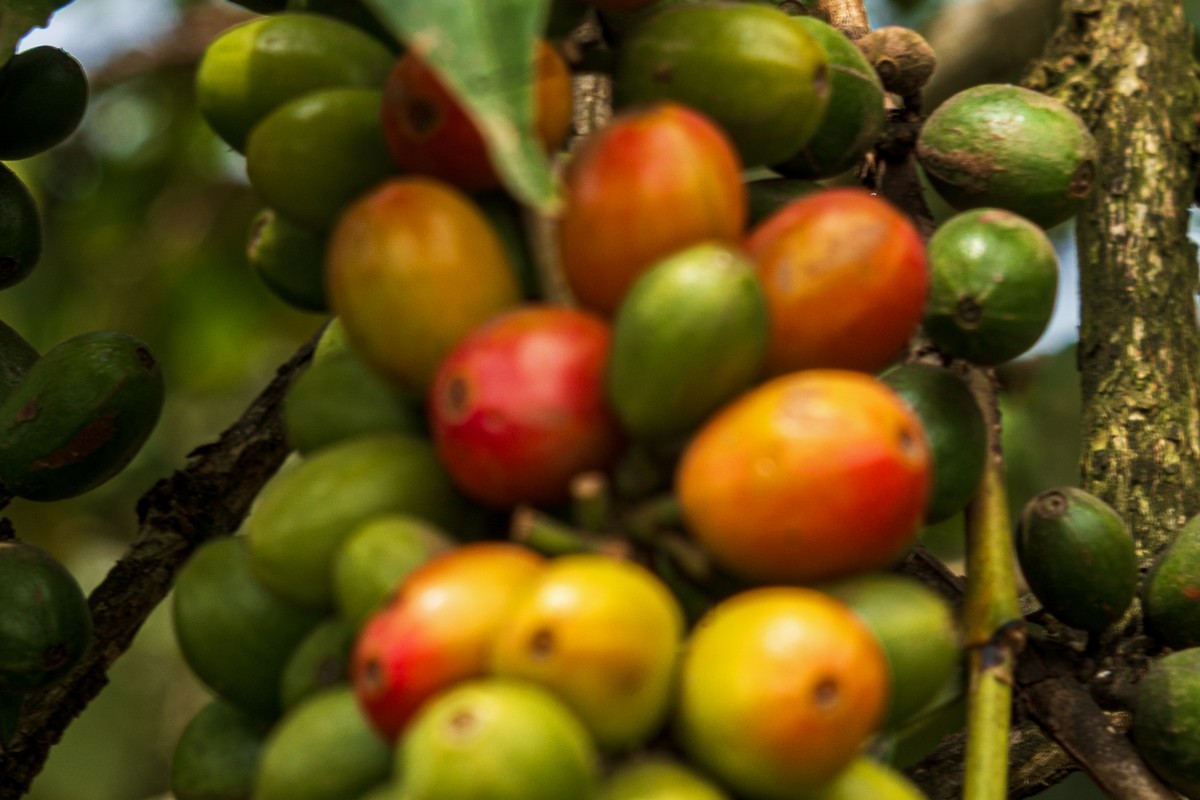
Field confirmation is recent, because it was only in 1961 and 1962 that the botanist Frederick G. Meyer made the first serious attempt to document wild arabica. He found it in abundance in the humid forests of Illubabor and Kaffa, at altitudes between roughly 900 and 1,800 meters (Meyer, 1965). In 1964 and 1965, an FAO mission proposed by Brazilian scientist Carlos Arnaldo Krug collected some 620 wild seed accessions in the country, with geneticist Lourival Carmo Mônaco, of the Instituto Agronômico de Campinas, on the team (Mônaco, n.d.).
Arabica arose from a natural hybridization between Coffea canephora, the species behind robusta and conilon, and Coffea eugenioides, in an event estimated at between 350,000 and 610,000 years ago (Salojärvi et al., 2024). The species later went through bottlenecks that narrowed its diversity, which is why the wild populations of southwestern Ethiopia, the largest and most diverse in existence, hold so much genetic value (Salojärvi et al., 2024; Davis et al., 2012). It was there, in 2010, that UNESCO designated the Kafa Biosphere Reserve, which it describes as the center of origin and genetic diversity of wild arabica (UNESCO, 2010).
The Legend of Kaldi the Goatherd
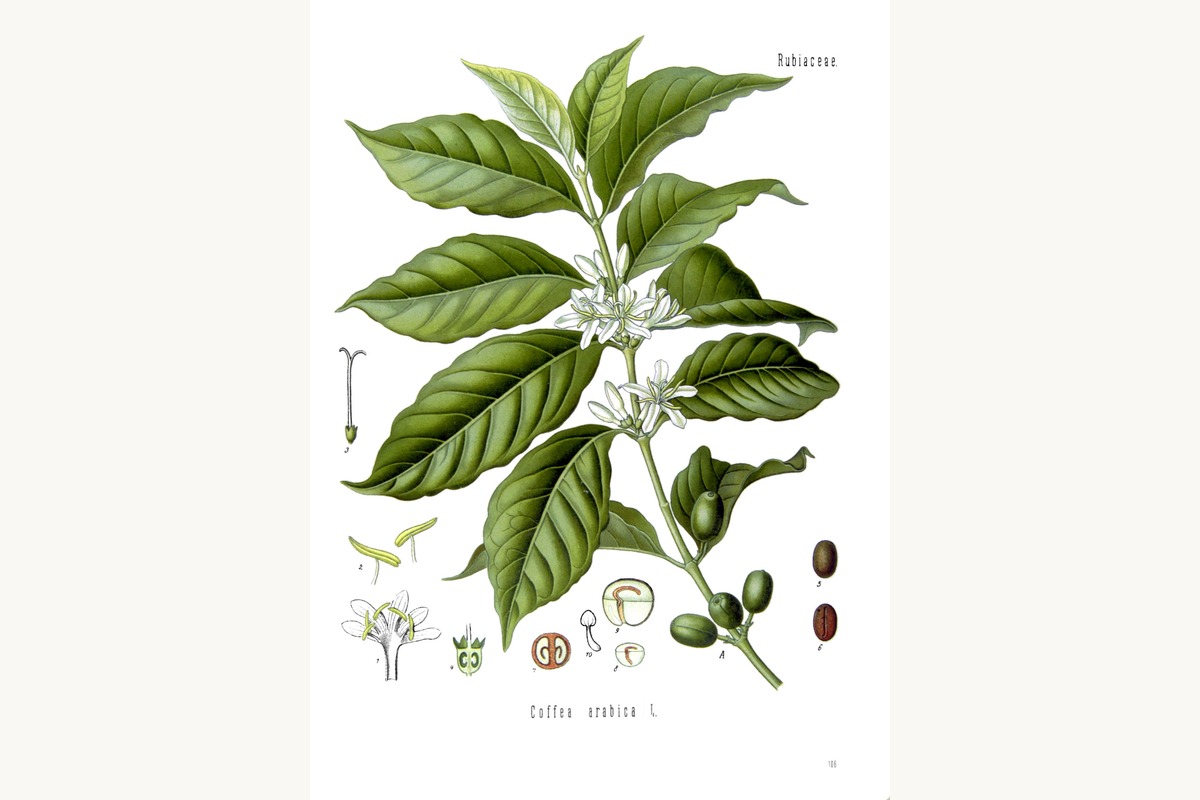
The earliest written record of the goatherd legend is a Latin treatise published in Rome in 1671 by Antonius Faustus Naironus. In it, the herder has no name, tends camels or goats, and the scene takes place in Yemen, not Ethiopia. The one who boils the fruit is the prior of a monastery, who stays awake through the night and leads his monks to adopt the drink for their vigils (Naironus, 1671). The name Kaldi was popularized in 1922 by William Ukers, who attributed it to a French version by an unidentified author (Ukers, 1922), and the date of AD 850 also belongs to the legend (Britannica, 2026a). It is still often said that the word coffee comes from Kaffa, but dictionaries trace the term to the Arabic qahwa, which passed into Turkish as kahve and from there into Italian as caffè (Merriam-Webster, 2026).
The Expansion into the Arab World
The first reliable record of coffee as a drink comes from across the Red Sea. According to historian Ralph Hattox, Sufis in Yemen were already drinking it by the mid-15th century, using the infusion to get through their nighttime devotions, as 16th-century Arabic sources report, among them the treatise by al-Jaziri (Hattox, 1985). The Yemeni port of Mokha became the main coffee export hub of Arabia and gave its name to the word mocha (Britannica, 2026b), and until the end of the 17th century practically all the world’s coffee came from Yemen (Britannica, 2026a; Meyer, 1965).
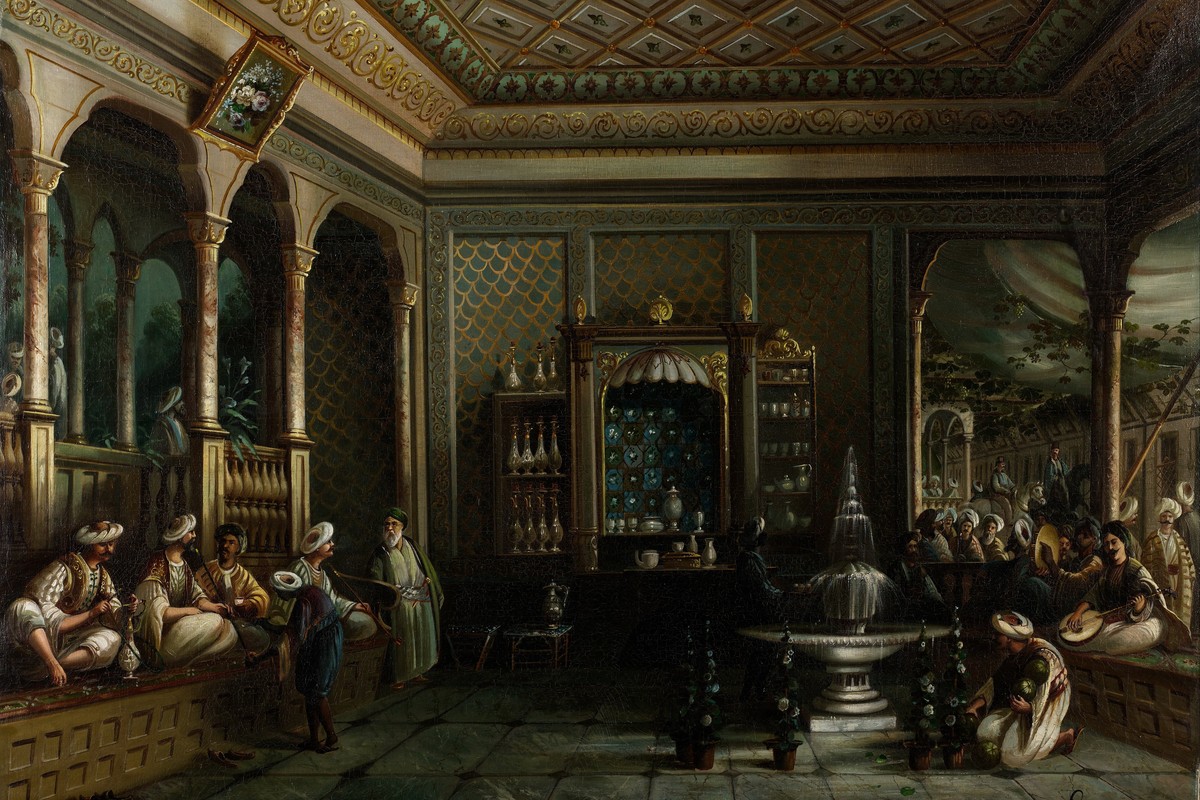
From Yemen, the drink reached Mecca and Cairo around the turn of the 16th century and soon met resistance. In Mecca, in 1511, the market inspector Khair Beg convened jurists who condemned coffee, and stocks were burned in public (Ayvazoğlu, 2011). In Istanbul, the first coffeehouses opened around 1554 or 1555 in the Tahtakale district (Ayvazoğlu, 2011). These houses, the qahveh khaneh (a Persian name; kahvehane in Turkish), drew learned men who came to discuss the news, talk, play chess and listen to music, to the point of earning the nickname “schools of the wise” (Britannica, 2026a).
The Arrival in Europe
Europe first came to know coffee through the books of travelers and botanists such as Prospero Alpini, who published the first printed European description of the plant in Venice in 1592 (Ukers, 1922). According to Ukers, Venetian merchants brought the beans to the continent around 1615 (Ukers, 1922). At first, coffee was sold in apothecary shops as a drug, in keeping with the medical beliefs of the time (Ukers, 1922).
The legend of Pope Clement VIII is set even before this trade, with priests supposedly urging him to ban the drink as an invention of Satan and the pope, after tasting it, choosing to baptize it instead. Ukers, who retells the episode, presents it as a much-quoted legend and points to no document of the period that confirms it (Ukers, 1922). If it happened, it was before 1605, the year the pope died, when coffee was still reaching Italy as a novelty brought by travelers and botanists (Britannica, 2026c; Ukers, 1922).
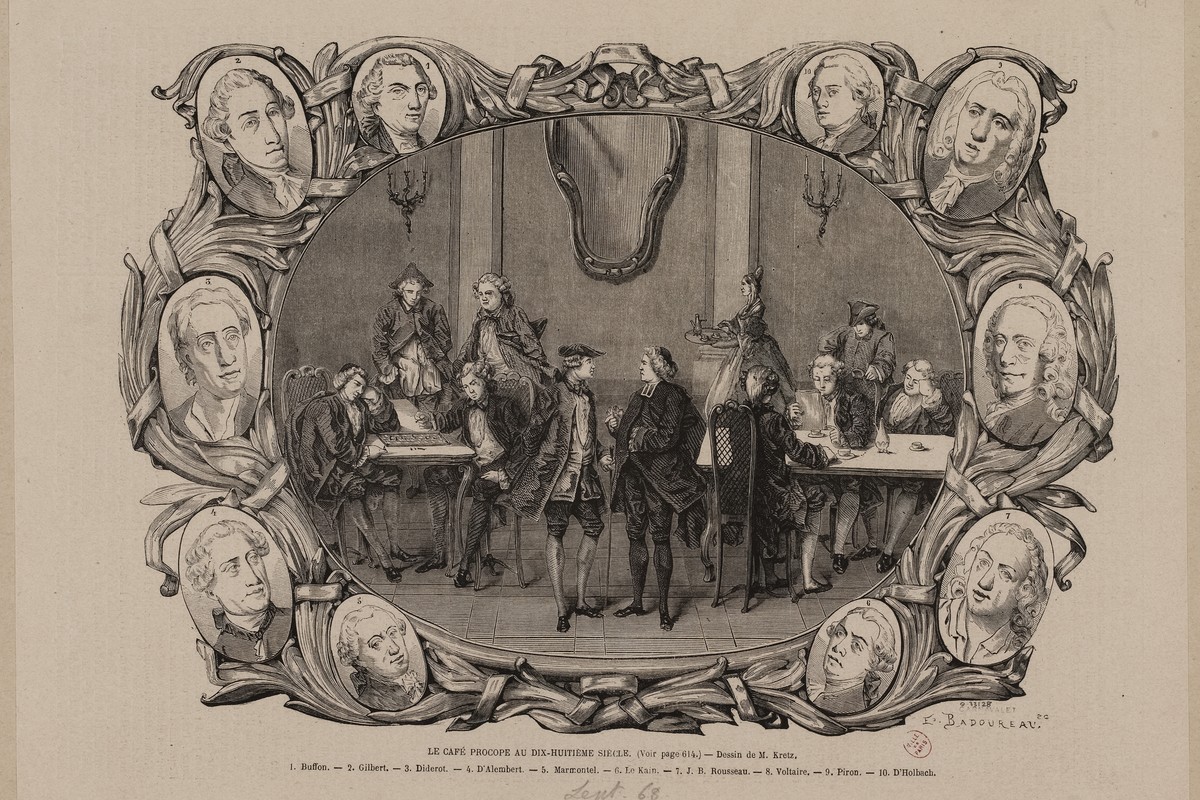
In England, the first coffeehouse opened in Oxford around 1650 or 1651, according to the antiquary Anthony Wood (Wood, 1891), and London’s first around 1652, run by Pasqua Rosée (Ukers, 1922). It was at Edward Lloyd’s coffeehouse, first mentioned in 1688, that merchants began underwriting marine insurance, the origin of Lloyd’s of London (Lloyd’s, 2026). In Vienna, the archives record the first official privilege to serve coffee in 1685, granted to the Armenian Johannes Deodat (or Diodato), and not to Georg Franz Koltschitzky, the hero of the legend of the 1683 Ottoman siege (Wien Geschichte Wiki, 2026). In Paris, Café Procope, opened in 1686, became a meeting place for the intellectuals of the Enlightenment (Britannica, 2026d; Britannica, 2026e).
Coffee Crosses the Atlantic
The Dutch broke the Yemeni monopoly by taking the coffee plant from Malabar, in India, to Java, where the seedlings thrived from 1699 onward (Ukers, 1922). There, the Dutch East India Company imposed compulsory deliveries of the beans on local regents, a system Ukers describes as a forced industry (Ukers, 1922). In 1714, Amsterdam sent Louis XIV a coffee tree that went to the Jardin du Roi, today’s Jardin des Plantes in Paris, and that is regarded as the mother plant of the seedlings taken to the French colonies (Ukers, 1922). On the other side of the ocean, Saint-Domingue, present-day Haiti, and Suriname became the great producers of the Americas in the 18th century, both relying on enslaved African labor on a massive scale (Marquese, 2022).
The story of the French naval officer Gabriel de Clieu mixes fact and legend. It is established that he took a seedling from Paris to Martinique in the early 1720s, in 1723 according to the most widely accepted date, and that he was recognized for it during his lifetime (Ukers, 1922). The heroic details, such as the water ration he shared with the plant during the crossing, come from a letter he wrote half a century later, with no independent confirmation (Ukers, 1922; Du Bois, 1855). And the idea that nearly all the coffee of the Americas descends from that seedling does not hold up, because Brazil’s coffee came from French Guiana (Ukers, 1922).
The Arrival of Coffee in Brazil: Records and Legend
Coffee entered Brazil through Pará, with seeds and seedlings brought from Cayenne to Belém in 1727 by Sergeant Major Francisco de Melo Palheta, a route that historian Afonso de Taunay considered “absolutely incontestable” (Taunay, 1945). The journey had a diplomatic purpose, a border dispute with French Guiana. Yet the written instructions that the governor of Maranhão, João da Maia da Gama, handed to Palheta already provided for coffee, with the order to “hide a few beans with every disguise and every caution.” This is why Taunay credits the governor with the idea of introducing coffee to Brazil (Taunay, 1945).
In the petition he sent to King João V in 1733, Palheta states that the governor of Cayenne had forbidden giving the Portuguese any coffee capable of germinating, and says he brought back, at his own expense, “a thousand-odd fruits” and five plants, without mentioning any woman (Martins, 1999). Taunay records the same cargo as five live seedlings and a thousand-odd seeds (Taunay, 1945). The governor’s wife first appears in a chronicle written decades later by the bishop of Pará, in which she, in front of her husband, slips a handful of seeds into the Portuguese officer’s coat pocket, with neither romance nor flowers (Taunay, 1945).
The most popular version, with a seduction and a farewell bouquet hiding seeds, is not in that account, yet it is repeated as fact even by the National Coffee Association of the United States (NCA, 2026). Historian Basílio de Magalhães considered the gift plausible, but only as conjecture (Martins, 1999), and the known documents point to an operation planned by the colonial government, not to a romantic escapade. Palheta himself is so poorly documented that Taunay did not know whether he was Brazilian or Portuguese (Taunay, 1945).
The Coffee Cycle and Brazil’s Rise
From Rio de Janeiro to the Paraíba Valley
Because production in Pará was never significant, coffee only gained scale in the Southeast, after the high court judge João Alberto de Castelo Branco took it to Rio de Janeiro around 1760, according to Taunay (Taunay, 1945). It spread quickly there, and Rio’s exports jumped from 57 arrobas (an old unit of about 15 kilograms) in 1779 to 539,000 in 1820 (Carvalho, 2007). The great boost came from abroad, when the uprising of enslaved people in Saint-Domingue brought down output in the colony, then the world leader, from 40,000 metric tons in 1789 to 9,000 in 1818, by then in independent Haiti (Topik, 2004). After 1810, according to Taunay, the great coffee rush began, stripping the hills of their forests and taking over the Paraíba Valley (Taunay, 1945), the country’s main producing region between 1830 and 1870 (Martins, 1999).
Slavery, Immigration and Railways
This expansion rested on slavery, and until 1888 planting and harvesting were done by hand by enslaved people (Topik, 2004), while the trade in enslaved people grew alongside the coffee groves (Taunay, 1945). Historian Ana Luiza Martins opens the section on labor in her book under the title “O Brasil é o café e o café é o negro,” or “Brazil is coffee and coffee is the Black man” (Martins, 1999). She also points out that even after the transatlantic slave trade ended in 1850, the interprovincial trade kept sending captives from the Northeast to the coffee-growing South in the decades that followed (Martins, 1999).
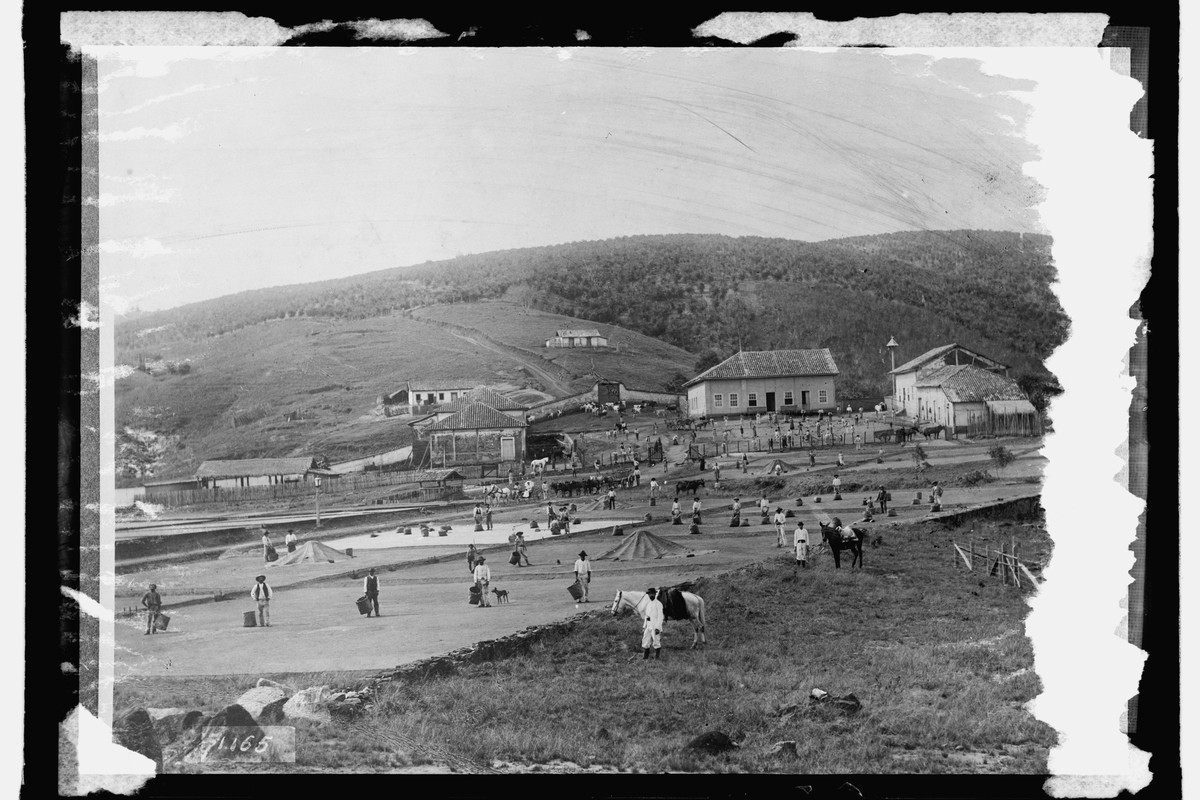
Enslaved labor gave way to subsidized immigration, mostly Italian, and between 1870 and 1920 Italians made up 42% of the immigrants arriving in Brazil, about 1.4 million people (Gomes, 2007). Most of them went to the coffee farms of São Paulo under the colonato, a family labor regime marked by debts that created dependency (Gomes, 2007). Railways completed the machinery from 1867 onward, with the São Paulo Railway linking Jundiaí and Santos (Martins, 1999), and the country built by far the largest rail network among coffee producers (Topik, 2004).
How Brazil Became the World’s Largest Producer
There is no official year for the start of Brazil’s global leadership, which historians place between the late 1830s and 1850, and Topik states that by 1850 Brazil was already producing more than half of the world’s coffee (Topik, 2004). Taunay’s series shows the Brazilian share reaching 75% in 1901-1906 (Taunay, 1945), when overproduction led to the Taubaté Agreement, the first coffee valorization plan (Dubois, 2013). Today the country accounts for almost 40% of world production (USDA, 2026), and Conab, Brazil’s national supply agency, estimates the 2026 crop at 67.6 million 60-kilogram bags, 48.2 million of them arabica (Conab, 2026).
The Specialty Coffee Movement
The term specialty coffee, which gave rise to the Brazilian café especial, was coined in 1974 by importer Erna Knutsen in the United States (SCA, n.d.), around the idea that specific microclimates produce beans with unique flavors (Alves et al., 2024). On the traditional scale of the Specialty Coffee Association (SCA), a coffee counts as specialty when it scores at least 80 points in a standardized cupping and also passes a physical grading of the green beans that allows no primary defects in a 350-gram sample (SCA, 2018). Since November 2024, the SCA has used a new cupping system, the Coffee Value Assessment, which replaces the 2004 protocol (SCA, 2024), but the 80-point floor remains in the regulations of Brazilian geographical indications such as Cerrado Mineiro and Chapada Diamantina (INPI, 2013a; INPI, 2024).
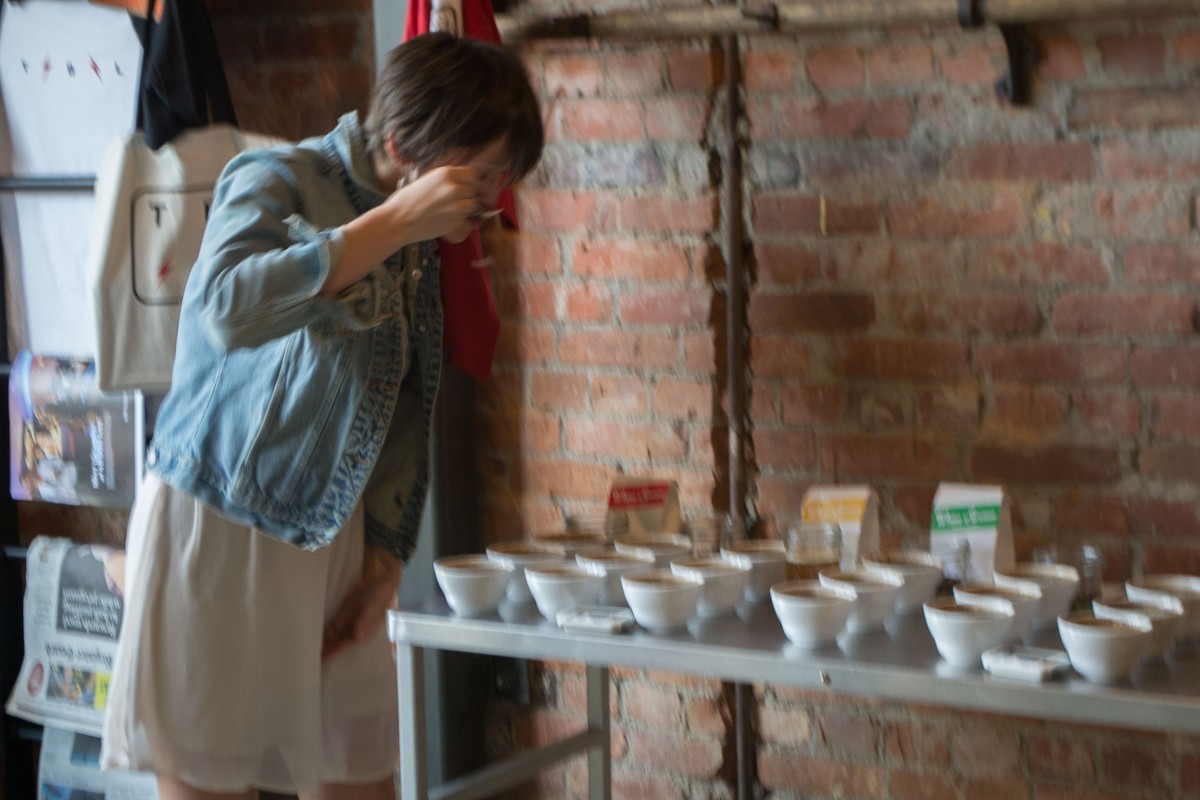
The movement gained momentum with the so-called third wave, a term attributed to American roastmaster Trish Rothgeb in the early 2000s (Rothgeb, 2011) for the phase in which coffee came to be valued for its origin, processing and variety (Guimarães et al., 2016). The Cup of Excellence was born in Brazil in 1999, together with the first online coffee auction (ACE, 2026), and its Brazilian edition is now organized by BSCA, the Brazil Specialty Coffee Association (BSCA, 2026).
Brazil’s Specialty Coffee Regions
Altitude appears in almost every regulation for an agronomic reason, as temperature is the main environmental factor in arabica quality (Alves et al., 2024). Cooler mountain temperatures lengthen the ripening of the cherries, which favors the buildup of compounds linked to aroma (Alves et al., 2024; Vaast et al., 2006). In Carmo de Minas, scores above 88 points were concentrated above 1,200 meters, but in Brazil latitude makes up for part of the altitude, which is why each region sets its own floor (Alves et al., 2024).
The demarcated regions receive a geographical indication (GI) registration from INPI, Brazil’s National Institute of Industrial Property, under one of two categories: Indication of Source (IP, from the Portuguese Indicação de Procedência), when the place became known for its production, or Designation of Origin (DO, from Denominação de Origem), when the quality is essentially due to the geographical environment (Brasil, 1996). Brazil’s main specialty coffee regions are the following:
- Alta Mogiana: IP since 2013, with 16 São Paulo municipalities around Franca, expanded in 2023 to 23 with the addition of seven from Minas Gerais, and farms between 900 and 1,000 meters (INPI, 2013b).
- Cerrado Mineiro: Brazil’s first coffee GI (IP in 2005) and the country’s first coffee DO (2013), with arabica from 800 meters up and an 80-point floor (INPI, 2026; INPI, 2013a).
- Chapada Diamantina: DO since 2024, with 24 municipalities in Bahia, a minimum altitude of 850 meters and an almost entirely manual harvest (INPI, 2024).
- Mantiqueira de Minas: DO since 2020, with 25 municipalities on the Minas Gerais side of the range and an 83-point floor, higher than usual (INPI, 2020a).
- Matas de Minas: IP since 2020, with more than 60 municipalities in eastern Minas Gerais, arabica above 600 meters and a strong presence of family farming (INPI, 2020b).
- Montanhas do Espírito Santo: DO since 2021, with 16 highland municipalities and arabica between 500 and 1,400 meters (INPI, 2021a).
- Sul de Minas: the South and Center-West region of Minas Gerais is the country’s largest arabica producer, with 21.3% of all Brazilian coffee in 2025 (Conab, 2025), but there is no coffee GI by that name, since the Sul de Minas IP covers wines (INPI, 2025).
Espírito Santo is home to two distinct coffees, and in 2025 conilon accounted for 81% of the state’s output (Conab, 2025). Belonging to the species Coffea canephora, conilon grows in warmer, lower-lying areas and has had its own IP since 2021 (INPI, 2021b), while arabica occupies the cool, mountainous highlands, with 52% of the state’s arabica harvested in the Sul-Caparaó region, according to Incaper, the state agricultural research and extension institute (Incaper, n.d.).
Caparaó: Altitude, Mountains and Identity
The Park and Pico da Bandeira
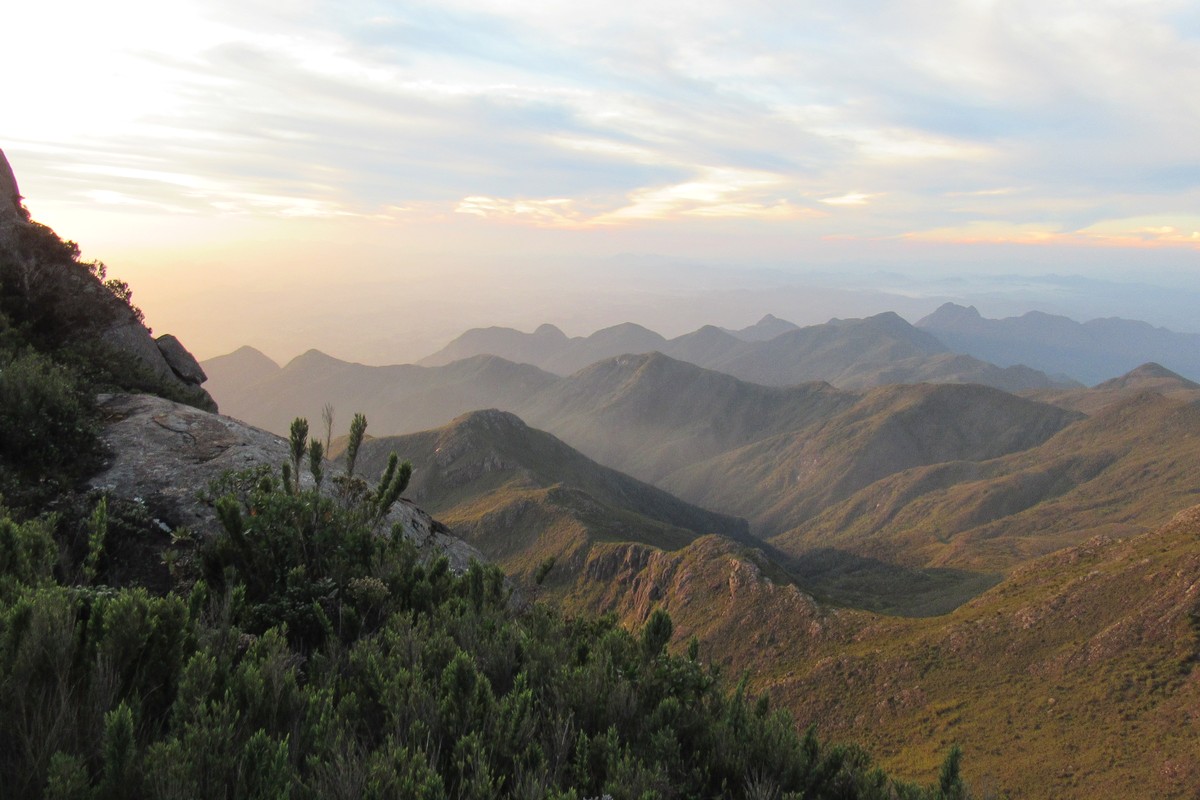
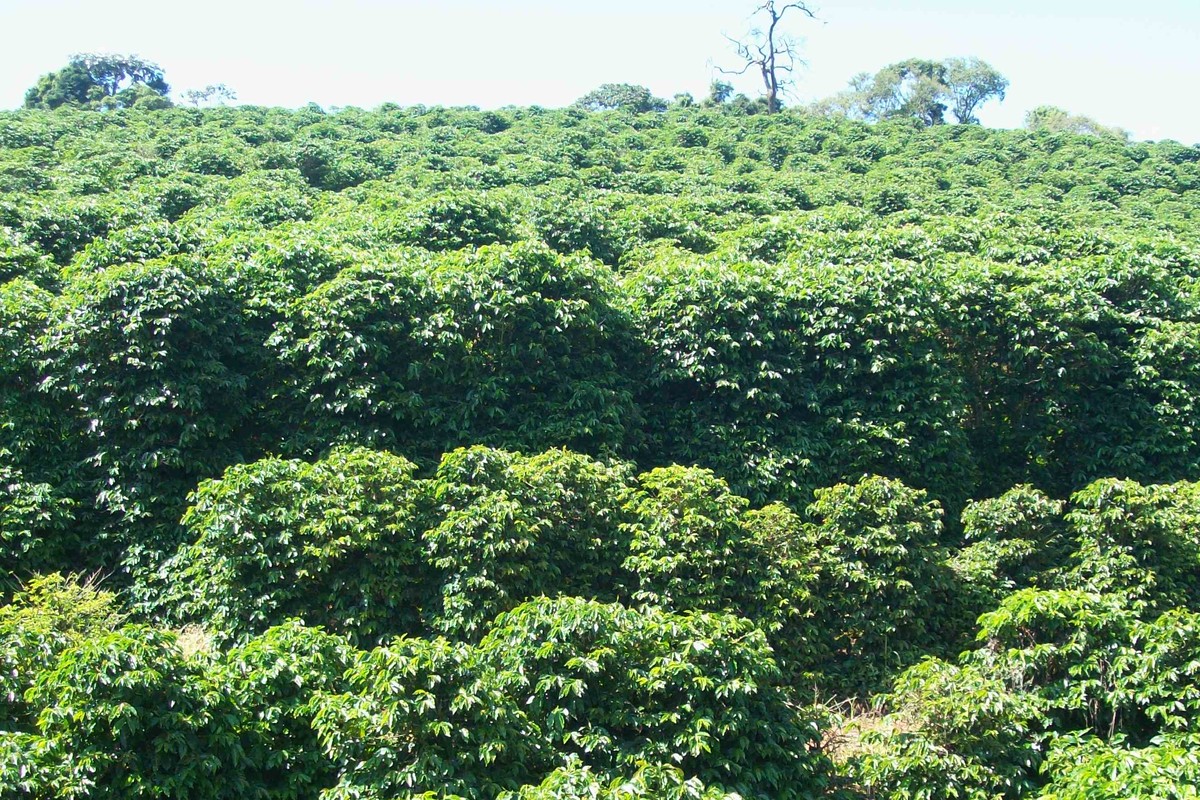
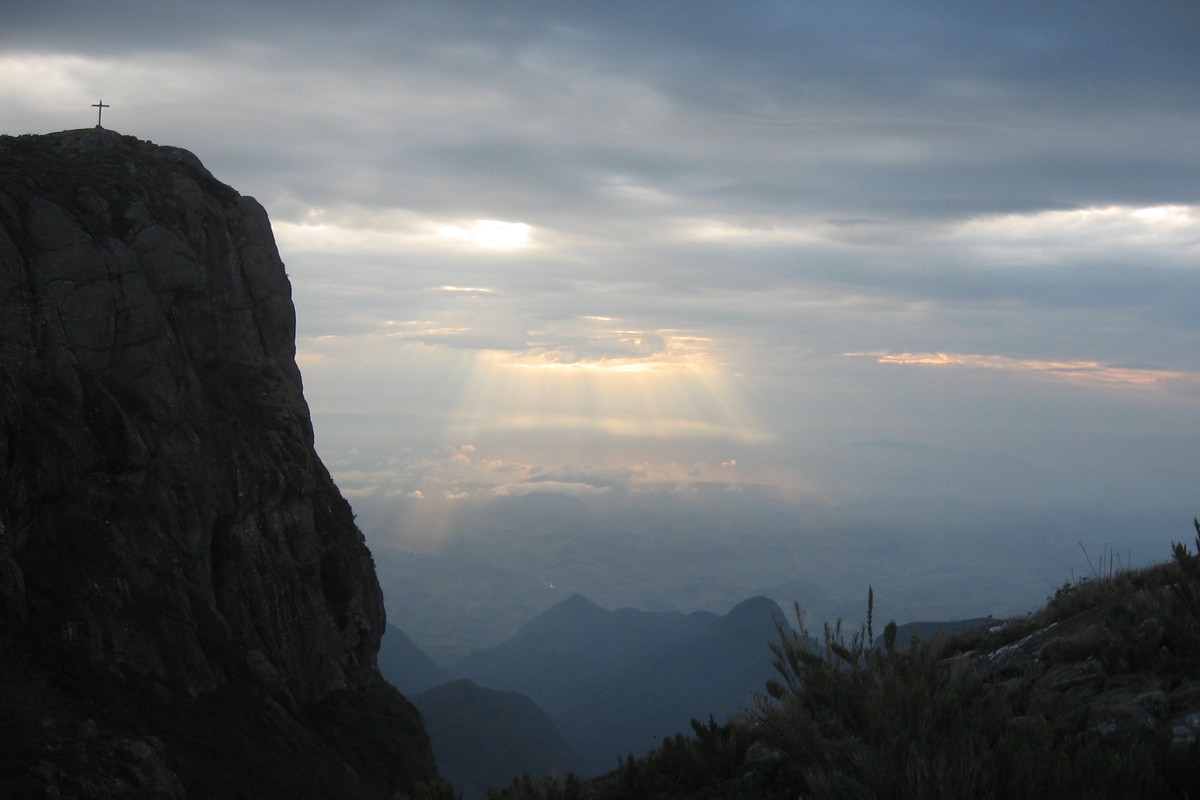
The Serra do Caparaó, on the border between Espírito Santo and Minas Gerais, is home to Caparaó National Park, created on May 24, 1961, by Decree No. 50,646 (Brasil, 1961). Now managed by ICMBio, the federal agency for protected areas, the park covers about 31,800 hectares of high-altitude grasslands and Atlantic Forest (ICMBio, 2026). Within it rises Pico da Bandeira, at 2,891.4 meters the third-highest point in Brazil according to IBGE, the national statistics institute (IBGE, 2024). Around the park, where the climate is tropical highland, more than 80% of the coffee fields lie on strongly rolling or mountainous terrain, which makes harvesting essentially manual (Souza et al., 2021).
The Caparaó Designation of Origin
Coffee growers began organizing in 2014 and in 2016 founded the Caparaó Specialty Coffee Producers Association, known by its Portuguese acronym APEC (Souza et al., 2021). On February 2, 2021, INPI recognized Caparaó as a Designation of Origin for arabica coffee, the first DO for any product from Espírito Santo, covering 4,754.63 km² across 16 municipalities (INPI, 2021c; Souza et al., 2021):
- Espírito Santo: Alegre, Divino de São Lourenço, Dores do Rio Preto, Guaçuí, Ibatiba, Ibitirama, Irupi, Iúna, Muniz Freire and São José do Calçado.
- Minas Gerais: Alto Caparaó, Alto Jequitibá, Caparaó, Espera Feliz, Manhumirim and Martins Soares.
The six Minas Gerais municipalities also belong to the Matas de Minas IP (INPI, 2020b), and a 2025 study identifies Caparaó as the country’s first coffee GI to bring together municipalities from two states (Santos et al., 2025). The DO’s book of technical specifications sets no minimum altitude, but it describes farms at altitudes ranging from 800 to 1,400 meters. To earn the seal, the coffee must score within the SCA specialty range, which in practice means 80 points or more (APEC, 2020).
The Profile Described in the Registration
The registration describes a very sweet coffee with delicate citric acidity and a silky to creamy body, showing at least five descriptors from among almonds, brown sugar, caramel, chocolate, floral, honey, molasses, nuts, rapadura (unrefined cane sugar), spices, vanilla and yellow fruits (INPI, 2021c). This is a reference profile for the designation, not a guarantee for every cup. The same document accepts the producers’ claim that the local microclimate is comparable to that of the belt between 1,500 and 2,400 meters in Ethiopia, with the difference that full-sun farms predominate in Caparaó (INPI, 2021c).
An Origin with History and Awards
Caparaó’s ties to the genetics of Brazilian coffee go back a long way. According to a 1952 record cited by Incaper, the seeds of the Caturra cultivar that reached the Instituto Agronômico de Campinas at the end of 1937 were harvested on the São João farm, on land that now belongs to the municipality of Divino de São Lourenço (Souza et al., 2021). In national competitions, the region took second and third place for arabica at Coffee of the Year Brasil 2020 (A Gazeta, 2020). On the Minas Gerais side, growers from Espera Feliz won the top places statewide in the Minas Gerais Coffee Quality Competition in 2017, 2018 and 2019, according to the state rural extension agency Emater-MG (Emater-MG, 2020).
From Farm to Cup with Natublend Curation
This history of coffee, traced from the wild coffee forests of Ethiopia to the present day, leads to the work of Natublend Curation, which selects the beans for the brand’s specialty coffee line from high-altitude Brazilian farms. The selection results in four cup profiles, each with its own sensory character:

Essence
Lightness and subtle refinement.

Exaltation
Complexity and depth.

Expression
Aroma and intensity.
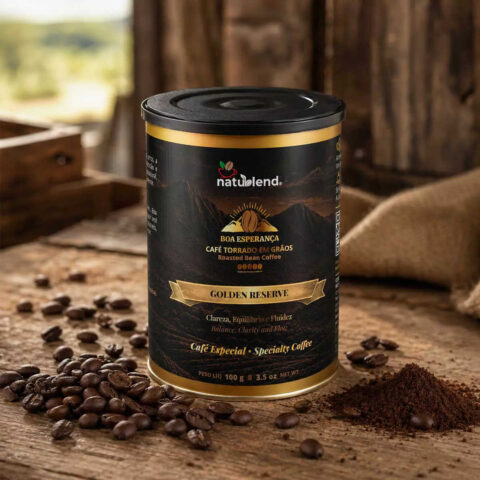
Golden Reserve
Clarity and balance.
All four come in an airtight tin and can be compared on the Natublend specialty coffees page.
Frequently Asked Questions
Did Coffee Originate in Ethiopia or Yemen?
The plant is native to southwestern Ethiopia and neighboring areas (Kew, 2026), but coffee drinking was first documented in Yemen, in the mid-15th century (Hattox, 1985).
Is the Story of Kaldi the Goatherd True?
There is no historical evidence for it. The earliest account, from 1671, does not name the herder and sets the scene in Yemen, not Ethiopia (Naironus, 1671).
Who Brought Coffee to Brazil?
Sergeant Major Francisco de Melo Palheta, on an official mission in 1727, took seeds and seedlings from Cayenne to Belém. The story of the bouquet given by the French governor’s wife does not appear in the documents (Taunay, 1945).
Does Caparaó Coffee Have a Designation of Origin?
Yes, since February 2, 2021, for arabica coffee from 16 municipalities in Espírito Santo and Minas Gerais (INPI, 2021c).
References
View All 60 Cited References
Peer-Reviewed Scientific Studies (5)
- DOI1965 MEYER, Frederick G. Notes on wild Coffea arabica from southwestern Ethiopia, with some historical considerations. Economic Botany, vol. 19, no. 2, pp. 136-151. 1965. Available at: doi.org.
- DOI2024 SALOJÄRVI, Jarkko et al. The genome and population genomics of allopolyploid Coffea arabica reveal the diversification history of modern coffee cultivars. Nature Genetics, vol. 56, no. 4, pp. 721-731. 2024. Available at: doi.org.
- DOI2012 DAVIS, Aaron P.; GOLE, Tadesse W.; BAENA, Susana; MOAT, Justin. The Impact of Climate Change on Indigenous Arabica Coffee (Coffea arabica): Predicting Future Trends and Identifying Priorities. PLoS ONE, vol. 7, no. 11, e47981. 2012. Available at: doi.org.
- DOI1750 MARQUESE, Rafael de Bivar. A Tale of Two Coffee Colonies: Environment and Slavery in Suriname and Saint-Domingue, ca. 1750-1790. Comparative Studies in Society and History, vol. 64, no. 3. 2022. Available at: doi.org.
- DOI2025 SANTOS, Z. C. dos; MALHEIROS, F. C. N.; LEMKE, H. P.; BARBOSA, P. M. da S.; BRUNCH, K. L. Desafios de gestão no pós-registro de Indicações Geográficas do café: os casos Montanhas do Espírito Santo e Caparaó. Terceiro Milênio: Revista Crítica de Sociologia e Política, vol. 27, pp. 167-189. 2025. Available at: doi.org.
Institutional Sources (24)
- GOV2010 UNESCO. Kafa (Biosphere Reserve). Man and the Biosphere Programme (MAB). 2010. Available at: unesco.org.
- GOV2011 AYVAZOĞLU, Beşir. Turkish Coffee Culture. Ministry of Culture and Tourism of Türkiye. 2011. Available at: teda.ktb.gov.tr.
- GOV2007 CARVALHO, Alcides. Histórico do desenvolvimento do cultivo do café no Brasil. Documentos IAC, 34. Campinas: Instituto Agronômico. 2007. Available at: iac.sp.gov.br.
- GOV2007 GOMES, Angela de Castro. Imigrantes italianos: entre a italianità e a brasilidade. In: IBGE. Brasil: 500 anos de povoamento. Rio de Janeiro: IBGE. 2007. Available at: biblioteca.ibge.gov.br.
- GOV2026 USDA FOREIGN AGRICULTURAL SERVICE. Coffee: World Markets and Trade. United States Department of Agriculture. 2026. Available at: apps.fas.usda.gov.
- GOV2026 CONAB. Acompanhamento da safra brasileira de café, v. 13, safra 2026, n. 3, terceiro levantamento. Companhia Nacional de Abastecimento. 2026. Available at: gov.br.
- GOV2024 ALVES, H. M. R.; VOLPATO, M. M. L.; BORÉM, F. M. et al. Efeitos das características ambientais na qualidade do café. Informe Agropecuário, Belo Horizonte, vol. 45, no. 327, pp. 17-26. 2024. Available at: alice.cnptia.embrapa.br.
- GOV INPI. Ficha técnica de registro de Indicação Geográfica: Região do Cerrado Mineiro (DO). Instituto Nacional da Propriedade Industrial. 2013a. Available at: gov.br.
- GOV1996 BRASIL. Lei nº 9.279, de 14 de maio de 1996 (Lei da Propriedade Industrial). Presidência da República. 1996. Available at: planalto.gov.br.
- GOV INPI. Ficha técnica de registro de Indicação Geográfica: Alta Mogiana (IP). Instituto Nacional da Propriedade Industrial. 2013b. Available at: gov.br.
- GOV2026 INPI. Lista das Indicações de Procedência reconhecidas (atualizada em 29/09/2026). Instituto Nacional da Propriedade Industrial. 2026. Available at: gov.br.
- GOV2024 INPI. Ficha técnica de registro de Indicação Geográfica: Café da Chapada Diamantina (DO). Instituto Nacional da Propriedade Industrial. 2024. Available at: gov.br.
- GOV INPI. Ficha técnica de registro de Indicação Geográfica: Mantiqueira de Minas (DO). Instituto Nacional da Propriedade Industrial. 2020a. Available at: gov.br.
- GOV INPI. Ficha técnica de registro de Indicação Geográfica: Matas de Minas (IP). Instituto Nacional da Propriedade Industrial. 2020b. Available at: gov.br.
- GOV INPI. Ficha técnica de registro de Indicação Geográfica: Montanhas do Espírito Santo (DO). Instituto Nacional da Propriedade Industrial. 2021a. Available at: gov.br.
- GOV2025 CONAB. 4º Levantamento de Café, Safra 2025: tabela de dados, estimativas da produção e colheita. Companhia Nacional de Abastecimento. 2025. Available at: gov.br.
- GOV2025 INPI. Ficha técnica de registro de Indicação Geográfica: Sul de Minas (IP, wines). Instituto Nacional da Propriedade Industrial. 2025. Available at: gov.br.
- GOV INPI. Ficha técnica de registro de Indicação Geográfica: Espírito Santo (IP, conilon coffee). Instituto Nacional da Propriedade Industrial. 2021b. Available at: gov.br.
- GOV INCAPER. Cafeicultura Arábica. Instituto Capixaba de Pesquisa, Assistência Técnica e Extensão Rural. n.d. Available at: incaper.es.gov.br.
- GOV2026 ICMBIO. Parque Nacional do Caparaó. Instituto Chico Mendes de Conservação da Biodiversidade. 2026. Available at: gov.br.
- GOV2024 IBGE. Anuário Estatístico do Brasil 2024, Tabela 1.3.2.1: Pontos mais altos do Brasil. Instituto Brasileiro de Geografia e Estatística. 2024. Available at: anuario.ibge.gov.br.
- GOV2021 SOUZA, M. A. de; SIMÃO, J. B. P.; SILVA, M. V. da; ZANUNCIO JUNIOR, J. S. Denominação de Origem Caparaó para Café Arábica. Incaper em Revista, vols. 11 and 12, pp. 49-60. 2021. Available at: biblioteca.incaper.es.gov.br.
- GOV INPI. Ficha técnica de registro de Indicação Geográfica: Caparaó (DO). Instituto Nacional da Propriedade Industrial. 2021c. Available at: gov.br.
- GOV2020 APEC; INPI. Caderno de Especificações Técnicas da Denominação de Origem Caparaó para Café. Instituto Nacional da Propriedade Industrial. 2020. Available at: gov.br.
Supplementary Readings (31)
- 2026 ROYAL BOTANIC GARDENS, KEW. Coffea arabica L. Plants of the World Online (POWO). 2026. Available at: powo.science.kew.org.
- 1727 TAUNAY, Afonso d’E. Pequena história do café no Brasil (1727-1937). Rio de Janeiro: Departamento Nacional do Café (reissued by Fundação Darcy Ribeiro, 2014). 1945. Available at: fundar.org.br.
- MÔNACO, Lourival C.; FERRARESSO, Jonas Leme. An Unprecedented Journey: The FAO Coffee Mission to Ethiopia. Specialty Coffee Association, 25 Magazine, issue 13. n.d. Available at: sca.coffee.
- 1671 NAIRONUS, Antonius Faustus. De saluberrima potione cahue, seu cafe nuncupata discursus. Rome: Typis Michaelis Herculis (digitized by the Internet Archive). 1671. Available at: archive.org.
- 1922 UKERS, William H. All About Coffee. New York: The Tea and Coffee Trade Journal Company (Project Gutenberg). 1922. Available at: gutenberg.org.
- ENCYCLOPAEDIA BRITANNICA. History of coffee. Britannica. 2026a. Available at: britannica.com.
- 2026 MERRIAM-WEBSTER. Coffee (entry, Word History). Merriam-Webster Dictionary. 2026. Available at: merriam-webster.com.
- 1985 HATTOX, Ralph S. Coffee and Coffeehouses: The Origins of a Social Beverage in the Medieval Near East. Seattle: University of Washington Press. 1985. Available at: archive.org.
- ENCYCLOPAEDIA BRITANNICA. Mokha (Mocha), Yemen. Britannica. 2026b. Available at: britannica.com.
- ENCYCLOPAEDIA BRITANNICA. Clement VIII. Britannica. 2026c. Available at: britannica.com.
- 1891 WOOD, Anthony; CLARK, Andrew (ed.). The Life and Times of Anthony Wood, vol. 1. Oxford Historical Society. 1891. Available at: archive.org.
- 2026 LLOYD’S. Lloyd’s history, chapter one. Lloyd’s. 2026. Available at: lloyds.com.
- 2026 WIEN GESCHICHTE WIKI (City of Vienna). Kaffeehaus; Johannes Deodat; Georg Franz Koltschitzky. Wien Geschichte Wiki. 2026. Available at: geschichtewiki.wien.gv.at.
- ENCYCLOPAEDIA BRITANNICA. Enlightenment. Britannica. 2026d. Available at: britannica.com.
- ENCYCLOPAEDIA BRITANNICA. Denis Diderot. Britannica. 2026e. Available at: britannica.com.
- 1855 DU BOIS, Louis. Notice sur le chevalier de Clieu et bibliographie du café. Caen (digital edition on Wikisource). 1855. Available at: fr.wikisource.org.
- 1850 MARTINS, Ana Luiza. Império do café: a grande lavoura no Brasil, 1850 a 1890. 7th ed. São Paulo: Atual. 1999. Print edition.
- 2026 NATIONAL COFFEE ASSOCIATION USA. History of Coffee. About Coffee. 2026. Available at: aboutcoffee.org.
- 2004 TOPIK, Steven. The World Coffee Market in the Eighteenth and Nineteenth Centuries, from Colonial to National Regimes. GEHN Working Paper 04/04, London School of Economics. 2004. Available at: lse.ac.uk.
- 1963 DUBOIS, Pablo (International Coffee Organization). The International Coffee Organization 1963-2013: 50 Years Serving the World Coffee Community. International Coffee Organization. 2013. Available at: ico.org.
- SPECIALTY COFFEE ASSOCIATION. Celebrating Erna Knutsen’s Specialty Coffee. 25 Magazine, issue 6. n.d. Available at: sca.coffee.
- 2018 SPECIALTY COFFEE ASSOCIATION. Protocols & Best Practices (Revised 2018). SCA. 2018. Available at: static1.squarespace.com.
- 2024 SPECIALTY COFFEE ASSOCIATION. The SCA Officially Adopts CVA Descriptive and Affective Assessments as New Cupping Standards. SCA News. 2024. Available at: sca.coffee.
- 2011 ROTHGEB, Trish. Trish Rothgeb Writes A Letter To Sunset Magazine. Sprudge. 2011. Available at: sprudge.com.
- 2016 GUIMARÃES, E. R.; CASTRO JÚNIOR, L. G.; ANDRADE, H. C. C. A terceira onda do café em Minas Gerais. Organizações Rurais & Agroindustriais, vol. 18, no. 3, pp. 214-227. 2016. Available at: redalyc.org.
- 2026 ALLIANCE FOR COFFEE EXCELLENCE. Cup of Excellence History. Cup of Excellence. 2026. Available at: cupofexcellence.org.
- 2026 BSCA (Associação Brasileira de Cafés Especiais). Official website. BSCA. 2026. Available at: bsca.com.br.
- 2006 VAAST, P.; BERTRAND, B.; PERRIOT, J. J.; GUYOT, B.; GÉNARD, M. Fruit thinning and shade improve bean characteristics and beverage quality of coffee (Coffea arabica L.) under optimal conditions. Journal of the Science of Food and Agriculture, vol. 86, no. 2, pp. 197-204. 2006. Available at: agritrop.cirad.fr.
- 1961 BRASIL. Decreto nº 50.646, de 24 de maio de 1961: cria o Parque Nacional de Caparaó. Senado Federal, legislation database. 1961. Available at: legis.senado.leg.br.
- 2020 A GAZETA. Café arábica do ES é o grande vencedor do Coffee of the Year 2020. A Gazeta. 2020. Available at: agazeta.com.br.
- 2020 EMATER-MG (reproduced by Notícias Agrícolas). Agricultores familiares de Espera Feliz/MG viram referência na produção de cafés especiais. Notícias Agrícolas. 2020. Available at: noticiasagricolas.com.br.