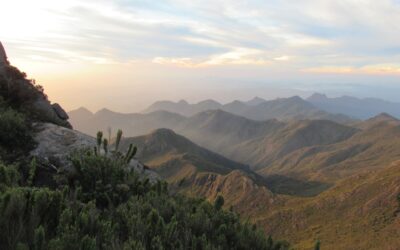
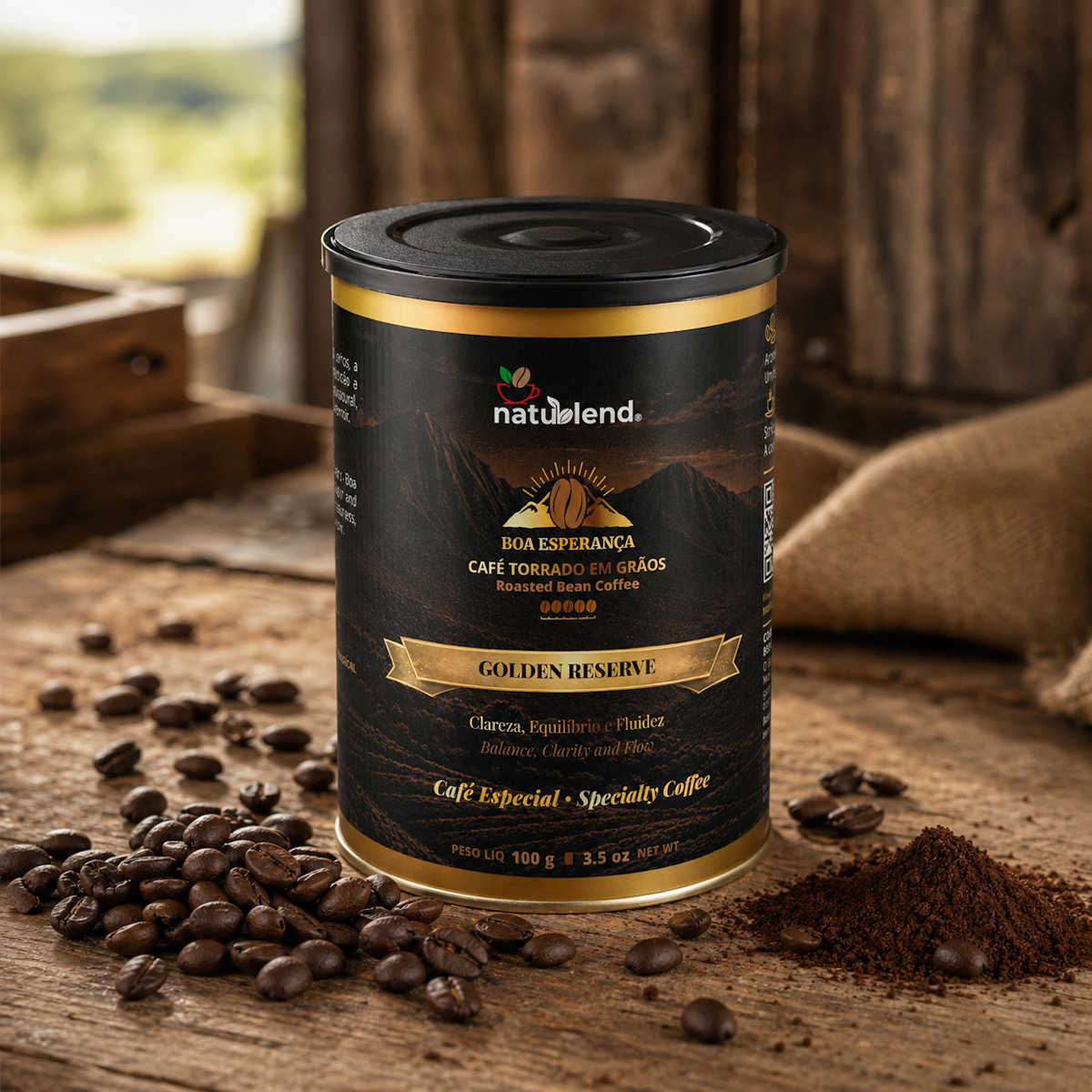
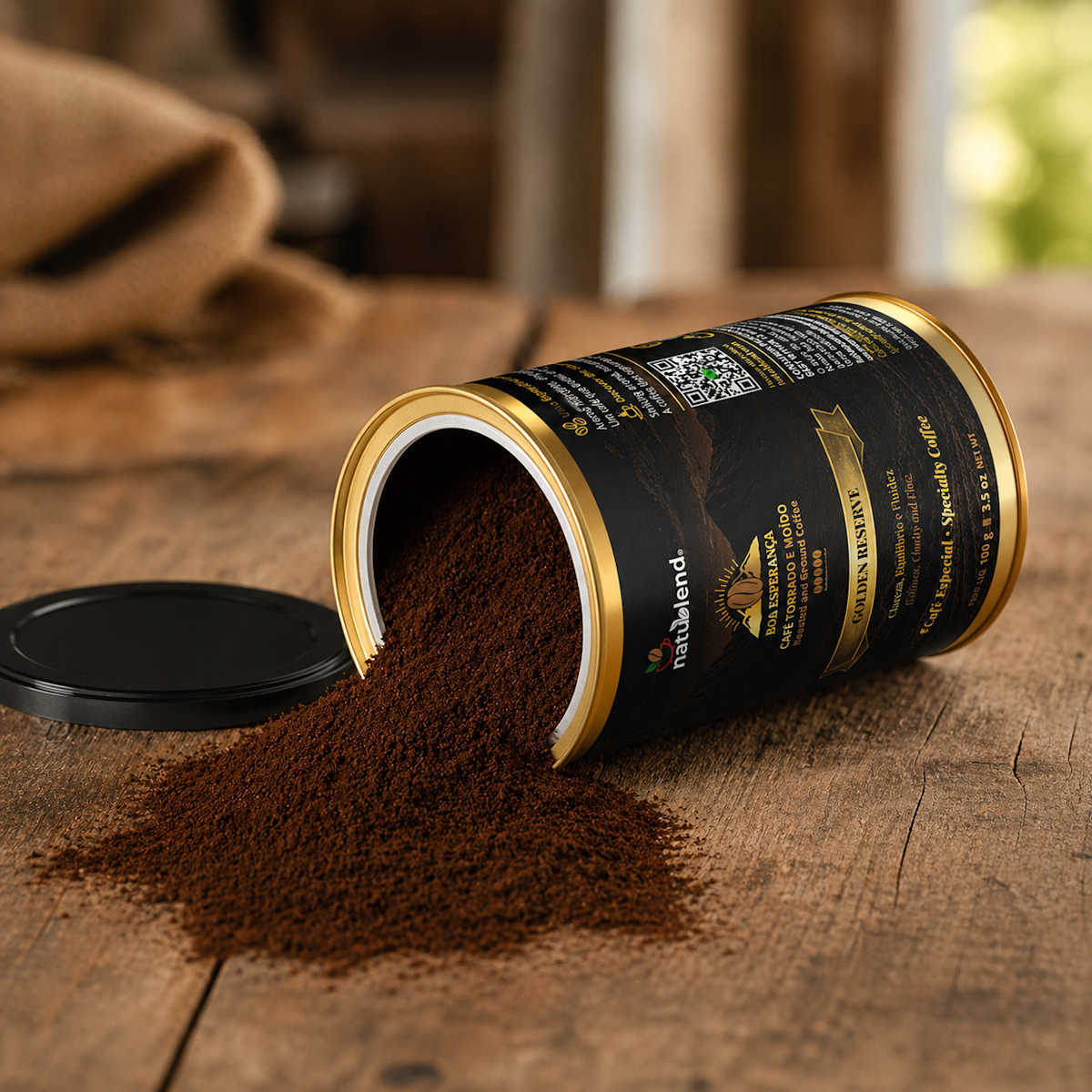
Golden Reserve coffee is the one in the Natublend line that, according to the brand, comes from Fazenda Boa Esperança, on the Minas Gerais side of the Caparaó range, from fields planted between 1,200 and 1,450 meters above sea level. It is a 100% arabica, medium-roast coffee that Natublend itself presents as the balanced classic of the line, designed to work well with any brewing method, from everyday pour-over to espresso. On the sensory chart drawn up by Natublend’s curators, it pairs sweetness at the top of the scale with medium acidity, meant to support that sweetness rather than compete with it, along with barely perceptible bitterness and medium body.
As the brand describes it, this is a coffee for people who switch methods over the course of the week and like a sweet, balanced cup, but also for those who want to understand what they are drinking beyond what the label says. The story of the region, from Caparaó National Park to the recognition of the Caparaó Designation of Origin, has already been told in the article The History of Coffee, from Ethiopia to the Caparaó Mountains, so it is not repeated here.
This article follows the beans from field to tin: the farm and what research says about growing coffee at altitude, the production stages, the meaning of each number on the sensory chart, the logic behind the three brewing recipes the brand suggests and, finally, what the airtight tin protects while it is sealed and what changes once it is opened. Whenever the subject is a product-specific detail, the source is Natublend’s spec sheet; when the subject is coffee science, the source is the technical literature listed in the references.
What Is Golden Reserve
Within Natublend’s specialty coffee line, Golden Reserve holds a distinct place, since it is the only one of the four that comes from Fazenda Boa Esperança, while the other three originate on another property in the same region. According to the brand, the farm has been growing coffee on the same land for more than 40 years under conventional farming, and the coffee is picked selectively by hand, then pulped, washed, and sorted by density, dried on patios, and given a medium roast before being packed in a 100-gram airtight tin.
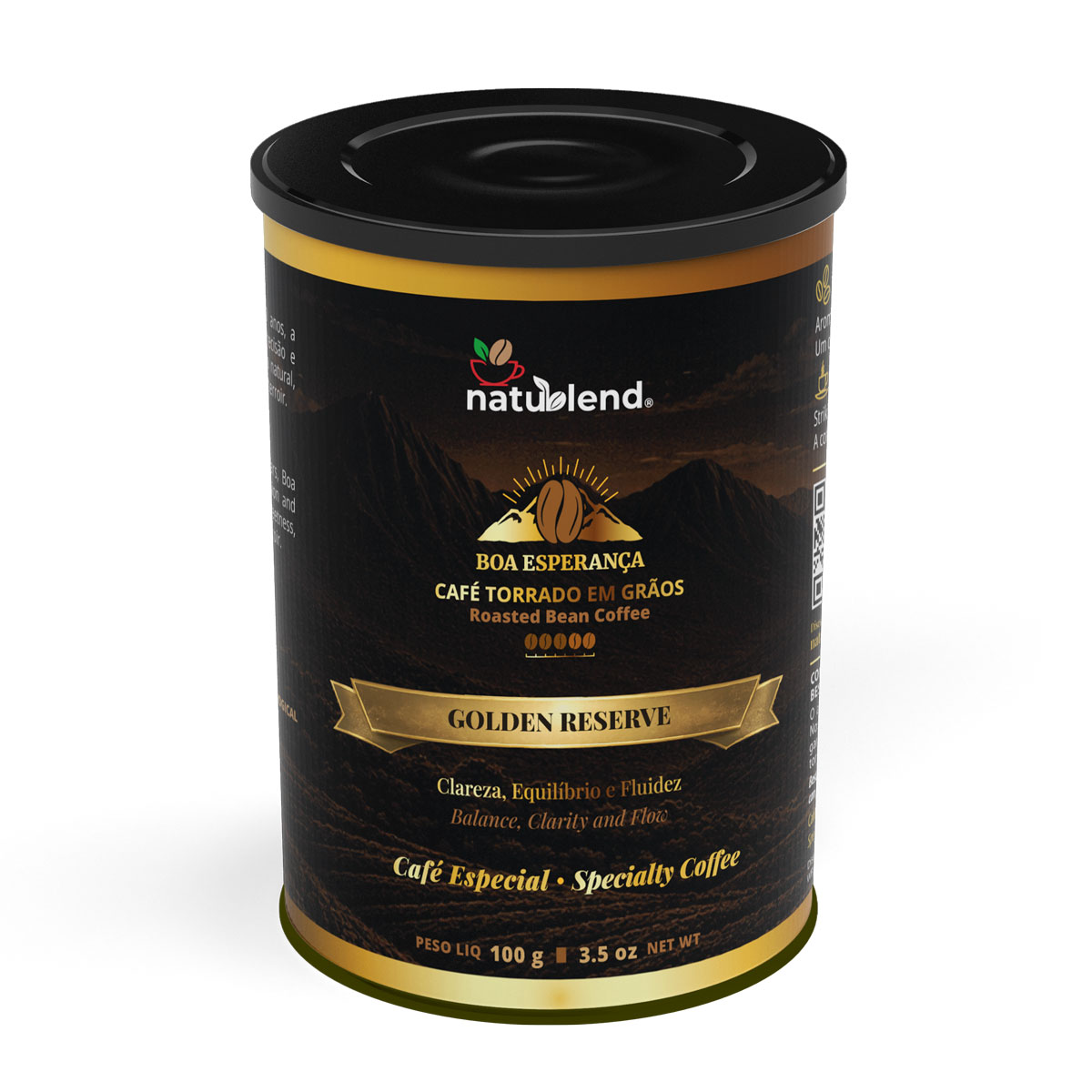
The brand frames the sensory goal as balance. Natublend’s curators rate Golden Reserve at sweetness 5, body 3, bitterness 1, and acidity 3 on the brand’s own scale from 1 to 5, and position it as the versatile coffee of the line, the one that does not depend on a single method to show what it has to offer. The table below brings together the origin and production details provided by the brand.
| Item | Golden Reserve |
|---|---|
| Origin | Caparaó, Minas Gerais |
| Farm | Fazenda Boa Esperança |
| Altitude | 1,200 to 1,450 meters |
| Species | 100% arabica (Coffea arabica) |
| Process | Selective hand picking; pulping, washing, and density sorting; patio drying |
| Roast | Medium, artisanal |
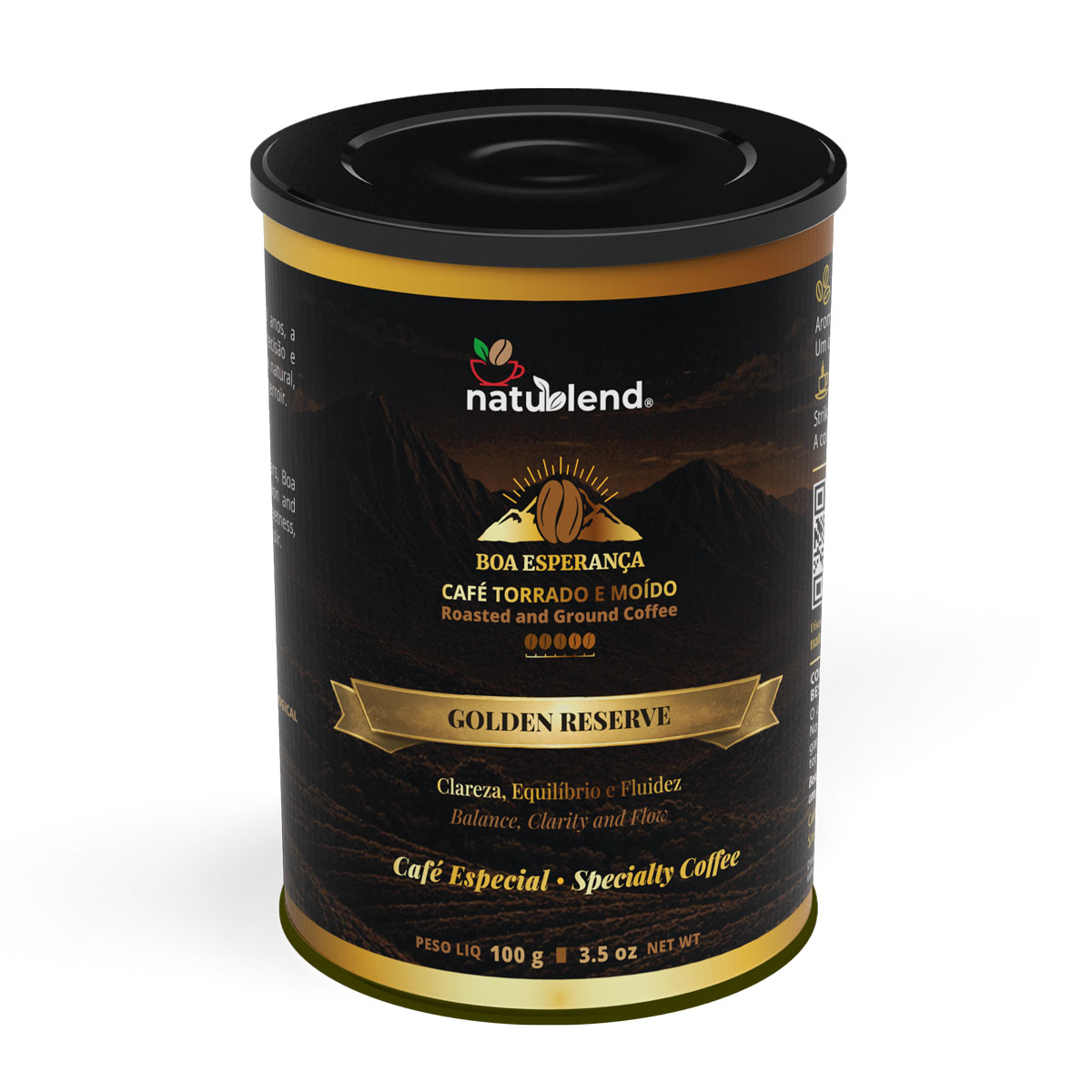
| Packaging | 100 g airtight tin |
| Shelf life | At least 12 months sealed, from the roast date; about 60 days after opening, for best quality |
Data provided by Natublend.
Fazenda Boa Esperança: Where the Beans Come From
According to Natublend, Fazenda Boa Esperança lies on the Minas Gerais side of the Caparaó, a mountain range on the border with Espírito Santo. Since 2021, the region has had a Designation of Origin for arabica coffee registered with INPI, Brazil’s industrial property office. The Caparaó DO, as it is known, covers a delimited area of 16 municipalities, ten in Espírito Santo and six in Minas Gerais, the latter being Alto Caparaó, Alto Jequitibá, Caparaó, Espera Feliz, Manhumirim, and Martins Soares (INPI, 2021). Being located in a region with a Designation of Origin, however, does not automatically extend the seal to any particular coffee, a point covered in the FAQ at the end of this article. This section focuses on what the brand says about the farm and on what agronomic research can tell us about the altitude at which it grows coffee.
Four Decades on the Same Land
Natublend reports that Fazenda Boa Esperança has grown coffee continuously on the same land for more than 40 years. That carries weight in a perennial crop like coffee, where each plot responds in its own way to rain, slope aspect, and wind, and where many decisions during the season depend on knowing how the fields usually behave from one year to the next. In the brand’s description, it is this accumulated knowledge that makes it possible to recognize the moment each plot is ready for picking.
Altitude and Microclimate between 1,200 and 1,450 Meters
The brand’s spec sheet places the fields at Fazenda Boa Esperança between 1,200 and 1,450 meters above sea level. The relationship between altitude and arabica quality is a frequent topic in coffee research, and one of the documented effects has to do with time: at higher, cooler elevations, the fruit tends to ripen more slowly. In a study conducted on Gorongosa Mountain, in Mozambique, ripening took about four weeks longer at 935 meters than at 650 meters, and the green beans from the higher site had greater density, mass, and screen size; altitude had a stronger influence on the physicochemical attributes of the beans than the shade regime did (Cassamo et al., 2022).
Altitude is also associated with the chemical composition of the bean. On plantations in southwestern Ethiopia, the sucrose content of green coffee rose with altitude, an increase that was significant only in wet-processed coffees (3.02 g per kilogram for every 100 meters), while caffeine and chlorogenic acids decreased (Worku et al., 2018). Closer to the Caparaó, a study of arabica harvested at 700, 950, and 1,100 meters in Espírito Santo found higher sensory quality at the upper elevations, with no relevant difference among the cultivars evaluated (Ferrão et al., 2009), and research by UFLA, the Federal University of Lavras, with the participation of Embrapa Café, in the Serra da Canastra, reported improvements in acidity, aroma, and flavor above 1,300 meters (UFLA and Embrapa Café, n.d.).
These results help explain why altitude is so highly valued, but they are no guarantee. In the Ethiopian study, the rise in acidity with altitude appeared only in shaded plants, and the authors of the Mozambique study describe the net effect of altitude on cup quality as still uncertain (Worku et al., 2018; Cassamo et al., 2022). The brand’s spec sheet does not include microclimate data for the property, such as average temperature or rainfall pattern, so what can be said is more general: the range of 1,200 to 1,450 meters lies above the elevations compared in the Mozambique and Espírito Santo studies, which point to a trend without measuring this specific altitude, and what reaches the cup also depends on farm management, harvesting, processing, and roasting.
Conventional Farming and the Certifica Minas Café Program
Natublend classifies the management of Fazenda Boa Esperança as conventional, which sets Golden Reserve apart from the three Sítio Pé de Breu coffees, grown in a pesticide-free agroforestry system according to the producer. In this context, conventional farming means that the brand does not credit the farm with the state Sem Agrotóxicos (pesticide-free) seal or with the federal organic certification governed by Law No. 10,831/2003, which follows its own system (Notícias Agrícolas, n.d.). The term describes the farming system and, on its own, says nothing about the quality of the cup.
The brand also states that the farm is certified under Certifica Minas Café, the coffee arm of Certifica Minas, a Minas Gerais state government program established as public policy by State Law No. 22,926/2018 and regulated by Decree No. 47,398/2018. The program now covers more than 15 production chains, of which coffee was the first and remains the largest (Agência Minas, n.d.a). It is coordinated by the State Department of Agriculture, Livestock and Supply (Seapa); Emater-MG, the state rural extension service, guides producers through the required adjustments; the Minas Gerais Institute of Agriculture and Livestock (IMA) carries out the audits, decides on certification, and authorizes use of the seal; and Epamig contributes research to improve the process. The criteria combine quality management, social responsibility, and socioeconomic and environmental sustainability, with requirements for good production practices and traceability (Agência Minas, n.d.a).
Participation is voluntary. Producers must hold a Minas Gerais state tax registration, submit an application at the local Emater-MG office and, after making the necessary adjustments, undergo IMA’s compliance audit; the certificate is valid for one year, and keeping it requires passing a new annual audit (Agência Minas, n.d.b). At the time of publication, the program’s official channels did not offer a public lookup by property name, only aggregate figures, so the certification of Fazenda Boa Esperança is recorded here as information provided by the brand (IMA, n.d.).
From Tree to Tin: The Production Process
The Golden Reserve spec sheet describes four stages between the coffee tree and the tin: selective hand picking, pulping with washing and density sorting, patio drying, and medium roasting. The brand does not detail the parameters of each one, such as the drying time or the roast curve, so what follows explains what each stage does to the bean according to the technical literature, without attributing to the product any figures Natublend has not disclosed.
Selective Hand Picking
On a single coffee branch, unripe, ripe, and overripe fruit grow side by side, because flowering happens in waves and ripening follows the same rhythm. In selective picking, only the fully ripe cherries are picked by hand, and the rest of the fruit is left for a later pass. The method is more expensive and slower than strip picking, in which all the fruit on a branch is pulled off at once, but it reduces the share of unripe and overripe beans in the lot, which tend to bring astringency and off-flavors to the cup.
At altitude, selectivity becomes even more important: ripening tends to be slower at higher elevations, as the Gorongosa study showed (Cassamo et al., 2022), the harvest window stretches out, and catching each fruit at the right point usually takes more than one pass over the same plant.
Pulping, Washing, and Density Sorting
After harvest, according to Natublend, Golden Reserve is pulped, washed, and sorted by density, steps that the technical literature groups under the name wet processing. In pulping, a machine removes the skin and pulp, and the bean comes out still wrapped in its parchment and mucilage, the sugary layer that, in the fruit, lies between the pulp and the parchment. In washing, water removes what is left of this mucilage; in density sorting, it does the screening: the lighter beans, usually hollow or malformed, float and are discarded, while the denser ones sink and move on through the process.
The brand does not specify which variant of this processing it uses, for example whether the mucilage is removed by fermentation or mechanically, and that choice often has a bearing on the final profile. What research does allow us to say, in general terms, is that processing interacts with altitude: in the Ethiopian study, the increase in green-bean sucrose at higher elevations was significant only in wet-processed coffees (Worku et al., 2018).
Patio Drying
After processing, the coffee goes to the terreiro, the sun-drying patio that is one of the classic images of Brazilian coffee farming. There the beans are spread out in layers and turned throughout the day so they dry evenly, until they reach the right moisture content for storage and milling. Even drying helps prevent defects and unwanted fermentation, and it is a stage where the experience of whoever runs the patio counts for a lot, since the pace depends on the thickness of the layer, the sun, and the humidity of the air.
Medium Roast
Roasting turns a green bean with a vegetal aroma into the coffee we recognize by its smell. The main driver is the Maillard reaction, a set of heat-triggered reactions between reducing sugars and amino acids in the bean that darkens the seed and forms a large share of the aroma compounds: in an analysis of single-origin coffees, about 30% to 40% of the volatiles detected had the Maillard reaction as their main formation pathway, with another share linked to thermal decomposition and Strecker degradation (Zakidou et al., 2021). At the same time, caramelization acts on the sugars and, together with the Maillard reaction, produces caramel-like compounds (such as furaneol and maltol), furan derivatives, and ketones (Zakidou et al., 2021).
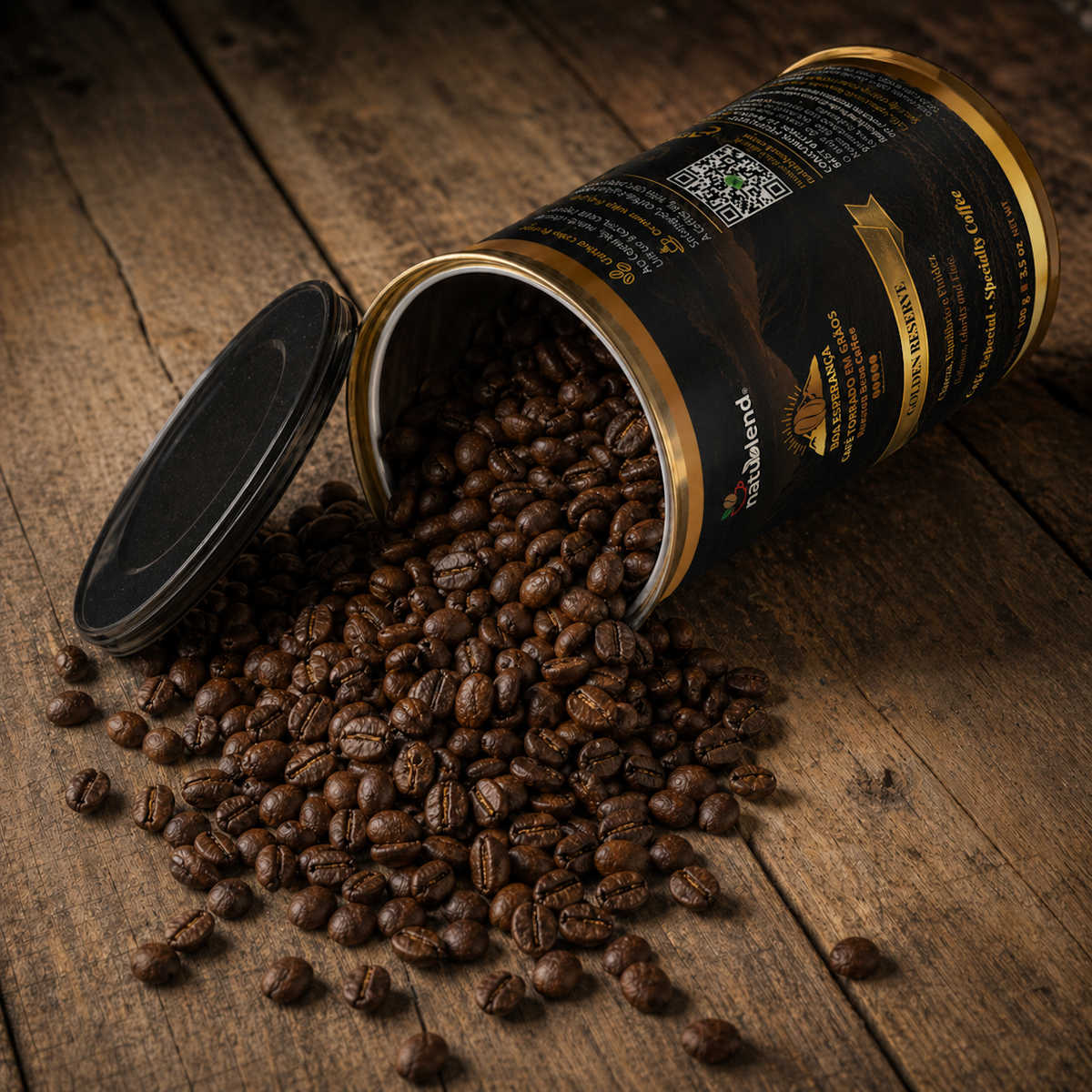
The point at which the roast is stopped has a strong influence on the balance of the cup. When caramelization goes too far, the sugars burn and turn acrid, which reduces perceived sweetness and adds bitter, burnt notes (Sucafina, n.d.). The final roast degree, however, is not the only variable: a study with 104 consumers of Colombian specialty coffee showed that points along the entire roast curve, from the turning point to first crack and the drop, predict the acidity and body scores given in tasting (Campo-Ceballos and Gaviria-López, 2023). Natublend describes the Golden Reserve roast as medium and artisanal, carried out on a curve designed to balance acidity, body, and sweetness, but does not disclose color readings, temperature, or time; in general terms, a medium roast indicates a point between light and dark roasts.
Sensory Profile: What Sweetness 5, Body 3, Bitterness 1, and Acidity 3 Mean
The sensory chart is often the most useful part of a coffee description when choosing what to buy, and also the part most open to misunderstanding when read out of context. Before looking at each number, it is worth understanding where the numbers come from and what they measure.
A Curation Scale, Not a Cupping Score
The four attributes are rated by Natublend’s curators on the brand’s own scale, from 1 to 5, which makes it possible to compare the coffees in the line with one another. This is not a score under the Specialty Coffee Association (SCA) cupping protocol, and the numbers cannot be converted to the 100-point scale used in the specialty coffee market. In the brand’s own reading of the chart, a 5 indicates an attribute at maximum intensity and a 1, an attribute that is barely perceptible. Read this way, the scale describes intensity, not quality, so bitterness 1 is neither better nor worse than bitterness 3, just different.
Acidity 3: Medium and Rounded
In coffee, acidity is a sensory attribute, the lively, sometimes citrusy or fruity sensation that gives the drink its brightness. It depends on the bean’s acid profile and changes considerably with roasting. In brewed filter coffee, concentrations of chlorogenic, citric, and malic acids fall as the roast gets darker, while those of acetic, glycolic, lactic, phosphoric, and quinic acids rise; the measured pH, interestingly, increases, from 3.97 in the light roast to 4.10 in the medium and 4.25 in the dark (Rune et al., 2023). That is why the authors conclude that perceived acidity is a more holistic concept than pH or total acid content can explain.
In sensory tasting, the lightest roast in a study published by the SCA had the highest perceived acidity, with dried fruit notes, and progressively darker roasts reduced acidity and fruity character (Alstrup, n.d.). Altitude also plays a part, but conditionally: in the Ethiopian study, acidity rose with altitude only in shaded plants (Worku et al., 2018). Natublend’s curators give Golden Reserve an acidity of 3 and describe it as medium, rounded, and smooth, calibrated to work alongside the sweetness without competing with it. On the brand’s scale, a 3 indicates acidity that is present and brings liveliness to the cup.
Bitterness 1: Barely Perceptible
Coffee bitterness comes from several compounds at once. Caffeine and trigonelline contribute to it, as does quinic acid, a breakdown product of chlorogenic acids during roasting; because quinic acid content increases as the roast darkens, darker roasts tend to be more bitter even when other acids decrease (Rune et al., 2023). The SCA sensory study points in the same direction, with bitterness, harshness, and roasty character increasing in darker roasts (Alstrup, n.d.), and caramelization taken too far adds burnt notes (Sucafina, n.d.).
Natublend gives Golden Reserve a bitterness of 1, which on the brand’s scale corresponds to barely perceptible bitterness. In the cup, however, the result depends on how the coffee is brewed: overextraction, whether from too fine a grind or too long a contact time, dissolves the astringent and bitter compounds that come out last and can produce a bitterness the chart does not predict (Coffee Hunter, n.d.).
Body 3: Medium and Versatile
Body is the sense of weight and texture of the drink in the mouth, what separates a coffee that runs as light as tea from one that feels almost creamy. It also responds to roasting, but not in a linear way: in the SCA study, perceived body increased from the lightest roast up to the intermediate levels and seemed to decrease again in the darkest, a drop that did not reach statistical significance, and viscosity measurements followed the same pattern, peaking at the intermediate roast (Alstrup, n.d.).
The brewing method matters too. Paper filters hold back a large share of the fine particles and oils and deliver a cleaner, lighter cup, while espresso and the French press let more of these components through and produce a fuller-bodied drink. Natublend’s curators give Golden Reserve a body of 3, a medium body that the brand presents as suitable for any method: the idea is that this middle ground lets you use the same coffee for espresso, French press, and pour-over without it seeming thin in one case or too heavy in another.
Sweetness 5: The Top of the Scale
Sweetness is the attribute that most sets Golden Reserve apart within the line, since it is the only one of the four coffees with sweetness 5, the maximum on the brand’s scale. From a scientific standpoint, however, a coffee’s sweetness is more complex than it looks. In green coffee, sucrose content rose with altitude in the Ethiopian study, but the increase was significant only in wet-processed coffees and was stronger in unshaded plants (Worku et al., 2018). Because the brand does not detail the shading of its fields or the processing variant, and none of these studies analyzed Golden Reserve, the finding cannot be carried over to this coffee.
Roasting consumes much of that sugar: in brewed filter coffee, total sugar content dropped from about 0.97 mg/ml in the light roast to 0.25 mg/ml in the medium and 0.17 mg/ml in the dark, on average (Rune et al., 2023). Even so, perceived sweetness does not fall in the same proportion. In the SCA sensory study, it did not vary significantly across the roast degrees tested (Alstrup, n.d.), and a study cited by Rune and colleagues indicates that adjusting the roast can change perceived sweetness without changing the actual sugar in the drink to the same extent (Rune et al., 2023). Part of this perceived sweetness may come from aroma, since roasting forms caramel-like compounds such as furaneol and maltol (Zakidou et al., 2021). The score of 5 indicates that, in the assessment of Natublend’s curators, sweetness is Golden Reserve’s most intense attribute, which helps explain why the brand describes it as a balanced classic: a sweet profile with medium acidity and low bitterness.
How the SCA Cupping Protocol Evaluates a Coffee
In the specialty coffee market, the benchmark evaluation is cupping, the standardized tasting protocol of the Specialty Coffee Association. In November 2024, the SCA replaced its former 2004 protocol with a new series of standards, the Coffee Value Assessment (SCA, n.d.a). In the affective assessment, described in SCA Standard 104, the cupper scores eight sections (fragrance, aroma, flavor, aftertaste, acidity, sweetness, mouthfeel, and overall impression) on a 9-point scale, and a formula converts these scores to the 100-point scale, deducting for non-uniform or defective cups, out of a total of five cups per sample. If every section receives a 9, the result is 100; if every section receives a 5, the neutral point of the scale, the result is 79 (SCA, 2024a).
Sample preparation is also standardized, under SCA Standard 102: 8.25 g of coffee for every 150 ml of cup capacity, a grind slightly coarser than that used for paper filters, water at 93 °C with a tolerance of 3 °C either way, and a crust of grounds left intact for 3 to 5 minutes before it is broken (SCA, 2024b). Under the old protocol, which is still used as a reference in the green coffee trade and in cupper training, 80 points or more marked a coffee as specialty grade (Royal Coffee, n.d.); the new standard defines specialty coffee by its distinctive attributes and the extra value they carry in the market, with no fixed minimum score (SCA, 2024a).
Since the Golden Reserve spec sheet does not include a score under the SCA protocol, this article does not assign it a cupping score. The curators’ 1-to-5 chart and a cupping score are different instruments with different purposes, and one should not be read as a translation of the other.
How to Brew Golden Reserve: The Science of Each Method
Brewing coffee is extraction. Hot water dissolves a fraction of the soluble compounds in the grounds, and the flavor of the cup depends on how much it extracts and which compounds. An established technical benchmark for filter coffee comes from the European Coffee Brewing Centre (ECBC), created in 1971 by the Norwegian coffee association, and it matches the brewing parameters associated with the SCA: a beverage with 11.5 to 13.5 g of dissolved solids per liter, the result of extracting 18% to 22% of the mass of the grounds (Wilfa, n.d.). In certification tests for filter coffee makers, the reference dose is about 55 g of coffee per liter of water, with a 10% margin, and the water should be between 90.6 °C and 96.1 °C (Gear Patrol, 2018). This logic goes back to research from the 1950s that gave rise to the brewing control chart, still the basis of SCA courses today and currently being revised by researchers at the University of California, Davis (SCA, n.d.b).
Researchers at the ZHAW Coffee Excellence Center, in Switzerland, sum up extraction in five factors: coffee bed height, the concentration difference between the water and the grounds, contact time, grind profile (the size and distribution of the particles), and temperature (Wellinger, n.d.). When these factors fall out of balance, the cup shows it. Underextraction, typically the result of cool water, too coarse a grind, or too short a contact time, leaves a sour, thin drink with a short finish, while overextraction dissolves the astringent and bitter compounds that come out last and masks the coffee’s more delicate notes (Coffee Hunter, n.d.). The three recipes Natublend suggests for Golden Reserve balance these factors in different ways, and understanding the reason behind each number helps you correct the brew when something is off.
Traditional Pour-Over
| Parameter | Recipe suggested by Natublend |
|---|---|
| Ratio | 7 to 8 g per 100 ml |
| Grind | Medium |
| Time | 3:00 to 4:00 min |
| Temperature | 92 to 94 °C |
Pour-over is a percolation method, in which the water passes through the bed of grounds once and drains through the filter. A medium grind balances two needs: it offers enough surface area to extract well within 3 to 4 minutes of contact, and it does not slow the flow too much, as a fine grind would by increasing resistance to the water and lengthening contact time (Coffee Circle, n.d.). The temperature of 92 to 94 °C falls within the 90.6 to 96.1 °C range used as a reference in filter coffee maker tests (Gear Patrol, 2018).
The ratio deserves attention. Natublend’s recipe of 7 to 8 g per 100 ml is equivalent to 70 to 80 g of coffee per liter, above the reference of about 55 g per liter used in equipment testing (Gear Patrol, 2018), and tends to produce a more concentrated cup. If you prefer a lighter drink, you can reduce the dose gradually, keeping grind and time the same, until you find your own sweet spot. If the coffee comes out astringent or bitter, the first adjustment is to grind a little coarser; if it comes out sour and thin, grind finer.
Espresso
| Parameter | Recipe suggested by Natublend |
|---|---|
| Ratio | 18 g in, 36 g out |
| Grind | Very fine |
| Time | 25 to 30 s |
| Temperature | 93 to 95 °C |
In espresso, water is forced through a compact bed of grounds under pressure, and everything happens in under half a minute. The recipe suggested by Natublend follows the widespread industry convention, with a 1:2 ratio of grounds to beverage (18 g of coffee for 36 g in the cup) and an extraction time of 25 to 30 seconds; the same convention works with about 9 bar of pressure and water between 90 and 96 °C, a range that comfortably includes the recipe’s 93 to 95 °C (Sage Appliances, n.d.). The very fine grind is what makes it possible to extract so much in so little time, because it multiplies the contact area and creates enough resistance to hold the water back under pressure.
Average particle size, however, does not explain everything. A ZHAW study of 43 coffee capsules showed that a finer grind increases the dissolved solids in the drink, but that the factor with the greatest influence on extraction time is the proportion of fine particles, those below 100 micrometers, and that too many fines restrict flow (Smrke et al., n.d.). That is why adjusting the grinder is usually the first espresso fix: if the shot finishes well before 25 seconds, grind finer; if it runs much past 30, grind coarser.
French Press
| Parameter | Recipe suggested by Natublend |
|---|---|
| Ratio | 30 g to 500 ml |
| Grind | Coarse |
| Time | Exactly 4:00 min |
| Temperature | 93 to 95 °C |
The French press works by immersion: the grounds stay in contact with the water throughout the brew and are separated only at the end, when the plunger pushes the metal filter down. Because this contact is long, the grind needs to be coarse to reduce surface area and keep extraction from going too far (Coffee Circle, n.d.), and the exact 4 minutes suggested by Natublend complete that balance. The ratio of 30 g to 500 ml is equivalent to 60 g per liter, close to the reference of about 55 g per liter used in filter coffee maker tests (Gear Patrol, 2018), a parameter designed for percolation but useful as a ballpark figure; the temperature of 93 to 95 °C also falls within the 90.6 to 96.1 °C range of that same reference.
The metal filter lets through fine particles and oils that paper would hold back, which is why the French press tends to produce a fuller-bodied drink than pour-over. One simple precaution helps: serve right after pressing, or pour the coffee into another container, since the grounds left at the bottom stay in contact with the drink and can extract more bitterness.
Storage: Why the Airtight Tin Matters
Roasted coffee has a short aromatic life, and the packaging largely determines how much of that aroma makes it to the cup. According to Natublend, Golden Reserve comes in a 100 g airtight tin that keeps for at least 12 months sealed, counted from the roast date, with a recommendation to finish it within about 60 days of opening. The science of coffee staling helps explain why these two time frames are so different.
Heat, Light, Moisture, and Oxygen
The staling of roasted coffee is not spoilage caused by microorganisms but a physicochemical process in which volatile aroma compounds are gradually lost while the bean’s lipids oxidize; together, the two processes produce the flavor of stale, sometimes rancid, coffee (Sage, 2012). The review published by the SCA points to oxygen as the single most important factor: according to the literature gathered there, reducing the oxygen inside the package to about 0.5% can extend shelf life by up to 20 times, each additional percentage point of oxygen speeds up degradation by about 10%, and vacuum-packed coffee loses freshness about five times more slowly than coffee exposed to air (Sage, 2012).
Heat and moisture accelerate the oxidation of lipids, which make up about 15% of the dry weight of roasted arabica, and the effect grows with the exposed surface area, which explains why ground coffee goes stale faster than whole beans (Sage, 2012). Some aromas are lost remarkably quickly: methanethiol, one of the compounds responsible for the smell of freshly roasted coffee, drops to about 30% of its initial level just eight days after roasting (Sage, 2012). As for light, the SCA review does not address it directly; in any case, in an opaque tin that variable disappears for as long as the tin stays closed.
Degassing and the Role of CO2
Roasting also produces gas. The Maillard reactions and pyrolysis release mostly carbon dioxide, about 87% of the total, and freshly roasted coffee holds 1% to 2% of its own weight in CO2, partly trapped in the porous structure of the bean (Smrke et al., 2018). This gas escapes slowly during storage. In an experiment at 35 °C, light-roast whole beans were still releasing CO2 after 800 hours, more than a month, and darker roasts released more gas, and faster, with the medium roast in between (Smrke et al., 2018).
Grinding changes the picture entirely. By breaking down the bean’s internal structure, it releases up to 75% of the trapped gas within seconds or a few minutes, the same proportion the whole bean would take weeks to lose (Smrke et al., 2018), and the same surface area that speeds up the escape of gas also exposes the grounds to air and accelerates oxidation (Sage, 2012). That is why those who buy Golden Reserve as whole beans and grind just before brewing tend to preserve more aroma than those who grind a week’s worth at once.
Many coffee packages deal with this gas through one-way valves, which let CO2 out without letting oxygen in; in nitrogen-flushed packages with a valve, internal oxygen stayed below 0.5% over nine weeks of storage (Smrke et al., 2022). Natublend describes the Golden Reserve tin as airtight, without detailing the sealing system.
12 Months Sealed, 60 Days Open: What to Do Once the Tin Is Open
While the tin is sealed, the packaging limits the coffee’s contact with light, moisture, and oxygen, and this is the period covered by the shelf life of at least 12 months from the roast date stated by Natublend. Once the tin is opened, that protection drops quickly. In a study of packages sealed under modified atmosphere, the oxygen inside rose from almost zero to ambient air levels, about 21%, within roughly a week of opening, and carbon dioxide fell to practically zero, even when the beans were transferred to an ordinary airtight jar (Smrke et al., 2022). Repeated opening makes matters worse: over 30 days of simulated home use, ground coffee lost 35% to 45% of its original volatile compounds even in the highest-barrier packaging, such as glass jars and steel tins, while hexanal, a marker of lipid oxidation, increased by about 50% (Trenzová et al., 2024).
The window of about 60 days after opening is the brand’s recommendation, and within it the aroma tends to be most intense in the first few weeks. A few simple habits help you make the most of that period:
- close the tin tightly right after each use, rather than leaving it open while you brew;
- grind only what you need for each brew, if you buy whole beans;
- store the tin in a cool, dark, dry place, away from the coffee maker, the stove, and sunny windows;
- use a dry spoon every time, so no moisture gets into the tin.
Golden Reserve in the Natublend Line: Where It Fits
Natublend’s specialty coffee line includes four coffees, and Golden Reserve is the only one from Fazenda Boa Esperança. According to the brand, the other three, Essence, Exaltation, and Expression, come from Sítio Pé de Breu and differ in their roast curves, each calibrated to its own profile. On the curators’ chart, the three share bitterness 1 and acidity 4 and vary in body and sweetness, while Golden Reserve holds the line’s only sweetness score of 5, with acidity 3 and medium body.
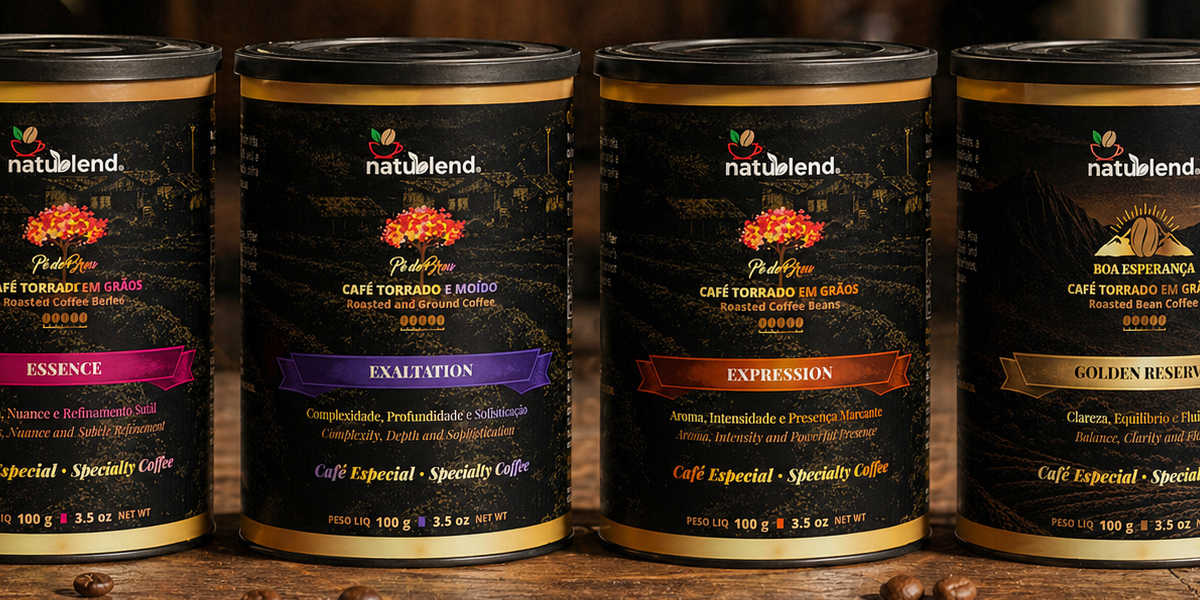
| Coffee | Farm | Stated profile | Brand chart (sweetness, body, bitterness, acidity) | Suggested methods |
|---|---|---|---|---|
| Essence | Sítio Pé de Breu | Lightness, nuance, and subtle refinement | 3, 3, 1, 4 | Chemex and V60 |
| Exaltation | Sítio Pé de Breu | Complexity, depth, and sophistication | 3, 5, 1, 4 | Chemex and slow V60 |
| Expression | Sítio Pé de Breu | Aroma, intensity, and striking presence | 4, 4, 1, 4 | Espresso and moka pot |
| Golden Reserve | Fazenda Boa Esperança | Balance, clarity, and flow | 5, 3, 1, 3 | Espresso, French press, and traditional pour-over |
Data provided by Natublend; sensory chart on the brand’s own scale, from 1 to 5.
Sítio Pé de Breu, which the brand places in Alto Caparaó, uses pesticide-free agroforestry management, according to the producer; the origin of these three coffees is told in detail in the article about the farm. For anyone looking for a single coffee that adapts to several methods, Golden Reserve is, as the brand presents it, the coffee in the line designed for that purpose, while those who already have a favorite method will find that the three Pé de Breu coffees offer profiles suggested for specific methods, such as Chemex, espresso, moka pot, and V60.
Frequently Asked Questions
Does Golden Reserve Carry the Caparaó Designation of Origin?
Natublend’s spec sheet does not state that Golden Reserve is certified under the Caparaó Designation of Origin. According to the brand, Fazenda Boa Esperança lies on the Minas Gerais side of the Caparaó, the region that contains the DO’s delimited area, recognized by INPI in 2021 for arabica coffee from 16 municipalities in Espírito Santo and Minas Gerais (INPI, 2021). Even for a coffee produced within that area, however, use of the seal is not automatic. The Book of Technical Specifications provides for voluntary participation, full compliance with the rules, and approval from the Regulatory Council of the Caparaó Specialty Coffee Producers Association (APEC), and the control seal is granted only to coffee that passes a sensory evaluation (INPI, 2021). Since the product sheet does not mention this process, this article does not present Golden Reserve as a DO-certified coffee. The story of the Designation of Origin is told in the article The History of Coffee, from Ethiopia to the Caparaó Mountains.
What Is the Difference between Golden Reserve and the Other Three Coffees in the Line?
The first difference is origin: according to the brand, Golden Reserve comes from Fazenda Boa Esperança, under conventional farming, while Essence, Exaltation, and Expression come from Sítio Pé de Breu, a different property, under pesticide-free agroforestry management according to the producer. On the brand’s chart, Golden Reserve has sweetness 5, body 3, bitterness 1, and acidity 3; the three Pé de Breu coffees share bitterness 1 and acidity 4 and differ from one another in body and sweetness. Golden Reserve is presented as the balanced classic of the line, designed to work with any method.
How Is Fazenda Boa Esperança Farmed?
According to Natublend, Fazenda Boa Esperança uses conventional farming. The brand states that the farm is certified under Certifica Minas Café, a state program that audits good production practices, social and environmental responsibility, and traceability. It is a different seal from the federal organic certification governed by Law No. 10,831/2003, which has its own system and requirements (Notícias Agrícolas, n.d.).
What Is the Best Brewing Method?
As the brand presents it, no single method stands out for Golden Reserve: versatility is precisely what Natublend highlights in this coffee. The brand suggests three recipes: espresso, with 18 g of grounds for 36 g of beverage, a very fine grind, 25 to 30 seconds, and water at 93 to 95 °C; French press, with 30 g for 500 ml, a coarse grind, exactly 4 minutes, and water at 93 to 95 °C; and traditional pour-over, with 7 to 8 g per 100 ml, a medium grind, 3 to 4 minutes, and water at 92 to 94 °C. Espresso concentrates the coffee in a small volume, the French press tends to yield a fuller-bodied drink than pour-over, and pour-over, with its paper filter, tends to deliver a cleaner cup.
How Long Does Golden Reserve Keep Once Opened?
According to Natublend, the sealed tin keeps the coffee for at least 12 months from the roast date and, once it is opened, the recommendation is to use it within about 60 days to enjoy it at its best. Within that window, the aroma tends to be most intense in the first few weeks, because contact with air speeds up the loss of volatile compounds and the oxidation of the bean’s oils (Smrke et al., 2022; Trenzová et al., 2024). Closing the tin tightly after each use and keeping it in a cool, dark, dry place helps preserve the coffee.
What Does Medium Roast Mean?
Medium roast is how Natublend describes Golden Reserve’s roast degree, a point between light and dark roasts; the brand does not disclose technical parameters such as color reading, temperature, or time. In general terms, a sensory study published by the SCA found that as the roast got darker, perceived acidity decreased and bitterness and roasty character increased, while perceived body rose from the lightest roast up to the intermediate degrees (Alstrup, n.d.). Since the brand does not provide a color reading for Golden Reserve, it is not possible to place it precisely on that scale.
References
View All 30 Cited References
Peer-Reviewed Scientific Studies (9)
- DOI2022 CASSAMO, C. T. et al. Shade and Altitude Implications on the Physical and Chemical Attributes of Green Coffee Beans from Gorongosa Mountain, Mozambique. Agronomy, vol. 12, no. 10, art. 2540, 2022. Available at: doi.org.
- DOI2018 WORKU, M.; DE MEULENAER, B.; DUCHATEAU, L.; BOECKX, P. Effect of altitude on biochemical composition and quality of green arabica coffee beans can be affected by shade and postharvest processing method. Food Research International, vol. 105, 2018. Available at: doi.org.
- PMC2021 ZAKIDOU et al. Single Origin Coffee Aroma: From Optimized Flavor Protocols and Coffee Customization to Instrumental Volatile Characterization and Chemometrics. Molecules, vol. 26, no. 15, art. 4609, 2021. Available at: pmc.ncbi.nlm.nih.gov.
- DOI2023 CAMPO-CEBALLOS; GAVIRIA-LÓPEZ. Optimising consumer acceptability of Cauca specialty coffee through roasting profiles on acidity and body sensory attributes. Czech Journal of Food Sciences, vol. 41, no. 1, 2023. Available at: doi.org.
- DOI2023 RUNE et al. Acids in brewed coffees: Chemical composition and sensory threshold. Current Research in Food Science, vol. 6, art. 100485, 2023. Available at: doi.org.
- PEER SAGE APPLIANCES. What is the best coffee water temperature? [n.d.]. Available at: sageappliances.com.
- DOI2018 SMRKE, S. et al. Time-Resolved Gravimetric Method To Assess Degassing of Roasted Coffee. Journal of Agricultural and Food Chemistry, vol. 66, no. 21, 2018. Available at: doi.org.
- DOI2022 SMRKE, S. et al. Effects of different coffee storage methods on coffee freshness after opening of packages. Food Packaging and Shelf Life, vol. 33, art. 100893, 2022. Available at: doi.org.
- DOI2024 TRENZOVÁ, K. et al. Exploring the Impact of Different Packaging Types and Repeated Package Opening on Volatile Compound Changes in Ground Roasted Coffee. Journal of Microbiology, Biotechnology and Food Sciences, vol. 14, no. 1, e11022, 2024. Available at: doi.org.
Institutional Sources (6)
- GOV2021 INSTITUTO NACIONAL DA PROPRIEDADE INDUSTRIAL (INPI). Certificado de Registro de Indicação Geográfica nº BR412019000005-0: Denominação de Origem Caparaó, with the Caderno de Especificações Técnicas attached. Rio de Janeiro, 2021. Available at: gov.br/inpi.
- GOV2009 FERRÃO, M. A. G. et al. Qualidade do café arábica em diferentes altitudes no Espírito Santo. In: SIMPÓSIO DE PESQUISA DOS CAFÉS DO BRASIL, 6., 2009, Vitória. Available at: alice.cnptia.embrapa.br.
- GOV UNIVERSIDADE FEDERAL DE LAVRAS (UFLA); EMBRAPA CAFÉ. Influência da altitude em cafés. [UFLA study with the participation of Embrapa Café, Serra da Canastra, MG]. Repositório Alice, Embrapa, [n.d.]. Available at: alice.cnptia.embrapa.br.
- GOV AGÊNCIA MINAS. [Government of Minas Gerais press release on the Certifica Minas program]. [n.d.]a. Available at: agenciaminas.mg.gov.br.
- GOV AGÊNCIA MINAS. Solicitar consultoria para certificação de propriedades rurais cafeeiras. Governo de Minas Gerais, [n.d.]b. Available at: agenciaminas.mg.gov.br.
- GOV INSTITUTO MINEIRO DE AGROPECUÁRIA (IMA). Certifica Minas. [n.d.]. Available at: ima.mg.gov.br.
Supplementary Readings (15)
- NOTÍCIAS AGRÍCOLAS. IMA mantém credenciamento como certificador de produtos agropecuários do estado. [n.d.]. Available at: noticiasagricolas.com.br.
- SUCAFINA. Chemical Reactions in Roasting. Sucafina Instant, [n.d.]. Available at: instant.sucafina.com.
- ALSTRUP, Jesper. Modulating Perception. 25 Magazine, no. 5, Specialty Coffee Association, [n.d.]. Available at: sca.coffee.
- COFFEE HUNTER. Understanding over, under and ideal extraction. [n.d.]. Available at: coffeehunter.com.
- SPECIALTY COFFEE ASSOCIATION (SCA). Coffee Standards. [n.d.]a. Available at: sca.coffee.
- 2024 SPECIALTY COFFEE ASSOCIATION (SCA). SCA Standard 104-2024: Coffee Value Assessment, Affective Assessment. 2024a. Available at: sca.coffee.
- 2024 SPECIALTY COFFEE ASSOCIATION (SCA). SCA Standard 102-2024: Coffee Value Assessment, Sample Preparation and Tasting Mechanics. 2024b. Available at: sca.coffee.
- ROYAL COFFEE. Scoring Specialty Coffee: What Do the Numbers Mean? [n.d.]. Available at: royalcoffee.com.
- WILFA. ECBC approval. [n.d.]. Available at: wilfa.com.
- 2018 GEAR PATROL. Best Coffee Makers According to SCA. 2018. Available at: gearpatrol.com.
- SPECIALTY COFFEE ASSOCIATION (SCA). Towards a New Brewing Chart. 25 Magazine, no. 13, [n.d.]b. Available at: sca.coffee.
- WELLINGER, Marco. The Five Drivers of Extraction. Talk at World of Coffee Europe, ZHAW Coffee Excellence Center, [n.d.]. Available at: europe.worldofcoffee.org.
- COFFEE CIRCLE. Coffee Grind Size. [n.d.]. Available at: coffeecircle.com.
- SMRKE, S. et al. [Study on the role of fine particles in capsule espresso extraction]. ZHAW Digital Collection, [n.d.]. Available at: digitalcollection.zhaw.ch.
- 2012 SAGE, Emma. What is the Shelf Life of Roasted Coffee? A Literature Review on Coffee Staling. Specialty Coffee Association, 2012. Available at: sca.coffee.