
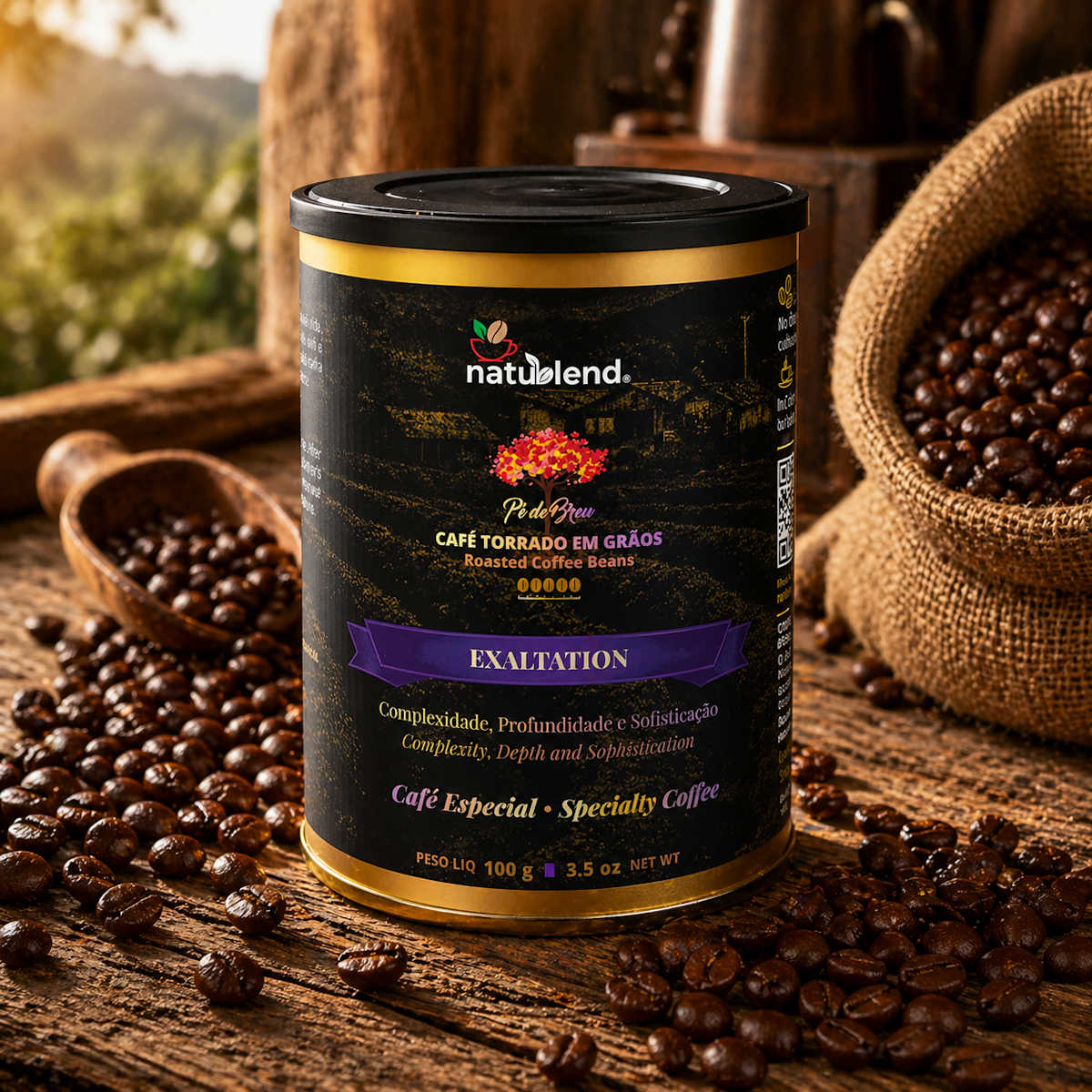
Sipped slowly, Exaltation specialty coffee reveals itself little by little, and that is how Natublend presents it within the Pé de Breu line. The brand’s sheet gives it the fullest body of the farm’s three coffees, velvety and at the very top of the scale, with sweetness in the background and an acidity that gives the whole cup its structure. Complexity, Depth and Sophistication, the motto printed on the tin, sums up the idea of a coffee the brand presents as a reward for those who pay attention to what they drink.
Its origin is Sítio Pé de Breu, in Alto Caparaó, in the state of Minas Gerais, and the drinkers the brand has in mind enjoy slow methods, from an unhurried V60 to the Chemex, and want to understand what is in their cup. The journey that brought coffee to these mountains is told in the history of coffee, from Ethiopia to Caparaó.
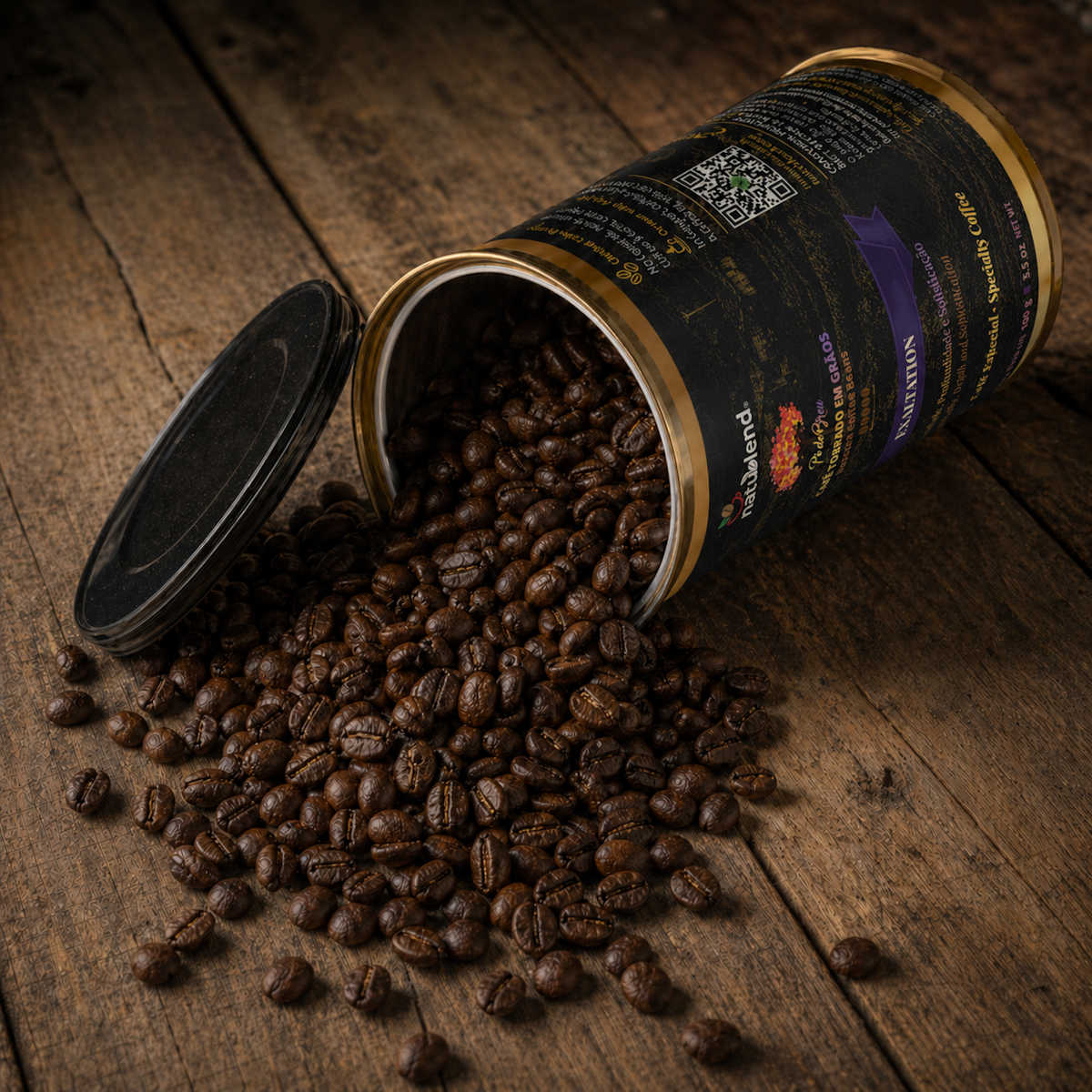
What to Expect in the Cup
The Exaltation sensory sheet, on a five-point scale, scores sweetness 3, body 5, bitterness 1, and acidity 4. The profile is asymmetrical, and the sheet itself explains the logic: sweetness stays in the background to make room for body and layers.
| Attribute | Score | What the Sheet Says |
|---|---|---|
| Acidity | 4 | Vibrant and structural, supports the complexity without letting the body feel heavy |
| Bitterness | 1 | Almost imperceptible, even in the fullest-bodied coffee of the line |
| Body | 5 | Velvety and deep, at the very top of the scale |
| Sweetness | 3 | In the background, making room for body and layers |
On the sheet, body is the heart of Exaltation. The brand describes it as velvety and deep, at the very top of the scale, and says it is what makes the coffee suited to slow brewing methods. In professional evaluation, this attribute has been reframed over time: the old 100-point form of the Specialty Coffee Association (SCA) had a category called body (Royal Coffee, n.d.), while the 2024 standard handles the tactile perception of coffee in the mouthfeel section, one of the eight on the new form (SCA, 2024).
Sweetness, at 3, sits in the background: it is present but makes room for the body and the layers the brand places at the center of the concept. Acidity, scored at 4, plays a structural role and, according to the sheet, supports the complexity without letting the body feel heavy, which explains why such a full-bodied coffee still tastes lively on the palate. Bitterness stays at 1, almost imperceptible, and the sheet makes a point of noting that this holds even for the fullest-bodied coffee of the line.
The Curation Behind Exaltation
The Chosen Origin
Exaltation comes from Sítio Pé de Breu, where the coffee grows between 1,000 and 1,400 meters, and according to Natublend the line is harvested by hand in selective passes that respect the ripeness of each cherry. The farm lies in Alto Caparaó, one of the 16 municipalities within the delimited area of the Caparaó Designation of Origin, recognized in 2021 by INPI, Brazil’s National Institute of Industrial Property (INPI, 2021). For a coffee built in layers, ripening is the altitude factor that matters most: on Mount Gorongosa, in Mozambique, cherries at 935 meters took about four weeks longer to ripen than those at 650 meters and yielded denser beans, although the authors still consider the final effect on the cup uncertain (Cassamo et al., 2022).
Tasting Each Lot
Natublend states that every lot is tasted and approved by the brand’s curators to keep the Exaltation profile consistent from one harvest to the next; the sheet gives no score and does not describe how the tasting is conducted. The professional standard gives an idea of the rigor a layered profile demands. In the SCA affective assessment, each sample is tasted in five cups, and the final score loses 2 points for every cup that differs from the others and 4 for every defective cup (SCA, 2024). In a profile built in layers, that uniformity matters: the complexity has to show up in every cup from the lot, not just in some of them.
The Roast Curve
Natublend presents Exaltation as a medium-roast coffee but does not disclose the color reading, temperature, or time of the curve. What the sheet states is the intended result: body at the top of the scale, almost imperceptible bitterness, and an acidity that holds the structure together.
Research shows that this result does not depend only on darkening the bean. In a sensory study published by the SCA, perceived body rose from the lightest roast up to intermediate levels and seemed to drop again in the darkest roast tested, although that drop was not statistically significant, and measured viscosity followed the same pattern, peaking in the middle (Alstrup, n.d.). A study with a panel of 104 consumers, using specialty coffee from Cauca, Colombia, went further and showed that points along the entire curve, from the charge and the turning point to first crack and the drop, predict acidity and body scores in the cup (Campo-Ceballos and Gaviria-López, 2023). For a coffee that calls for body at the top of the scale without losing acidity, what happens along the curve shapes the result, not only the final color of the bean.
Small-Batch Roasting and Packaging
According to Natublend, Exaltation is roasted in small batches and packed in an airtight 100 g tin, which the brand presents as a barrier against light, moisture, and oxygen. The greatest care begins once the tin is opened. In a study that simulated home use, with repeated openings over 30 days, ground coffee lost between 35% and 45% of its original volatile compounds even in the highest-barrier packaging, such as glass jars and steel cans, while hexanal, a marker of fat oxidation, rose by about 50% (Trenzová et al., 2024). For a coffee whose appeal lies in its layers, the practical advice is to open the tin, scoop out what you need, and close it again right away, and to plan on finishing it within a few weeks of opening.
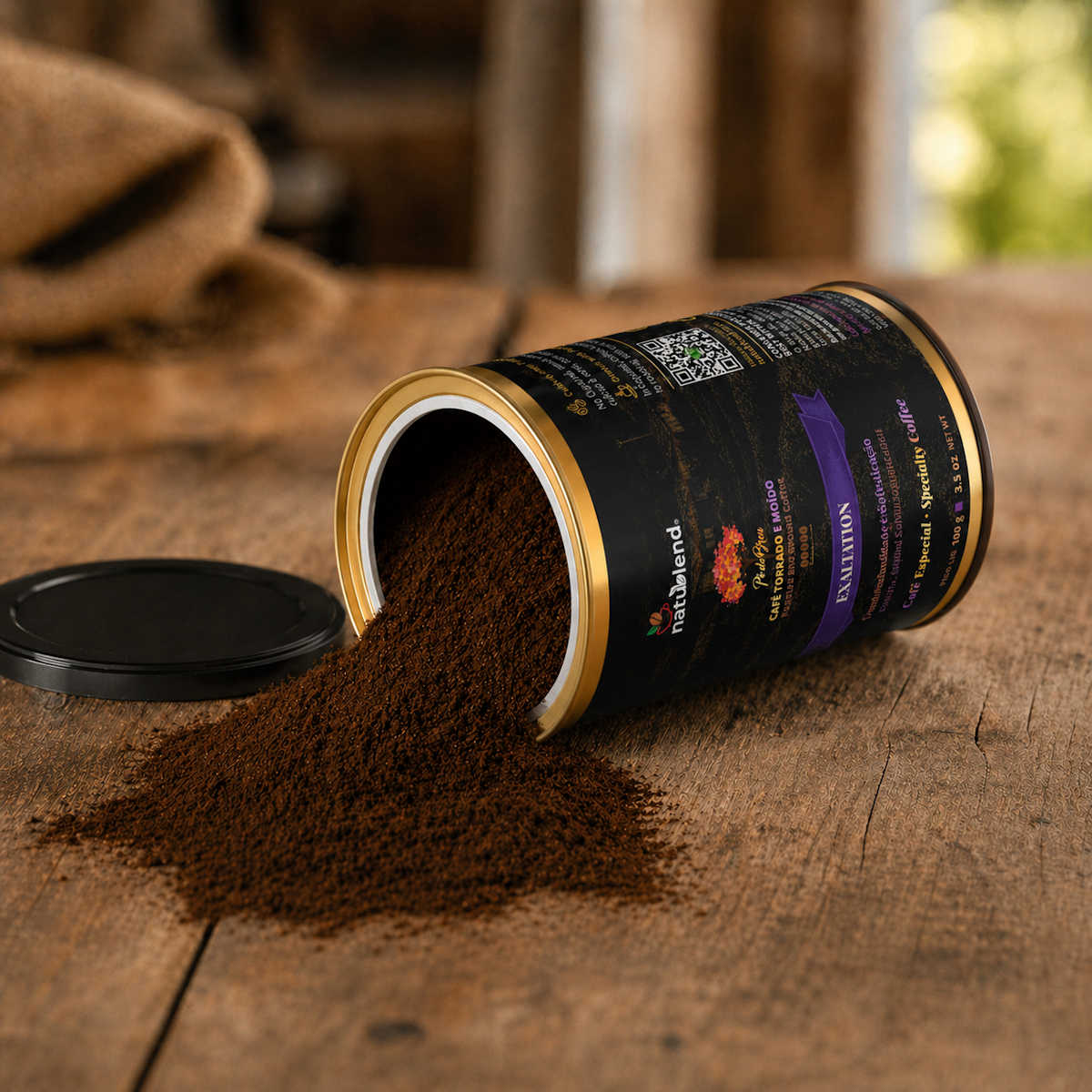
This pace of consumption also guides the choice between whole beans and ground coffee: if you brew Exaltation only a few times a week, you may prefer whole beans and grind just the dose for each brew. The brand’s sensory description of each coffee in the line is gathered on the Natublend specialty coffees page.
How to Brew Exaltation
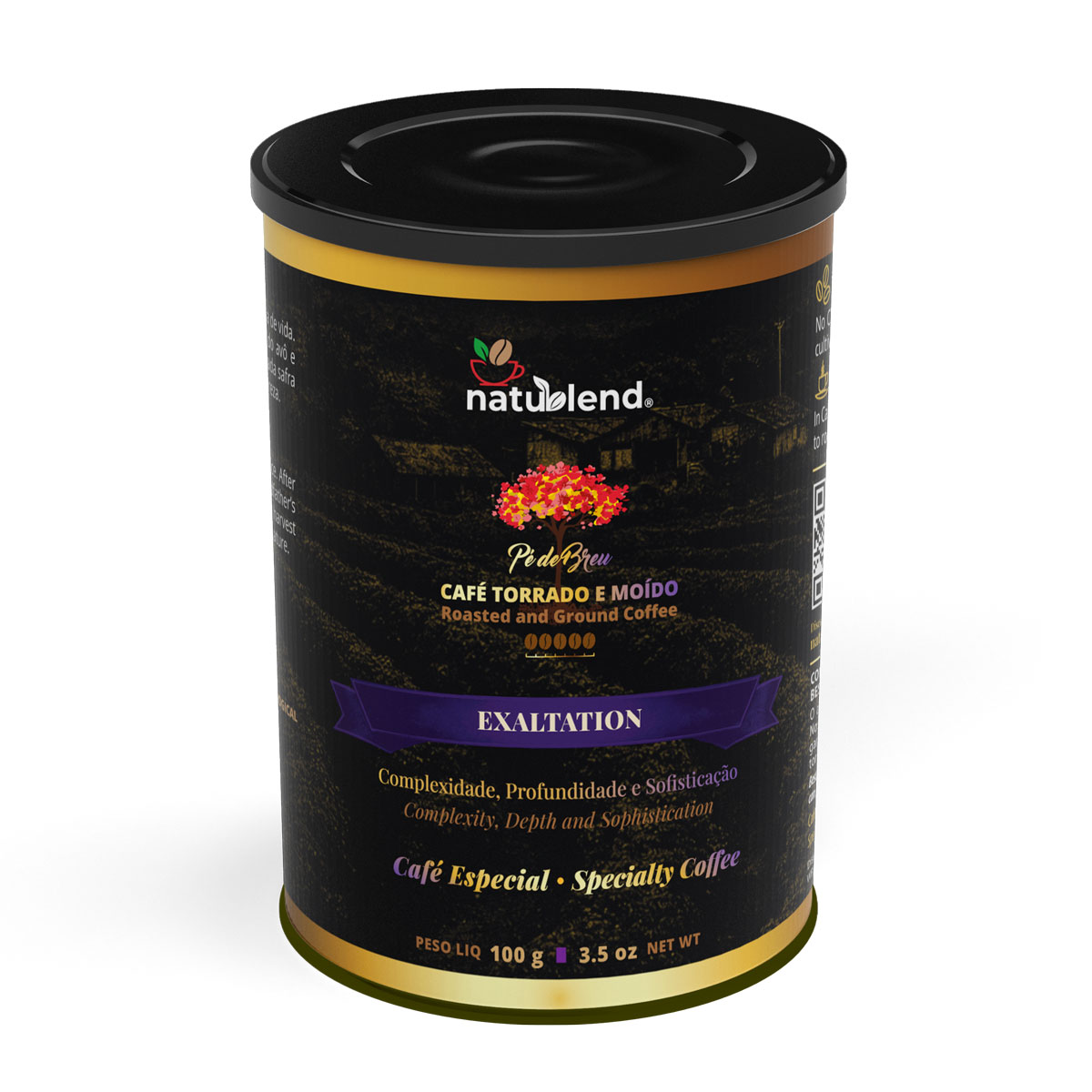
Natublend’s sheet recommends slow methods for Exaltation, in which contact time helps reveal the body and the layers. The order below follows the brand’s recommendation, with the slow V60 first and the ristretto as an alternative for those who prefer espresso. In the two pour-overs, the water ranges from 94 to 96 °C in the slow V60 and from 94 to 95 °C in the Chemex, with a medium grind in the first and a medium-coarse grind in the second.
Slow V60
| Parameter | Natublend Product Sheet |
|---|---|
| Grind | Medium |
| Ratio | 15 g of coffee to 250 ml of water |
| Temperature | 94 to 96 °C |
| Time | 3:30 to 4:00 minutes |
This is Natublend’s ideal method: according to the brand, the long bloom and the pulse pours reveal the layers of Exaltation one by one. The bloom is the first wetting of the grounds, and extending it makes sense because part of the carbon dioxide formed during roasting remains in the coffee after grinding, which releases up to 75% of that gas within seconds or a few minutes (Smrke et al., 2018). Pouring in stages, in turn, works on two of the five drivers of extraction identified by researchers at the Zurich University of Applied Sciences (ZHAW): the concentration difference between water and coffee, and contact time (Wellinger, n.d.). The ratio is the same as in the Essence V60 recipe, but here the grind is medium, the water ranges from 94 to 96 °C, and the pauses stretch the brew to 3:30 to 4:00 minutes.
Chemex
| Parameter | Natublend Product Sheet |
|---|---|
| Grind | Medium-coarse |
| Ratio | 30 g of coffee to 500 ml of water |
| Temperature | 94 to 95 °C |
| Time | 4:30 to 5:30 minutes |
The brand calls the Chemex the most analytical version of Exaltation: the thick filter isolates each layer, and the medium-coarse grind, the coarsest among this coffee’s recipes, matches the 4:30 to 5:30 minutes of contact. For those who like to measure, the classic reference for filter brewing grew out of a 1957 paper by Ernest Earl Lockhart and still underpins the SCA brewing courses (SCA, n.d.). It places balanced extraction between 18% and 22%, with 11.5 to 13.5 g of dissolved solids per liter, a range also adopted by the European Coffee Brewing Centre (ECBC), an independent testing body for coffee equipment (Wilfa, n.d.). With the 60 g per liter and the long contact time of this recipe, that yardstick helps check whether the cup has reached the intended concentration without overshooting the extraction.
Short Espresso (Ristretto)
| Parameter | Natublend Product Sheet |
|---|---|
| Grind | Very fine |
| Ratio | 18 g of coffee to 30 g of beverage |
| Temperature | 92 to 94 °C |
| Time | 28 to 32 seconds |
For espresso, Natublend recommends the ristretto, which according to the sheet condenses the depth of Exaltation into a few milliliters. The recipe of 18 g of grounds for 30 g of beverage is more concentrated than the 1:2 ratio the industry has adopted as the convention for espresso (Sage Appliances, n.d.). The advice to choose a ristretto over a lungo follows extraction logic: lengthening the shot tends to pull into the cup the bitter and astringent compounds that dissolve last, and overextraction usually masks subtle origin notes (Coffee Hunter, n.d.).
Essence, Exaltation, or Expression?
Natublend’s sheet gives the three Sítio Pé de Breu coffees the same acidity (4) and the same bitterness (1); what changes between them is sweetness and body. Exaltation shares a sweetness of 3 with Essence but takes body to 5, two points higher, so the two can go through the same V60 with very different results: lightness and transparency in one case, velvety texture and layers in the other. Expression has sweetness and body at 4 and was designed for espresso, the moka pot, and milk drinks. For everyday pressure-brewed coffee, Expression is the natural choice in the line; for an unhurried tasting, Exaltation offers the fullest body of the three and the layers the sheet describes.
Frequently Asked Questions
Does Exaltation Feel Heavy in the Cup?
According to Natublend’s sheet, no. The body is velvety and reaches 5, the top of the scale, but the acidity, scored at 4, plays a structural role and supports the complexity without letting the body feel heavy. Bitterness stays at 1, almost imperceptible.
Why Does Exaltation Call for Slow Brewing?
Because the sheet describes a body suited to slow methods and a layered profile. In the slow V60, with 15 g to 250 ml, a medium grind, water between 94 and 96 °C, and 3:30 to 4:00 minutes, the long bloom and the pulse pours reveal those layers one by one, according to the brand.
Can You Make Espresso with Exaltation?
Yes, and Natublend recommends the ristretto: 18 g of grounds for 30 g of beverage, a very fine grind, water between 92 and 94 °C, and 28 to 32 seconds. The brand advises choosing a ristretto over a lungo, because the short shot condenses the depth of the coffee into a few milliliters.
Natublend’s Specialty Coffees
The cards below show Exaltation alongside the three other Natublend specialty coffees: Essence and Expression, also from Sítio Pé de Breu, and Golden Reserve.
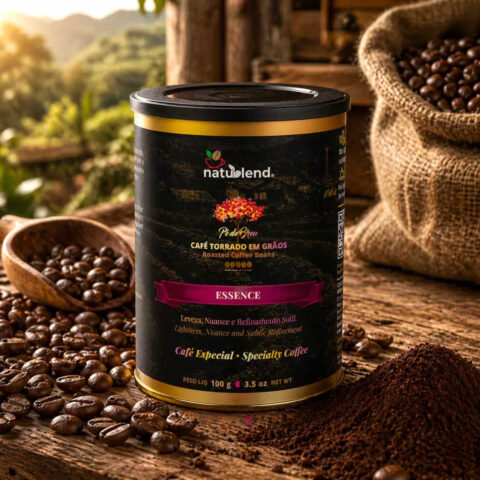
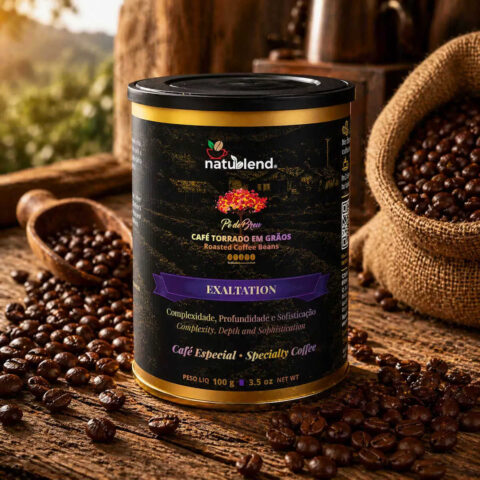
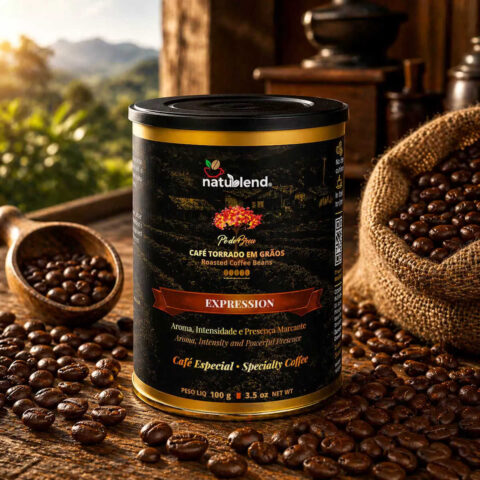
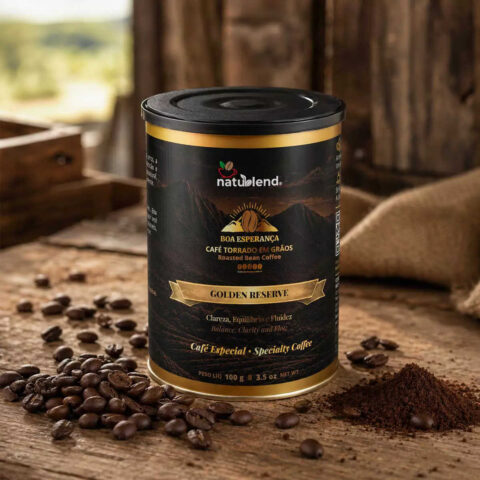
All four come in 100 g tins and can be compared side by side on the Natublend specialty coffees page.
References
View All 13 Cited References
Peer-Reviewed Scientific Studies (5)
- DOI2022 CASSAMO, C. T. et al. Shade and Altitude Implications on the Physical and Chemical Attributes of Green Coffee Beans from Gorongosa Mountain, Mozambique. Agronomy, v. 12, n. 10, 2540, 2022. Available at: doi.org.
- DOI2023 CAMPO-CEBALLOS; GAVIRIA-LÓPEZ. Optimising consumer acceptability of Cauca specialty coffee through roasting profiles on acidity and body sensory attributes. Czech Journal of Food Sciences, v. 41, n. 1, 2023. Available at: doi.org.
- DOI2024 TRENZOVÁ, K. et al. Exploring the Impact of Different Packaging Types and Repeated Package Opening on Volatile Compound Changes in Ground Roasted Coffee. Journal of Microbiology, Biotechnology and Food Sciences, v. 14, n. 1, e11022, 2024. Available at: doi.org.
- DOI2018 SMRKE, S. et al. Time-Resolved Gravimetric Method To Assess Degassing of Roasted Coffee. Journal of Agricultural and Food Chemistry, v. 66, n. 21, 2018. Available at: doi.org.
- PEER SAGE APPLIANCES. What is the best coffee water temperature? n.d. Available at: sageappliances.com.
Institutional Sources (1)
- GOV2021 INSTITUTO NACIONAL DA PROPRIEDADE INDUSTRIAL (INPI). Certificado de Registro de Indicação Geográfica nº BR412019000005-0: Caparaó, com Caderno de Especificações Técnicas. Rio de Janeiro, 2021. Available at: gov.br.
Supplementary Readings (7)
- ROYAL COFFEE. Scoring Specialty Coffee: What Do the Numbers Mean? n.d. Available at: royalcoffee.com.
- 2024 SPECIALTY COFFEE ASSOCIATION (SCA). SCA Standard 104-2024: Coffee Value Assessment, Affective Assessment. 2024. Available at: sca.coffee.
- ALSTRUP, Jesper. Modulating Perception. 25 Magazine, n. 5. Specialty Coffee Association, n.d. Available at: sca.coffee.
- WELLINGER, Marco. The Five Drivers of Extraction. World of Coffee Europe, n.d. Available at: europe.worldofcoffee.org.
- SPECIALTY COFFEE ASSOCIATION (SCA). Towards a New Brewing Chart. 25 Magazine, n. 13, n.d. Available at: sca.coffee.
- WILFA. ECBC approval. n.d. Available at: wilfa.com.
- COFFEE HUNTER. Understanding over, under and ideal extraction. n.d. Available at: coffeehunter.com.